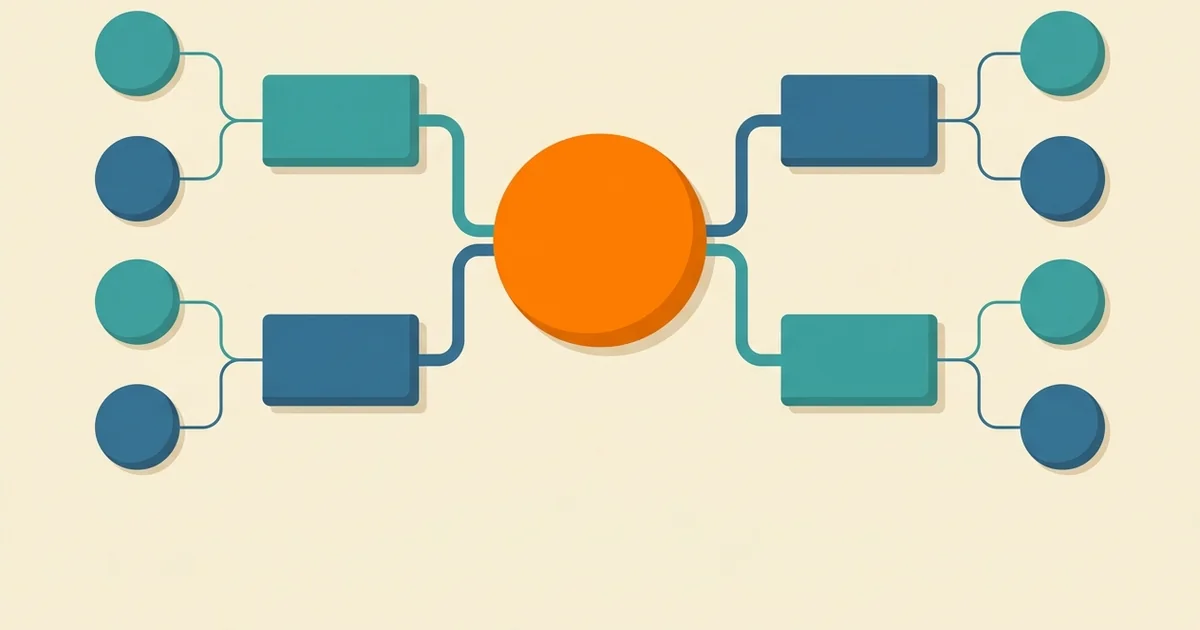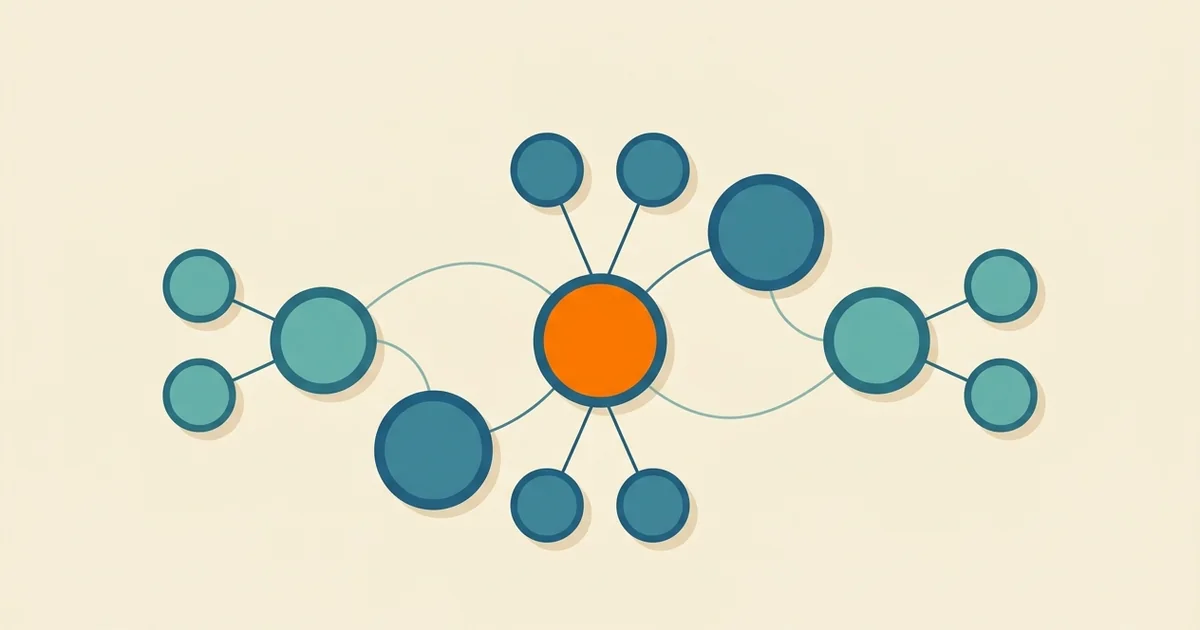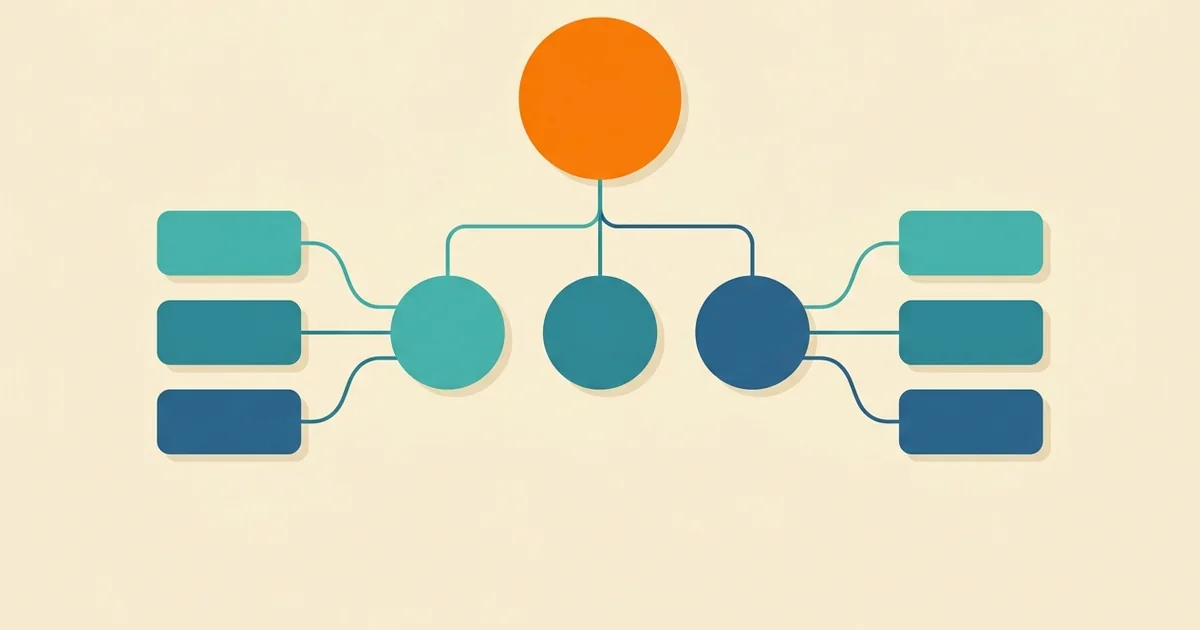
For thematic analysis of interviews, read transcripts, label relevant excerpts and develop patterns of meaning. Choose procedures that fit the analytical approach; a fixed codebook and intermediate categories are not universal requirements.
How to code qualitative data: a beginner-friendly guide to coding interviews
You have several interview transcripts open, the answers look interesting, and yet every sentence seems to contain something you could write about. That is where many students get stuck when searching for how to code qualitative data: the problem is not that there is no meaning, but that there is too much meaning at once. One participant describes feeling “left alone,” another mentions “unclear instructions,” and a third talks about “finding their own workaround.” Are these three separate findings, one theme, or just background detail? Coding interview data gives you a way to slow down, label what people are saying, and turn raw interview text into evidence you can discuss in an academic paper.
For a thematic analysis of interviews, read the transcripts in context, label relevant excerpts, and develop and review patterns of meaning. Other qualitative approaches may use coding differently or organize findings without themes. The aim is not to count every word mechanically, but to build a transparent link between participant responses, your interpretation, and your research question.
In this guide
- How do you code qualitative data for the first time
- What does qualitative coding mean in interview research
- How should you prepare interview transcripts before coding
- What is the step-by-step process for coding interview data
- What does an open coding example look like
- How do codes become themes in qualitative research
- How do you build a simple codebook for qualitative coding
- How can coding differ across disciplines
- What mistakes do students commonly make when coding interview data
- How do you write up qualitative coding in a student paper
- How can you check your coding before writing findings
How do you code qualitative data for the first time?
For the thematic route illustrated here, read a transcript in context, then develop provisional labels for relevant passages and compare them across the dataset. Revise interpretations and develop candidate patterns of meaning. A fixed codebook, a category stage and final themes are not required by every qualitative approach.
Start with meaning, not decoration
Qualitative coding means attaching interpretive labels to pieces of qualitative data, such as interview responses, focus group comments, observation notes, or open-ended survey answers. A code is not a decorative tag; it is a claim that a segment of data is relevant in a particular way.
For example, if a participant says, “I did not ask my manager because I thought it would make me look unprepared,” a weak code would be “manager.” A better code might be “fear of appearing incompetent.” The second code captures what is happening in the statement, not just a noun that appears in it.
Keep the research question visible
Coding becomes easier when your research question is narrow enough to guide decisions. If your question asks how first-year students experience feedback on written assignments, you do not need to code every comment about campus life, scheduling, or accommodation unless it connects to feedback. If your question still feels broad, the article on writing a qualitative research question funnel can help you tighten the focus before you code.
Your first coding round will still feel messy. That is normal. Treat the first pass as a way to learn what is in the data, not as the final structure for your results section.
What does qualitative coding mean in interview research?
Qualitative coding in interview research means labelling sections of participant responses so you can identify repeated ideas, contrasts, processes, and meanings. Codes help you move from individual quotes to analytic patterns. In student papers, coding also shows the reader how you moved from raw interview data to findings.
Codes are smaller than themes
Code: a short label attached to a specific data segment.
Theme: a broader pattern that connects several codes and helps answer the research question.
Category: an intermediate grouping of related codes, often used before final themes are named.
For example, “delaying email replies,” “waiting for office hours,” and “asking peers instead” may be separate codes. Together, they might form a category called “indirect help-seeking.” That category could contribute to a theme such as “Students manage uncertainty by avoiding direct contact with authority figures.”
Coding is interpretive, not random
Qualitative coding does not mean guessing what the participant “really meant” beyond the transcript. It means making a reasoned interpretation based on what they said, the research context, and your research question. You may revise a code after seeing similar data in another transcript, but you should keep enough notes to explain why.
In many undergraduate and master’s papers, coding is used within thematic analysis. If your assignment requires thematic analysis specifically, the article on a thematic analysis theme cluster map may help you connect coding, theme development, and write-up.
Codes can describe actions, feelings, barriers, or beliefs
Good codes often name what is happening in the data. They may capture actions, such as “checking instructions repeatedly”; feelings, such as “anxiety about being judged”; barriers, such as “lack of private study space”; or beliefs, such as “online feedback feels less personal.”
Choose descriptive or interpretive labels according to the analytical approach and purpose. A broad topic code can help organize material in some codebook approaches, while a more specific interpretive code may support reflexive thematic analysis. Do not treat one code style as the only valid option.
How should you prepare interview transcripts before coding?
Prepare readable, consistently formatted transcripts, check unclear audio and reduce identification risks according to the approved data plan. Replacing names is pseudonymization when identities remain recoverable; it does not guarantee anonymity. Limit access to raw recordings, working transcripts and any separate identity key.
Clean the transcript without changing meaning
Remove repeated filler only if your methodology allows it and if the filler is not relevant to your analysis. For many student interview projects, light cleaning is acceptable: fixing obvious typos, adding punctuation for readability, and marking unclear words with a neutral note such as “[unclear].”
Do not rewrite participants into polished academic English. If a participant says, “I just kind of gave up asking,” changing it to “I discontinued the practice of requesting support” removes tone and may change the meaning. Preserve phrasing that shows hesitation, frustration, confidence, or uncertainty when those features matter.
Anonymise before analysis
Replace names, institutions, employers, towns, and other identifiers with neutral labels. Use labels such as “Participant 1,” “P1,” or “Interviewee A,” and keep the key linking real identities to participant labels in a separate secure file if your course requires one.
This step matters even in small student projects. A business student interviewing employees in one local café, for example, may need to remove job titles or shift patterns if those details could identify participants. Ethical handling of interview material is part of the method, not an extra task at the end.
Align preparation with your interview protocol
Your codes will be easier to interpret if you know why each question was asked. If you have not yet conducted interviews, plan the sequence carefully so your questions produce data that can answer your research question. The article on a five-stage research interview protocol with consent checkpoint can help with that earlier stage.
If your interview guide contains broad opening questions and narrower probes, keep those sections visible in the transcript. It helps you see whether a comment came from an open response or from a follow-up prompt.
What is the step-by-step process for coding interview data?
The basic process for coding interview data is: familiarise yourself with the transcripts, create initial codes, apply and revise codes across the dataset, group related codes, develop themes, and check those themes against the original data. Each step involves interpretation and revision. Beginner coders should expect codes to change as they understand the dataset better.
A practical coding sequence
The following is an illustrative thematic route, not a required sequence for every qualitative study:
- Read one full transcript without coding to understand the whole conversation.
- Reread the transcript and mark passages that relate to the research question.
- Give each passage a short code that captures the meaning of the segment.
- Code a second transcript using existing codes where they fit and new codes where needed.
- Compare codes across transcripts and merge labels that mean nearly the same thing.
- Explore relationships between codes; intermediate categories are optional.
- Develop candidate patterns of meaning that answer the question rather than automatically promoting categories into themes.
- Recheck each theme against the transcript excerpts that support it.
- Write brief analytic memos explaining why each theme matters.
Code small enough to be useful
A data segment can be a phrase, a sentence, or a short paragraph. If you code an entire page as “student stress,” the code will be too large to compare. If you code every individual word, you will drown in fragments.
A practical unit is the smallest passage that contains a complete relevant idea. For instance, “I waited until the night before because I didn’t understand what the rubric wanted” could be coded as “rubric confusion causing delay.” That is more useful than coding the whole answer as “procrastination.”
Use memos while you code
Analytic memo: a short note where you record why a code matters, what pattern you are noticing, or what question you want to check later. Memos prevent coding from becoming a mechanical labelling exercise.
A memo might read: “Several participants describe not asking for help because they want to appear capable. This may connect to identity management, not only access to support.” Later, this note may help you name a theme more precisely.
What does an open coding example look like?
The following example illustrates data-led initial coding. “Open coding” has specific meanings in grounded theory; it is not a mandatory first stage of every qualitative analysis. Initial coding can be more inductive, more theory-informed or combine both, depending on the research purpose.
Open coding in a student interview
Here, initial coding means developing provisional labels from relevant excerpts. Interpretation is informed by the researcher and the study context; codes do not simply emerge untouched from the data.
Suppose the research question is: “How do master’s students experience feedback on draft assignments?”
| Interview excerpt | Weak code | Stronger open code |
|---|---|---|
| “I got comments like ‘be clearer,’ but I didn’t know what part was unclear.” | Feedback | Vague feedback creates uncertainty |
| “I asked a classmate before asking the instructor because I didn’t want to look lost.” | Classmate | Avoiding instructor to protect competence |
| “The audio feedback felt more personal, even if it was shorter.” | Audio | Personal tone increases feedback value |
| “I only understood the comments after comparing them with the grading rubric.” | Rubric | Rubric helps decode instructor comments |
The stronger codes identify what the excerpt shows. They are still short, but they carry analytic meaning.
Weak versus stronger coding
| Weak student version | Stronger rewrite |
|---|---|
| Code: “stress” for every comment where a participant mentions pressure, deadlines, confusion, or fear of judgement. | Use separate codes such as “deadline pressure,” “unclear assessment criteria,” and “fear of negative evaluation,” then decide later whether they belong under a broader theme. |
| Theme: “Students had problems with feedback.” | Theme: “Students treated vague feedback as a problem of interpretation, not only as a lack of information.” |
The stronger version gives you material for an argument. It also makes your findings section easier to structure because each theme has a clear analytic direction.
In vivo codes can help
In vivo code: a code that uses the participant’s own words. If several nursing students describe “freezing” during simulation feedback, “freezing during feedback” may be a useful in vivo code.
Use in vivo codes when a phrase is memorable and analytically useful. Do not overuse them for every colourful expression, or your code list will become hard to manage.
How do codes become themes in qualitative research?
Codes become themes when you compare coded excerpts, group related codes, and identify a broader pattern that helps answer your research question. A theme is not just a topic that appears often. It is an interpretive statement about what the data suggests.
From code list to theme map
Imagine you are studying how undergraduate students manage group project conflict. Your initial codes include “avoiding direct criticism,” “using humour to soften disagreement,” “private messaging outside meetings,” “waiting for instructor intervention,” and “doing extra work silently.”
These codes could form a category called “indirect conflict management.” A possible theme might be: “Students preserve group harmony by handling conflict outside formal project meetings.” That theme says more than “conflict happened”; it explains a pattern in behaviour.
Frequency is not the same as significance
A code does not need to appear in every interview to matter. A rare but detailed account may reveal a process that helps explain other data. At the same time, a code that appears many times may still be too general to become a theme.
For example, “stress” may appear in nearly every interview about healthcare placements. But “stress” alone is a topic, not a theme. A stronger theme in a nursing study might be: “Students interpreted medication-round pressure as a test of professional identity.” That theme connects emotion, context, and meaning.
Use themes to answer the research question
Ask each potential theme: “What part of my research question does this answer?” If the answer is unclear, the theme may be too broad, too descriptive, or outside your scope.
This is where a good chapter or section structure helps. If you are struggling to arrange themes in your paper, the article on the horizontal hierarchy of academic paper sections can help you create a findings structure that does not collapse into a list of quotes.
How do you build a simple codebook for qualitative coding?
In a codebook approach, list codes with definitions, inclusion and exclusion guidance and example excerpts. In reflexive thematic analysis, coding is more organic: record developing interpretations and decisions without imposing a fixed codebook or coder agreement as universal quality tests. State which approach you use.
What to include in a beginner codebook
A codebook does not need to be complicated. For a term paper, seminar paper, research paper, or capstone project, a small table is often enough.
Use these fields:
- Code name: the short label used in the transcript.
- Definition: what the code means in your analysis.
- Include when: the type of excerpt that should receive this code.
- Exclude when: similar excerpts that should not receive this code.
- Example: a short anonymised quote from the transcript.
Codebook example
| Code name | Definition | Include when | Exclude when | Example excerpt |
|---|---|---|---|---|
| Avoiding instructor contact | Participant avoids asking the instructor for help because of embarrassment or self-presentation concerns. | They mention fear of looking confused, weak, or unprepared. | They cannot contact the instructor because of scheduling or technical access. | “I didn’t want him to think I hadn’t tried.” |
| Decoding feedback through rubric | Participant uses the rubric to interpret comments. | They compare comments to criteria or marking levels. | They mention reading the rubric before writing, without linking it to feedback. | “The comment only made sense after I checked the rubric.” |
| Peer translation | Participant asks peers to explain feedback or task expectations. | Peers help interpret comments, criteria, or instructions. | Peer support is emotional only. | “My friend explained what the instructor probably meant.” |
Revise without losing your trail
You can merge codes, split codes, or rename codes as your analysis develops. Keep a version history or a memo explaining major changes. For example, you might merge “asking friends” and “checking group chat” into “peer translation” if both describe students using peers to interpret academic expectations.
Do not pretend your first code list was perfect. A transparent account of refinement usually reads as more credible than a codebook that appears from nowhere.
How can coding differ across disciplines?
Coding differs across disciplines because interview questions, participant contexts, and expected forms of evidence vary. A psychology paper may focus on emotions and coping processes, while a nursing paper may focus on patient safety, care transitions, or professional judgement. A business, education, or law project may code decision-making, institutional rules, or stakeholder roles.
Social sciences and psychology example
In a psychology research paper on how undergraduate students cope with academic feedback anxiety, interview excerpts may be coded for “anticipating criticism,” “avoiding grade portals,” “seeking reassurance,” and “reframing feedback as improvement.” These codes focus on emotional and cognitive processes.
A possible theme might be: “Students reduce feedback anxiety by delaying exposure to evaluation.” That theme would need evidence from several coded excerpts, not just one quote about nervousness.
Health sciences and nursing example
In a nursing capstone project on medication adherence among older adults discharged to home care, interviews might include comments from patients or caregivers. Codes could include “confusing medication changes,” “trusting nurse explanations,” “family member sorting tablets,” and “fear of side effects.”
A theme might be: “Medication routines depend on informal caregiver translation after discharge.” This theme links home care practice, patient understanding, and support networks. It also stays close to what interview participants actually described.
Education, business, and law examples
In an education seminar paper on online discussion boards, codes might include “posting for compliance,” “waiting for model answers,” and “peer reply as performance.” These codes could build a theme about participation being shaped by assessment design.
In a business and management research paper on hybrid team leadership, codes might include “unequal visibility,” “informal decisions in office days,” and “remote workers repeating updates.” A theme could state that hybrid work changes who is seen as contributing.
In a law-related undergraduate paper on access to housing advice, codes might include “not recognising issue as legal,” “fear of landlord retaliation,” and “confusing eligibility rules.” These codes could support a theme about legal problems being experienced first as practical crises.
What mistakes do students commonly make when coding interview data?
Students commonly make coding mistakes when they label too broadly, confuse topics with themes, ignore negative cases, code without a research question, or use quotes as findings without interpretation. These mistakes make the analysis look descriptive rather than analytic. Each can be fixed by making codes more specific and checking them against the research aim.
Mistakes that weaken qualitative coding
-
Using topic labels instead of analytic codes
Student example: coding ten different excerpts as “motivation” when one participant is describing fear of failure, another describes career ambition, and another describes pressure from parents.
Correction: split the broad topic into codes such as “fear of failing publicly,” “career-driven persistence,” and “family pressure to perform.” -
Creating a theme from one attractive quote
Student example: writing a theme called “University is a lonely place” because one participant used that phrase.
Correction: treat the quote as possible evidence, then check whether several excerpts support a wider pattern such as “Students experience independence as reduced access to informal support.” -
Coding everything in the transcript
Student example: labelling comments about weather, room booking, commuting, and hobbies even though the research question concerns feedback use.
Correction: code only material that relates to the research question, the interview context, or an emerging pattern that may explain relevant responses. -
Ignoring contradictory evidence
Student example: claiming “All students preferred audio feedback” while two participants said audio feedback was hard to search and revisit.
Correction: include a contrast code such as “audio feedback difficult to review” and refine the theme to show variation. -
Changing code meanings halfway through
Student example: using “support” first for emotional encouragement, then later for academic advice, technical help, and financial assistance.
Correction: define the code in a codebook or split it into “emotional reassurance,” “academic guidance,” and “technical access support.”
Why these mistakes matter
These errors usually appear when students rush from transcripts to findings. The result is a findings section that lists interesting quotes but does not show a clear route from data to interpretation.
For the thematic example here, a traceable connection runs from excerpts through coding and theme development to the question; a separate category stage is optional. If one part of that chain is vague, the reader may not trust the analysis.
How do you write up qualitative coding in a student paper?
Write up qualitative coding by describing your data, explaining your coding process, naming your approach, and showing how codes were developed into themes. The write-up should be clear enough that a reader can understand what you did without seeing every coded transcript. Include examples of codes and selected quotes, but do not overload the paper with raw data.
Methods section wording
Your methodology section should state what data you coded, how many interviews or transcripts were included, what coding approach you used, and how themes were developed. Keep the language accurate and modest.
For example:
The interview transcripts were read several times before initial codes were assigned to segments relevant to the research question. Codes were compared across transcripts, merged where meanings overlapped, and grouped into broader categories. Themes were then developed by checking whether each category explained a repeated pattern in participants’ accounts.
This type of wording is suitable for many undergraduate and master’s papers, as long as it matches what you actually did.
Findings section structure
Do not present codes as a long bullet list. Use themes as the main findings headings, then support each theme with coded evidence and short quotes.
A simple pattern works well:
- State the theme in one clear sentence.
- Explain what the theme means.
- Give one or two short participant quotes.
- Interpret the quotes in relation to the research question.
- Mention variation or exceptions if relevant.
For example, instead of writing “Code 1: peer support; Code 2: instructor fear; Code 3: rubric,” you might write a theme heading such as “Students used peers to translate unclear academic expectations.” Under that heading, you can explain which codes contributed to the theme.
Keep quotes purposeful
A quote should do work in your paragraph. Do not insert a quote and expect it to explain itself. Before or after the quote, state what the reader should notice.
If a participant says, “I read the comment five times and still didn’t know what to change,” the point may be confusion, lack of actionable feedback, or emotional frustration. Your coding decides which meaning is relevant in context.
How can you check your coding before writing findings?
Check your coding by reviewing whether each code is defined, consistently applied, supported by examples, and linked to the research question. Then test whether each theme is broader than a code but narrower than a whole topic. This final review helps you avoid vague findings and unsupported claims.
Questions to test your codes
Ask these questions before moving into the findings section:
- Does each code capture a specific meaning, action, belief, feeling, or barrier?
- Can I tell the difference between similar codes?
- Do I have at least one clear excerpt for each code I plan to use?
- Have I merged duplicate codes?
- Have I kept any negative or contrasting cases?
- Can I explain why this code matters for the research question?
If you cannot answer these questions, revise the code list before writing. It is easier to fix unclear coding now than to repair a weak findings chapter later.
Questions to test your themes
Themes need a different test. A theme should make an interpretive claim, not just name a subject area.
Compare these examples:
| Topic-like heading | Stronger theme heading |
|---|---|
| Feedback problems | Vague feedback shifted responsibility for interpretation onto students |
| Stress in placements | Medication-round pressure made students question professional readiness |
| Group work conflict | Students protected group harmony by moving conflict into private channels |
| Online learning | Students treated recorded lectures as a safety net rather than a replacement for class |
The stronger versions say what is happening in the data. They are easier to connect to discussion, literature, and your research question.
Before you move on: qualitative coding checklist
- My research question is visible while I code.
- My transcripts are anonymised and consistently formatted.
- I have read each transcript at least once before coding it closely.
- My codes label meanings, actions, beliefs, feelings, or barriers rather than broad topics only.
- My coding records explain decisions and examples in a way appropriate to the analytical approach.
- I have merged duplicate codes and separated codes that were doing different jobs.
- My themes are broader than individual codes but narrower than whole topic areas.
- I have checked themes against the original transcript excerpts.
- I have included contradictory or contrasting data where it changes the interpretation.
- My findings section can trace a clear path from quote to code to theme.
Read the methods and guidance: These sources expand the discussion. Institutional ethics requirements depend on your own institution and approved protocol.
Frequently Asked Questions
What is the difference between a code and a theme in qualitative research?
A code is a short label attached to a specific excerpt, while a theme is a broader pattern built from several related codes. For example, “avoiding instructor contact” may be a code, while “students protect competence by seeking indirect support” may be a theme. Codes organise the data; themes help answer the research question.
How many codes should I have for interview data?
There is no required number of codes or a standard range per interview. Use labels that serve the research question and chosen approach, revising overlapping or overbroad codes when justified. Explain analytic decisions rather than targeting thirty to eighty codes.
How long does it take to code qualitative interview data?
Coding usually takes longer than students expect because reading, labelling, comparing, and revising happen in several rounds. A one-hour interview transcript may take several hours to code carefully, especially on the first pass. Build in time to revise the codebook and check themes before writing findings.
Can undergraduate students use qualitative coding without software?
Yes, undergraduate students can code qualitative data using a table, spreadsheet, word processor comments, or printed transcripts if the dataset is small. Software can help manage larger projects, but it does not do the interpretation for you. Clear code definitions matter more than the tool.
Is qualitative coding suitable for a master’s research paper?
Yes, when the approach fits the question and data. Explain how coding and interpretation were carried out and revised. Whether findings use themes, categories, cases or another structure depends on the method; neither a degree level nor a codebook alone demonstrates quality.
Do I need to count codes in qualitative coding?
You may count codes if frequency helps your analysis, but counts are not the main goal of qualitative coding. A theme can matter because it explains meaning, tension, or process, not only because it appears often. If you use counts, pair them with interpretation and quotes.