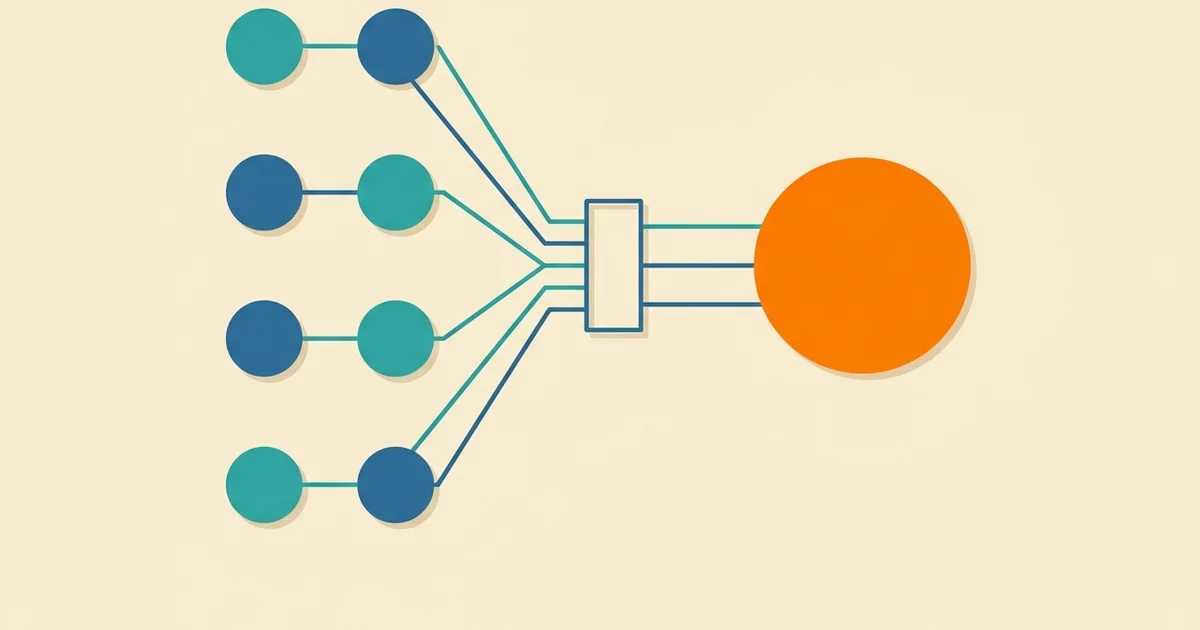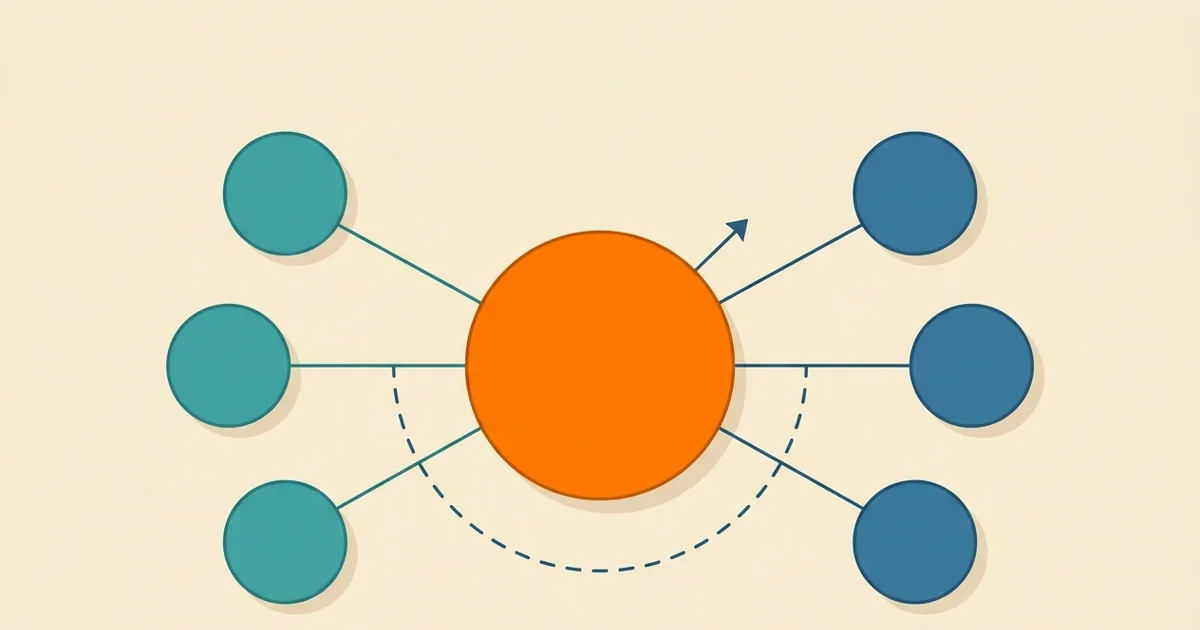
To write a discussion chapter, interpret what your findings mean in relation to your research question, compare them with the literature, explain limitations honestly, and suggest specific future research. The chapter should move from evidence to interpretation, not repeat your results.
How to write a discussion chapter: connect findings, limitations, and future research
You have findings, tables, themes, or argument sections, but the discussion still feels like a second results chapter with a few citations sprinkled in. That is the point where many students search for how to write a discussion chapter and realise the task is not “say the results again”. The harder job is explaining what the findings mean, why they matter, where they agree or conflict with earlier work, and what your study can and cannot claim. For undergraduate and master’s students, the discussion is often where a paper becomes an argument rather than a report. It needs judgement: enough confidence to interpret your evidence, enough caution to avoid overclaiming, and enough structure that a reader can follow your reasoning.
A discussion chapter answers the question: “What do these findings mean in relation to my research question and the existing literature?” It connects your results to scholarly debates, explains unexpected patterns, states study limitations academic readers will expect, and proposes future research directions that follow from the evidence rather than from generic curiosity.
In this guide
- How do you write a discussion chapter that answers your research question?
- What is the difference between discussion vs results?
- How do you connect findings to the literature without repeating the literature review?
- How should you acknowledge study limitations academic readers expect?
- How do you propose future research directions without sounding vague?
- What mistakes do students commonly make when writing a discussion chapter?
- How can you revise a discussion chapter before submission?
How do you write a discussion chapter that answers your research question?
Write a discussion chapter by organising your interpretation around the research question, not around every minor result. Start with the main finding, explain its meaning, compare it with the literature, address limitations, and end with future research directions or implications. The discussion should show how your evidence changes, confirms, qualifies, or complicates what was already known.
Start with the claim your evidence supports
A discussion chapter is built around claims. Claim means a reasoned statement about what your findings suggest, not a personal opinion or a simple result. For example, “Students reported stress” is a finding; “The findings suggest that assessment timing, rather than workload alone, shaped students’ stress experiences” is a discussion claim.
A useful opening move is to give the answer the evidence supports, including any unresolved question. In an invented cross-sectional example about social media and sleep, describe the observed associations and their uncertainty. Do not call one association stronger than another without an appropriate comparison. A non-significant result is not proof of no effect, and significance alone does not show effect size or practical importance.
Use a repeatable discussion paragraph pattern
Most student discussions improve when each paragraph has a job. Do not begin with a citation unless the paragraph is mainly about the literature. Begin with your finding or interpretation, then bring in sources to test the meaning of that interpretation.
A practical paragraph sequence is:
- State the finding or pattern that matters most.
- Interpret what the finding suggests in relation to the research question.
- Compare the interpretation with one or two relevant studies or theories.
- Explain agreement, contrast, or partial fit.
- Add a limitation or caution if the claim needs boundaries.
- Close with the implication for your paper’s argument.
This sequence works for the discussion section research paper, a seminar paper, or a capstone project because it keeps the reader focused on reasoning. The exact order can vary, but every discussion paragraph needs evidence, interpretation, and connection.
Keep the chapter’s hierarchy visible
A discussion chapter often loses shape because students treat it as a long reflection. Use section headings that mirror your main findings or research objectives. If your results chapter is organised by hypothesis, theme, or sub-question, your discussion can use the same broad order while changing the purpose from reporting to interpreting.
If you are still building the paper structure, the horizontal hierarchy of academic paper sections can help you see how findings, discussion, limitations, and future research fit into the whole paper. Your discussion should not float outside the document architecture; it should answer what earlier chapters set up.
What is the difference between discussion vs results?
Results report what the analysis found; discussion develops the meaning of those findings in relation to the question and literature. Some papers separate these functions into sections; others combine them, and qualitative findings can already involve interpretation. Follow the required format while making the link between evidence and interpretation clear.
Results report; discussion interprets
The examples in this guide are invented teaching demonstrations, including their findings and references to earlier research. They are not evidence about education, health, or management. In a real discussion, distinguish an observed pattern from a proposed explanation and support each claim with the study or cited literature.
In a quantitative business paper on remote work and employee engagement, the results might state that flexible work frequency had a positive association with self-reported engagement, while meeting overload had a negative association. The discussion would ask what that pattern means: perhaps flexibility supports autonomy, but excessive meetings weaken the benefit by increasing coordination burden.
In a qualitative education paper on feedback practices, the results might present themes such as “unclear criteria” and “delayed comments”. The discussion would explain how those themes relate to formative assessment theory or to previous research on feedback timing.
Concrete comparison table
| Student version | Results-style writing | Discussion-style writing |
|---|---|---|
| Psychology survey | “The correlation between test anxiety and sleep quality was negative.” | “The negative association warrants discussion of possible explanations, but it does not establish a mechanism linking anxiety to academic functioning.” |
| Nursing interviews | “Participants said discharge instructions were confusing.” | “Participants’ accounts suggest uncertainty during the transition to home care; effects on medication adherence would require additional evidence.” |
| Management case study | “Employees preferred hybrid work.” | “The preference raises a question about scheduling control, but preference alone cannot establish its importance relative to work location.” |
| Education observation | “Students asked more questions in small groups.” | “The observed pattern raises a hypothesis about peer visibility; fear of mistakes must be examined rather than assumed.” |
Use interpretation verbs, not reporting verbs only
Results sections often use verbs such as “showed”, “reported”, “indicated”, and “revealed”. Discussion sections can use those verbs too, but they also need interpretive verbs: “suggests”, “supports”, “challenges”, “extends”, “qualifies”, “aligns with”, “contrasts with”, and “may be explained by”.
Be careful with certainty. If your method cannot prove causation, do not write as if it can. A survey can suggest an association; an interview study can show how participants describe an experience; a conceptual paper can argue that a framework clarifies a problem. The verb you choose tells the reader how far your evidence can reach.
How do you connect findings to the literature without repeating the literature review?
Connect findings to the literature by using sources as conversation partners, not as a second reading list. Each citation should help explain whether your findings confirm, extend, contradict, or refine previous work. The aim is synthesis: putting your evidence and existing scholarship into the same argument.
Move from source summary to source use
A literature review usually establishes what is already known and where your research fits. The discussion returns to selected sources only when they help interpret your findings. If your literature review included twenty sources on student motivation, your discussion might use four or five that directly relate to the pattern you found.
Synthesis means combining your finding with source evidence to create a new, focused point. It is different from summary because it uses sources to answer your research question. If your literature review still reads like a list, the distinction between source evidence synthesized into a central literature review claim is useful before drafting the discussion.
Compare, contrast, extend, or explain
Every literature connection should perform one of four functions:
- Compare: Your finding is similar to previous work.
- Contrast: Your finding differs from previous work.
- Extend: Your finding adds a new context, group, variable, or explanation.
- Explain: A theory or study helps account for your finding.
In a nursing paper on medication adherence among older patients discharged to home care, interview findings may show that patients understood the importance of medication but struggled with timing and dosage changes. The discussion could connect this to literature on transitional care, not by repeating every study on adherence, but by explaining how the current finding shifts attention from motivation to communication clarity.
Weak vs stronger literature connection
| Weak student version | Stronger rewrite |
|---|---|
| “This finding is supported by Smith and Lee, who also wrote about student stress. Johnson also found that students have stress. Therefore, my findings are similar to the literature.” | “The finding partly aligns with earlier work linking assessment pressure to student stress, but it narrows the issue by showing that timing and clustering of deadlines mattered more to participants than total workload. This suggests that stress may be shaped by assessment design, not only by individual coping capacity.” |
The stronger version does more than name sources. It explains the relationship between the current finding and the literature. It also creates a more precise academic claim.
Handle unexpected findings carefully
Unexpected findings are not failures. They often create the most interesting discussion paragraphs if you avoid forcing them to match your expectations. In a management paper, you might expect remote work to reduce team cohesion, but your interviews show that newer employees felt more included in structured online meetings than in informal office settings.
A good discussion would not simply write, “This was surprising.” It would test possible explanations: meeting structure, equal speaking opportunities, manager facilitation, or the sample’s early-career profile. Then it would connect those explanations to relevant literature on organisational communication or onboarding.
How should you acknowledge study limitations academic readers expect?
Acknowledge limitations by naming the boundaries that affect how your findings can be interpreted, not by apologising for the whole study. Good limitations explain scope, method, sample, data quality, measurement, and transferability where relevant. Each limitation should also state what it does and does not affect.
Distinguish limitations from mistakes
Study limitations are boundaries in design, data, or scope that shape interpretation. They are not the same as errors. A small interview sample is not automatically a flaw if your aim is depth rather than statistical generalisation; it becomes a limitation when you state that findings may not represent all students, nurses, customers, or classrooms.
For scope decisions, the research scope and limitations can help separate what your paper intentionally includes from what it cannot claim. That distinction is useful because many students either hide limitations or list them so harshly that the study appears worthless.
Name the effect of each limitation
A limitation is incomplete if it only says, “The sample size was small.” Add the effect on interpretation. For example: “Because the sample included twelve second-year psychology students from one university, the findings cannot be treated as representative of undergraduates more broadly; however, they provide insight into how this group described assessment pressure.”
In health sciences or nursing, a paper on patient education after discharge might state that participants were recruited from one urban hospital ward. The limitation affects transferability to rural settings, different hospital systems, or patients with different support needs. It does not erase the value of patient accounts from that context.
Common limitation categories
Useful categories include:
- Sample limitations: size, recruitment method, demographic range, single institution.
- Measurement limitations: self-report bias, instrument fit, missing variables.
- Design limitations: cross-sectional data, lack of control group, short observation period.
- Data limitations: incomplete records, limited access to documents, uneven interview depth.
- Analytical limitations: coding reliability, model assumptions, alternative explanations.
Use only the categories that apply. A theoretical or conceptual paper may discuss limitations in framework selection, definitional scope, or the range of literature considered rather than sample size.
How do you propose future research directions without sounding vague?
Propose future research directions by linking each suggestion to a specific limitation, unresolved question, or unexpected finding. Avoid broad phrases such as “more research is needed” unless you state what kind of research, with whom, using which method, and for what purpose. Good future research directions are specific enough that another student could design a small study from them.
Link future research to a reason
Future research directions are evidence-based suggestions for further study. They should not introduce random topics. If your limitation is that your survey captured one time point, then a future study could use a longitudinal design. If your qualitative findings suggest a new theme, then future work might test how common that theme is across a wider population.
A weak sentence would be: “Future research should study this topic more.” A stronger sentence would be: “Future research could examine whether the relationship between evening social media use and sleep quality changes across the semester, using weekly measures rather than a single end-of-term survey.”
Match the method to the unanswered question
Future research directions become more credible when the method fits the gap. If your study raises a “how” or “why” question, qualitative interviews or focus groups may fit. If it raises a “how many” or “how strongly related” question, a quantitative survey or experiment may fit. If it raises a conceptual issue, theoretical work may be appropriate.
For quantitative papers, the link between findings and claims needs particular care. If you need a model for moving from numbers to interpretation, the article on quantitative findings connected to an evidence-based claim gives examples of cautious statistical discussion. For qualitative papers, future directions might grow from themes and participant language; the guide to theme and quote structure for qualitative findings can support that earlier stage.
Make recommendations realistic for undergraduate and master’s work
Your future research section should fit the scale of the paper. A seminar paper does not need to design a national research programme. A master’s research paper might suggest a larger multi-site sample, a follow-up interview design, or a comparison between groups, but it should still stay close to what your findings justify.
In an education paper on feedback in first-year writing courses, a realistic direction could be: “Future studies could compare written feedback with brief audio feedback across two course sections to examine whether students perceive one format as clearer.” That is more useful than saying, “Future research should improve feedback in universities.”
What mistakes do students commonly make when writing a discussion chapter?
Students commonly weaken the discussion by repeating results, dropping in citations without analysis, hiding limitations, overclaiming causation, or writing vague future research suggestions. These mistakes usually come from uncertainty about the discussion’s purpose. Each can be fixed by returning to the research question and asking what the evidence can reasonably support.
Mistake patterns and fixes
-
Repeating the results with different wording
Student example: “The survey found that 62% of respondents preferred hybrid work. This means that 62% liked hybrid work more than office work.”
Correction: Explain what the preference suggests. For example, “The preference identifies a pattern worth explaining; whether schedule control or job satisfaction accounts for it requires additional evidence.” -
Using citations as decoration
Student example: “This agrees with Brown (2021), Wilson (2020), and Ahmed (2019), who studied motivation.”
Correction: State the exact relationship between your finding and the sources. Do they agree on the mechanism, the population, the context, or only the general topic? -
Turning limitations into self-criticism
Student example: “This study is weak because it only used eight interviews.”
Correction: Reframe the limitation as a boundary. “The eight interviews allow close analysis of participant accounts, but the findings should not be treated as representative of all first-year students.” -
Claiming causation from non-causal data
Student example: “Online lectures caused students to become less motivated.”
Correction: Match the claim to the design. “Students associated online lectures with lower motivation, but the design cannot determine whether online delivery caused the change.” -
Ending with generic future research
Student example: “Future researchers should look at this topic in more detail.”
Correction: Specify the next study. “Future research could compare first-year and final-year students to test whether academic experience changes how students respond to deadline clustering.”
Why these errors matter
These mistakes do not only affect style. They affect the logic of the paper. If the discussion repeats results, the reader learns nothing new. If it overclaims, the evidence looks weaker. If the limitations are missing, the paper appears less credible because academic readers expect boundaries.
The fix is not to make the discussion longer. The fix is to make each paragraph answer a sharper question: What does this finding mean, how does it relate to what others found, and what can be claimed from this method?
How can you revise a discussion chapter before submission?
Revise a discussion chapter by checking whether every major finding is interpreted, connected to literature, limited appropriately, and linked to a clear implication or future research direction. Read the chapter for logic before you edit grammar. The best revision test is whether a reader can see the route from research question to evidence to interpretation.
Run a finding-by-finding audit
Create a simple audit table before line editing. List each main finding, the interpretation you make, the literature you connect to it, the limitation that affects it, and the implication or future research point. Empty cells reveal weak parts of the discussion.
This audit works especially well when the discussion feels repetitive. You may find that three paragraphs make the same point, while one major finding has no interpretation. You may also see that all your citations sit in the first half of the chapter, leaving later claims unsupported.
Check the order of claims
A discussion usually reads best when it moves from the most central finding to secondary findings. Do not bury the answer to your research question halfway through the chapter. If your most meaningful result is an unexpected non-significant finding, a strong theme, or a contradiction with previous research, give it enough space early.
For example, in a social sciences paper on volunteering and belonging among commuter students, the key finding might not be that volunteering increased campus engagement. It might be that short, task-based volunteering mattered more than long-term society membership because commuter students needed flexible participation. That claim deserves a central place in the discussion.
Before you move on: discussion chapter checklist
- The opening of the discussion answers the research question directly.
- Each main finding is interpreted rather than repeated.
- Literature is used to compare, contrast, extend, or explain findings.
- Claims use cautious wording that matches the method and evidence.
- Unexpected findings are discussed instead of ignored.
- Limitations describe effects on interpretation, not just weaknesses.
- The chapter avoids causal claims unless the design supports them.
- Future research directions are specific and linked to limitations or findings.
- The discussion does not introduce major new results.
- The final paragraph states the paper’s contribution without promising more than the study can show.
Final paragraph without overclaiming
The final paragraph of the discussion should give the reader a clear sense of contribution. Contribution means what your paper adds to understanding of the topic, given its level, scope, and method. For undergraduate and master’s work, a contribution may be modest but still valuable: clarifying a pattern in a specific sample, applying a theory to a new case, comparing competing explanations, or identifying a practical issue for further study.
One possible closing structure is a central interpretation, its main boundary, and a relevant implication. In an invented deadline-stress example, write: “Participants linked stress to clustered deadlines. The accounts identify scheduling as an issue worth investigating, but do not establish that it matters more than workload or that rescheduling will reduce stress.”
For further guidance, see USC: writing a discussion and ASA: interpreting significance and p-values. These resources offer writing and statistical interpretation guidance in specific contexts; they do not validate the invented examples in this guide or replace assignment requirements.
Frequently Asked Questions
How long should a discussion chapter be?
Discussion length depends on the assignment and document format; there is no universal percentage. Check whether the format calls for a separate discussion, a combined results-and-discussion section, or interpretation throughout. Use enough space for the main findings, relevant literature, alternatives, and limitations without repeating results.
What is the difference between discussion vs results?
Results report what you found; discussion explains what those findings mean. The results section presents statistics, themes, observations, or evidence. The discussion connects that evidence to your research question, literature, limitations, and implications.
Can I include limitations in the discussion section research paper?
Yes, limitations often appear near the end of the discussion section research paper or in a separate limitations subsection. Place them after the main interpretation so readers first understand what the study found. Then explain how the limitations affect the reach of your claims.
How many future research directions should I include?
There is no standard number of future research directions. Include the specific next steps justified by the findings, limitations, and assignment requirements. Avoid adding suggestions to meet a numerical target or repeating the same recommendations in both discussion and conclusion.
What should a master’s student include in a discussion chapter?
A master’s student should include a direct answer to the research question, interpretation of main findings, comparison with literature, methodological limitations, and focused future research directions. The chapter should show independent judgement while staying within the evidence. It does not need to claim a major field-changing contribution.
Can theoretical or conceptual papers have a discussion chapter?
Yes, theoretical and conceptual papers can include a discussion section, but it discusses arguments rather than empirical findings. It may explain how a framework clarifies a problem, where the argument differs from existing theory, what assumptions limit the analysis, and what future conceptual or empirical work could test next.