To read academic papers efficiently, start with the research question, abstract, conclusion, headings, and methods before reading line by line. Then extract the article’s claim, evidence, method, limitations, and relevance to your own assignment instead of taking general reading notes.
How to read academic papers efficiently: strategic reading, notes, and key arguments
You open a journal article for your assignment, read three dense paragraphs, and realise you still cannot say what the author is arguing or whether the paper is useful. That is the problem behind how to read academic papers: most students read too politely, from the first word to the last, as if every sentence has equal value. Academic papers are not novels. They are structured arguments with predictable parts, and your job is to find the claim, evidence, method, limits, and relevance before the deadline eats your week. If you are writing a term paper, seminar paper, research paper, or capstone project, efficient reading means reading with a purpose rather than trying to absorb everything.
To read academic papers efficiently, inspect the article’s purpose, structure, method, findings, and argument before slow reading. Use notes that separate summary, evidence, critique, and relevance so each source can later support your literature review, outline, or first draft.
In this guide
- How do you read academic papers without wasting hours?
- What should you check before reading a research paper closely?
- How should you read the abstract, introduction, and conclusion strategically?
- How do you analyze the argument and evidence in a journal article?
- How do you take notes that turn articles into usable material?
- How do reading strategies change for quantitative, qualitative, theoretical, and review papers?
- What mistakes do students commonly make when reading academic papers?
- How can you extract key arguments for your own literature review?
- How do you know when you have read enough for a term paper, research paper, or seminar paper?
- What should you check before moving from reading to drafting?
How do you read academic papers without wasting hours?
Read academic papers by moving from purpose to structure to detail, not by reading every sentence in order. Start with the title, abstract, research question, conclusion, headings, figures, and method so you know what the article is doing before you invest time in close reading. This approach is called strategic reading academic work because each pass through the paper has a specific task.
The three-pass reading method
Strategic reading is a planned way of reading that changes speed depending on what you need from the source. The first pass answers “Is this relevant?” The second pass answers “What does it claim and how does it support that claim?” The third pass answers “How can I use, compare, or question this article in my own paper?”
Use this sequence:
- Scan the title, abstract, keywords, journal, publication date, and headings.
- Read the introduction and conclusion to locate the problem, claim, and contribution.
- Inspect the method, data, theory, or source base.
- Read the results, findings, or main argument sections selectively.
- Take extraction notes in your own words.
- Decide whether the article is central, supporting, background, or not useful.
This sequence can help decide which sources need closer reading. Treat it as a flexible strategy rather than a guarantee of speed or a fixed time budget for each paper; difficulty, purpose and prior knowledge affect the effort required.
What efficient reading looks like in practice
Efficient reading is not lazy reading. It is targeted reading. For example, if your education seminar paper asks whether formative feedback improves first-year students’ writing confidence, you do not need every sentence in a paper about feedback across all university courses. You need the population, feedback type, outcome measure, method, findings, and limits.
| Reading habit | Weak student version | Stronger strategic version |
|---|---|---|
| Starting point | Reads page 1 immediately | Checks abstract, conclusion, headings, and method first |
| Notes | “This article is about student motivation.” | “Authors argue that feedback timing affects self-efficacy; survey of first-year writing students; relevance: supports feedback mechanism.” |
| Evidence use | Copies three quotations | Records finding, method, sample, and limitation |
| Relevance decision | Keeps every article found | Marks source as central, supporting, background, or discard |
| Time use | Reads one paper for 90 minutes with no output | Reads in passes and ends with usable notes |
The goal is not to finish more PDFs. The goal is to produce better decisions about which sources belong in your paper.
What should you check before reading a research paper closely?
Before close reading, check whether the paper is credible, relevant, current enough for your task, and aligned with your research question or assignment instructions. A quick source check saves time because not every search result deserves detailed analysis. If the article fails on credibility or fit, record why and move on.
Relevance comes before effort
Relevance means the article helps answer your research question, define your concepts, justify your method, or position your argument. A paper can be well written and still be irrelevant to your assignment.
Ask five fast questions before reading closely:
- Does the title match my topic, population, setting, theory, or variable?
- Does the abstract address a problem close to mine?
- Is the article peer reviewed or published by a credible academic source?
- Is the method suitable for the kind of claim I need?
- Does the conclusion speak to my assignment’s focus?
If you are still narrowing the topic, reading will feel messy because every source seems potentially useful. A focused topic makes article screening easier; if your topic is still broad, use a narrowing process like broad idea narrowing into a focused research problem before collecting too many PDFs.
Credibility checks for academic sources
Credibility means the source gives you enough reason to trust its scholarship. Check the journal or publisher, author affiliation, reference list, methodology, DOI or stable link, and whether the paper makes claims that match its evidence. For more detailed screening, use a source evaluation process such as academic sources passing through a credibility gate.
Do not reject older papers automatically. In psychology, a recent meta-analysis may be more useful than a single older experiment, but a classic theory paper may still define the concept your assignment uses. In law, the age of a source depends on whether the authority is still valid, whether legislation has changed, and whether later cases have distinguished or overruled it.
How should you read the abstract, introduction, and conclusion strategically?
Read the abstract to identify the article’s purpose, the introduction to understand the research problem, and the conclusion to see the claim the author wants readers to remember. These sections act like a map, but they are not enough on their own. Use them to decide what to inspect next, especially the method, evidence, and limitations.
Abstract: locate the promise
The abstract usually states the topic, problem, method, findings, and contribution in compressed form. Mark the words that show the type of paper: “survey,” “interviews,” “conceptual framework,” “systematic review,” “case study,” “experiment,” or “thematic analysis.”
A useful abstract note might look like this:
Weak: “This paper is about nurses and communication.”
Stronger: “Study examines nurse handover communication in acute care using semi-structured interviews; argues that interruptions and unclear responsibility reduce continuity of care; useful for patient safety section.”
The stronger note captures topic, method, claim, and possible use. It gives you something you can later place into a literature review paragraph.
Introduction: identify the problem and gap
Research problem means the issue, uncertainty, or debate the article responds to. Research gap means the missing, under-examined, or disputed area that the paper claims to address. In the introduction, look for phrases such as “however,” “less is known,” “previous studies have focused on,” or “this study examines.”
A psychology article on social media use and sleep quality may begin with broad concern about adolescent wellbeing, then narrow to nighttime platform use, then point to inconsistent findings about passive scrolling versus active messaging. That narrowing sequence tells you what problem the paper enters and what kind of evidence it needs.
Conclusion: test the claim against the body
The conclusion tells you what the authors think they have shown. Do not accept it automatically. Compare it with the method and findings: does the evidence support the size of the claim?
For instance, if a business management article based on interviews with twelve startup founders claims to reveal “how remote work transforms all organizational culture,” you should scale the claim down in your notes. A better reading might be: “Interview study suggests several founders perceived remote work as changing communication norms; transferability limited by small founder-only sample.”
How do you analyze the argument and evidence in a journal article?
Analyze a journal article by separating its claim, reasons, evidence, method, assumptions, and limitations. The central question is not “What is this article about?” but “What does the author want me to accept, and why?” That shift turns reading into analysis rather than summary.
Claim, evidence, and warrant
Claim means the main point the article argues or supports. Evidence means the data, texts, cases, observations, or prior studies used to support the claim. Warrant means the reasoning that connects the evidence to the claim.
Use this mini-template:
- Main claim:
- Sub-claims:
- Evidence used:
- Method or theory:
- Warrant:
- Limitation:
- Relevance to my paper:
In a nursing paper on medication adherence among older adults discharged to home care, the claim might be that follow-up calls improve adherence by reducing confusion about dosing. The evidence might be patient interviews, adherence records, or a controlled intervention. The warrant is the reasoning that clearer post-discharge communication reduces missed or incorrect doses.
Check whether the evidence matches the claim
Students often quote findings without checking whether the method can support the conclusion. A survey can show association, but it usually cannot prove causation by itself. An interview study can show meanings, experiences, and patterns, but it does not measure prevalence unless designed for that purpose.
If a paper says students with higher motivation report better performance, ask how “motivation” and “performance” were measured. If motivation came from a two-item self-report and performance came from expected grades rather than actual grades, your note should capture that weakness. For related work on variables, measurement, and relationships, see independent and dependent variables.
How do you turn reading notes into an article critique?
Begin with the assignment brief: does it ask for a methodological appraisal, an argument critique, or comparison with course readings? Identify the article and state your overall assessment in the introduction. Keep the account of its purpose and main claim separate from your judgement.
| Part of the critique | What to write from your notes |
|---|---|
| Claim | State the author’s position fairly, with a page or section reference. |
| Evidence | Identify the data or reasoning supporting it and assess their fit to the question. |
| Limitation | Explain a specific boundary and how it affects the claim; acknowledge strengths too. |
| Conclusion | Give a qualified judgement of the article’s contribution within its stated scope. |
Build each evaluative paragraph around a judgement, a specific passage or result, and your explanation of why it matters. Cite additional course readings when using them as a comparison; keep your interpretation distinguishable from the author’s.
Illustrative nursing example: if an invented study reports patients’ accounts of discharge instructions, you might value its detail about communication while explaining that those accounts alone do not establish improved medication adherence. This is a planning example, not a review of a real study. Adapt your emphasis to the rubric.
See ANU’s critical review guidance for evidence-based assessment and UNSW’s critical review structure for separating summary, critique, and conclusion.
How do you take notes that turn articles into usable material?
Take notes in a structured format that records what the article argues, how it argues, what evidence it uses, and how it connects to your own paper. Avoid notes that only restate the abstract. Good reading notes become paragraph material, comparison points, and revision checks.
Use a source matrix, not scattered comments
A source matrix is a table that stores the same categories for every source so you can compare articles quickly. It is especially useful for literature reviews because it reveals patterns across studies.
Recommended columns:
- Full citation or reference manager key
- Research problem
- Research question or aim
- Theory or concepts
- Method and sample
- Main finding or argument
- Limitation
- Theme in my paper
- Useful quotation with page number
- My comment or critique
Separate verbatim notes from your paraphrases and comments, retain source locations and compare your draft with the original for meaning and attribution. A matrix alone does not prevent patchwriting.
Separate summary from synthesis
Summary means reporting what one source says. Synthesis means connecting several sources to make a broader point. A literature review needs both, but synthesis carries the argument.
A weak note says: “Smith says feedback helps. Jones says feedback is useful. Patel says feedback matters.” A stronger synthesis note says: “Across three studies, feedback appears most useful when it is timely and specific; however, the studies define improvement differently, using confidence, grades, and revision quality.”
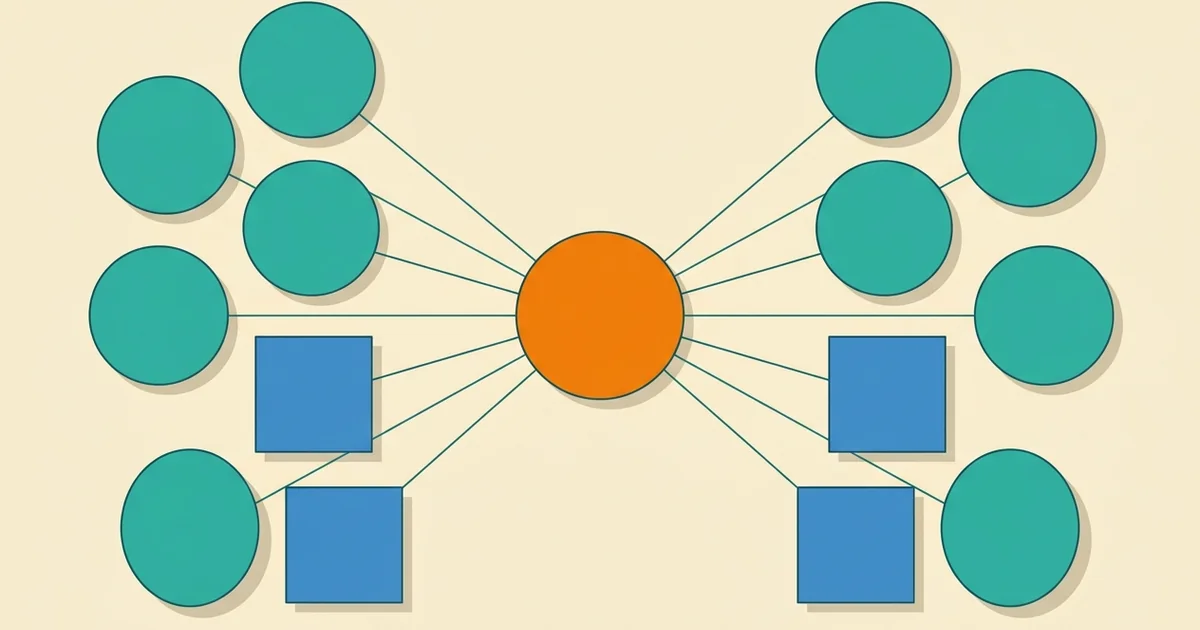
If this is the part that keeps turning into a list of sources, use a process for source nodes converging into a central claim. It will help you move from article-by-article notes to theme-based paragraphs.
How do reading strategies change for quantitative, qualitative, theoretical, and review papers?
Adjust reading to the paper’s question and approach. Quantitative reports need attention to design, measurement, analysis and uncertainty. Qualitative reports may use themes, narratives, discourse or other forms of interpretation. Conceptual work and reviews require scrutiny of reasoning, source selection and how the conclusions follow.
Quantitative empirical papers
For quantitative work, identify the question, design, sample, measures and analysis; hypotheses are relevant where the study tests specified expectations. Inspect effect estimates, uncertainty and assumptions as well as significance labels. If a result depends on methods you cannot yet evaluate, seek clarification before relying on it.
Example from psychology: a paper testing whether perceived academic stress predicts sleep quality among first-year students might measure stress using a validated scale and sleep quality using a standard sleep index. Your note should record whether the study is cross-sectional or longitudinal because that affects how far the authors can go with causal language.
Qualitative empirical papers
Read qualitative work in relation to its stated approach, context, sampling, data collection and interpretive process. Thematic work should support its patterns of meaning with data; narrative or discourse work may organize findings differently. Consider the researcher’s role and the boundaries of the claims rather than imposing a single theme-based template.
Example from nursing: an interview study of newly qualified nurses’ experiences with electronic medication records may identify themes such as alert fatigue, workflow interruption, and confidence during handover. Your analysis should ask whether the participant quotes support the themes and whether the authors discuss their role in interpretation.
Theoretical papers and literature reviews
Theoretical or conceptual papers build arguments through concepts, definitions, and logical relationships rather than fresh empirical data. Literature reviews build a structured account of what is known, disputed, and missing.
For a business management paper on psychological safety in hybrid teams, a conceptual article may redefine “voice behaviour” for remote meetings. A literature review may group studies by leadership style, communication channel, and team maturity. If your own assignment includes a review section, the process for thematic source clusters and research gap for a literature review can help organise these patterns.
What mistakes do students commonly make when reading academic papers?
Students commonly read too much too slowly, mistake topic for argument, copy phrases instead of extracting ideas, and ignore method limitations. These mistakes make literature reviews sound like reading logs rather than academic analysis. Fixing them usually means changing the note-taking format, not simply trying harder.
Specific mistakes and better reframes
-
Reading from page one with no screening
Example: “I read the whole 28-page article because it mentioned online learning in the title.”
Correction: First check whether the population, method, date, and conclusion match your assignment. If not, classify it as background or discard. -
Writing topic notes instead of argument notes
Example: “This article talks about motivation and student success.”
Correction: Reframe as: “The authors argue that self-efficacy predicts persistence more strongly than general enjoyment, based on survey data from first-year undergraduates.” -
Treating all findings as equally reliable
Example: “The study proves that remote work improves productivity.”
Correction: Ask what the study design supports. If the evidence is self-reported manager interviews, write “suggests perceived productivity gains among interviewed managers.” -
Copying quotation-heavy notes
Example: “ ‘Students benefited from structured peer feedback’ — I’ll use this quote.”
Correction: Record the idea in your own words, then keep only a short page-specific quotation if the wording itself matters. -
Ignoring definitions
Example: “Engagement means students participate more.”
Correction: Identify how the article defines and measures engagement: attendance, discussion posts, emotional involvement, time on task, or assessment completion.
The reading-log problem
A reading log records sources in the order you found them. A literature review needs themes, tensions, methods, and gaps. If your draft has one paragraph per source, your reading process may be the cause.
Switch your notes from “Author A says…” to “Several studies agree that…,” “The evidence differs because…,” and “This paper is limited by….” That shift makes later drafting much easier and reduces the risk of a source-by-source structure.
How can you extract key arguments for your own literature review?
Extract key arguments by turning each article into a claim-evidence-limitation-relevance note and then grouping those notes by theme. The aim is to find what sources do together: agree, disagree, define, measure, complicate, or leave unanswered. This is where reading academic articles efficiently becomes visible in your writing.
From article notes to theme clusters
A theme cluster is a group of sources that address the same concept, mechanism, method, or debate. Do not cluster only by topic words. Cluster by function.
For example, in a paper on university students’ use of generative AI for study planning, one cluster might define academic integrity, another might examine student decision-making, and another might study assessment design. A fourth cluster might reveal that many papers discuss policy but fewer examine students’ planning practices in ordinary coursework.
That final observation can point toward a gap. If you need a dedicated process for this, use source clusters revealing a research gap.
A practical extraction formula
Use this sentence frame after reading each article:
“[Author] argues that [claim] because [evidence/reason], based on [method/source base], but [limitation], so this source helps my paper by [specific use].”
Example:
“Nguyen argues that timely formative feedback improves revision confidence because students can act on comments before final submission, based on interviews with first-year composition students, but the study does not measure grade change, so this source helps my paper explain perceived confidence rather than performance.”
That single sentence gives you summary, method, critique, and relevance in one place.
How do you know when you have read enough for a term paper, research paper, or seminar paper?
Begin drafting when you can support the planned argument and identify remaining evidence needs. Repeated findings alone do not demonstrate adequate coverage: they may reflect a narrow search. Check competing explanations, relevant methods and the scope of the task, and continue targeted searching or follow the review protocol where required.
Signs of enough reading
Look for these signs:
- You can define your central concepts using academic sources.
- You can identify the themes or debates needed for the question, without a fixed number.
- You know which studies are central and which are background.
- You can explain differences in method, population, or theory.
- You have evidence for each major section of your outline.
- You can name at least one limitation or gap without forcing it.
For undergraduate work, this may involve fewer sources than a master’s research paper, but the same logic applies: relevance and fit matter more than collecting a large reference list. Always follow the assignment instructions, course handbook, or supervisor guidance if it gives a required source range.
Stop reading when reading becomes avoidance
Many students keep reading because drafting feels risky. If every new source adds only a minor example, start outlining. If your notes already support your main sections, move into a paper plan.
A useful checkpoint is to build a chapter or section outline from your source clusters. If the outline collapses because one section has no evidence, return to reading. If the outline holds, drafting is the better use of time.
What should you check before moving from reading to drafting?
Before drafting, check that each source has a clear role, each section has evidence, and your notes contain analysis rather than copied text. You also need to confirm that your reading answers the assignment instructions and supports your planned argument. This final check turns reading into writing material.
Build a source-to-section map
A source-to-section map links each source to the exact part of the paper where it will be used. It prevents two common problems: overusing one source everywhere and placing evidence in sections where it does not belong.
Create a simple map:
- Introduction: background sources and problem definition
- Conceptual section: definitions and theories
- Theme 1: sources that agree or build on each other
- Theme 2: sources that contrast or complicate the first group
- Method or context section: empirical design sources if needed
- Discussion or argument: sources that support your main claim
If you are unsure how these sections fit together, a structured outline such as horizontal hierarchy of academic paper sections can help you test the order before drafting.
Before you move on: academic paper reading checklist
- I screened the article for relevance before close reading.
- I identified the research problem, aim, or question.
- I recorded the main claim in my own words.
- I noted the method, source base, sample, or theoretical approach.
- I separated findings from the authors’ interpretation.
- I checked whether the evidence supports the claim.
- I recorded at least one limitation or boundary.
- I linked the article to a theme in my own paper.
- I kept page numbers for any exact quotation.
- I compared the article with at least one other source.
- I decided whether the source is central, supporting, background, or discard.
- I can explain how the source helps answer my assignment question.
Read the sources and guidance: These resources expand the discussion; apply them in relation to your paper type and course requirements.
Frequently Asked Questions
How long should it take to read an academic paper?
Allow the time needed for the purpose, complexity and your familiarity with the material. A quick scan can establish possible relevance, while a central or unfamiliar source may require repeated close reading. There is no universal screening or close-reading time range.
What is the difference between reading and analyzing a journal article?
Reading identifies what the article says; analysis evaluates how the article makes its claim and whether the evidence supports it. Analysis asks about method, assumptions, definitions, limitations, and relevance to your own argument. A literature review needs analysis because it must compare sources, not just report them.
How many academic papers should I read for an undergraduate assignment?
Use the number required by your assignment instructions first. If no number is given, read enough to cover the main concepts, debates, and evidence needed for the word count and task. A short undergraduate seminar paper may need a smaller, well-chosen set of sources than a longer research paper.
How should master’s students read research papers differently?
Master’s students usually need to pay closer attention to theory, methodology, and how a paper positions itself within a debate. Instead of only asking whether a source supports the topic, ask what assumptions it makes, what method choices shape the findings, and how it compares with other research. The reading notes should be detailed enough to support synthesis and critique.
Can I cite an article if I only read the abstract?
Citing from the abstract alone is risky because the abstract may simplify the method, findings, or limitations. Use the abstract for screening, then inspect the relevant sections before citing. If the article becomes part of your argument, read enough to represent it accurately.
How do I read a research paper with difficult statistics?
Identify the design, measures, comparison, estimates and uncertainty, then relate them to the question. A cautious sentence in the discussion does not validate an analysis. You need enough understanding to assess the particular result you cite; consult course materials or your instructor when the claim depends on unfamiliar statistics.