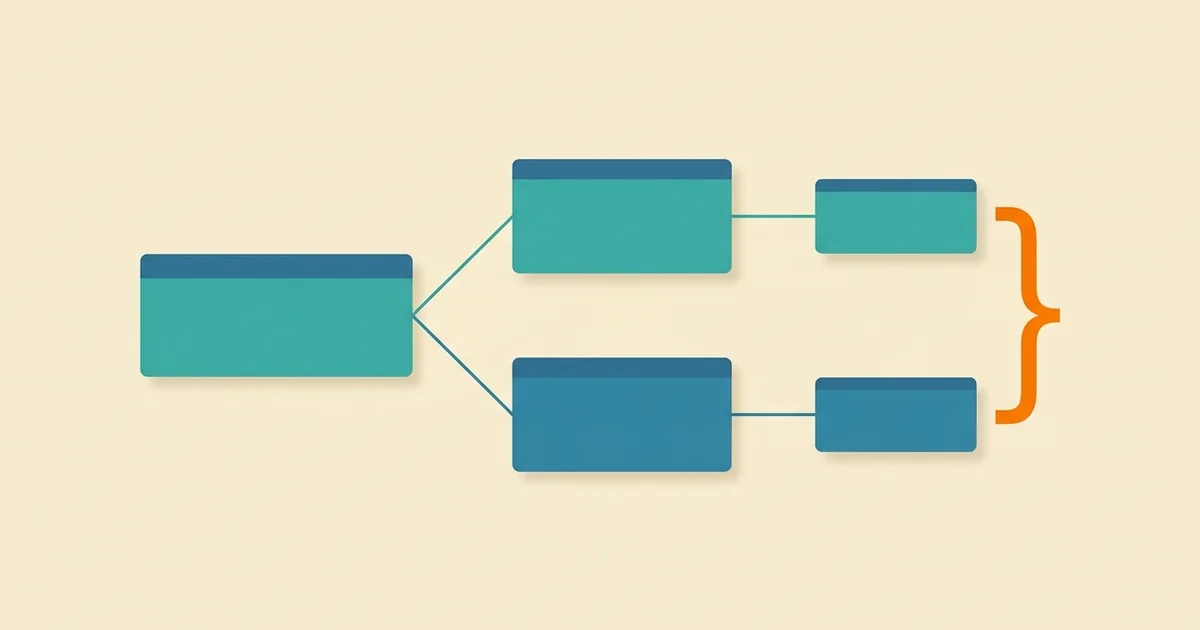
Research aims state the broad purpose of a paper, research objectives break that purpose into specific tasks, and hypotheses make testable predictions about relationships or differences. Develop the problem, questions, objectives and methods together; revise their alignment as feasibility and evidence become clearer. Hypotheses are appropriate when the design calls for a planned prediction.
Research aims and objectives: a complete student guide to aims, objectives and hypotheses
Your supervisor asks for “clear aims and objectives,” but your draft has one vague sentence, three overlapping bullet points and a hypothesis that sounds like a guess. That is where many student papers start to wobble: the topic may be approved, the readings may be relevant, yet the project still has no clean direction. Research aims and objectives are the bridge between a broad idea and a paper that can actually be planned, researched and drafted. If that bridge is weak, the literature review becomes a pile of sources, the method section loses focus and the discussion has nothing stable to answer.
Research aims state what your paper intends to achieve overall; objectives divide that aim into specific actions; hypotheses predict what you expect to find in empirical work. The three elements work best when they are aligned: one aim, several measurable or assessable objectives, and hypotheses only where your design can test them.
In this guide
- What are research aims and objectives, and how do they differ from hypotheses?
- What is the difference between aim and objectives in a student research paper?
- How do research aims objectives hypotheses fit together?
- How do you write research aims and objectives from a topic?
- How do you write research objectives that are specific and assessable?
- How do you write a hypothesis for quantitative work, and what do qualitative papers use instead?
- What mistakes do students commonly make when writing research aims objectives hypotheses?
- How can aims, objectives and hypotheses work in different disciplines?
- How do you check whether aims, objectives and hypotheses match your paper?
What are research aims and objectives, and how do they differ from hypotheses?
Research aims and objectives define the purpose and planned work of a study. A hypothesis is different: it is a testable prediction about a relationship, difference or effect. Many student papers need aims and objectives, but only some need hypotheses.
Key definitions
Research aim means the broad overall purpose of the paper. It answers “What is this study trying to achieve?” in one clear sentence.
Research objective means a specific task that helps fulfil the aim. It usually begins with an action verb such as “identify,” “compare,” “analyse,” “evaluate” or “examine.”
Hypothesis means a testable prediction, usually used in quantitative empirical research. It states what relationship or difference the researcher expects to find before analysing the evidence.
A term paper, seminar paper, research paper or capstone project can include all three, but they do not all do the same job. The aim sets direction. The objectives create a work plan. The hypothesis narrows prediction and testing.
A simple example
All study scenarios and predictions in this guide are invented teaching examples, not findings or recommended clinical or legal conclusions.
Imagine a second-year psychology paper on social media use and sleep quality among undergraduate students.
- Aim: To examine the relationship between evening social media use and self-reported sleep quality among undergraduate students.
- Objective 1: To measure average evening social media use among the participants.
- Objective 2: To assess participants’ self-reported sleep quality using a defined scale.
- Objective 3: To analyse whether evening social media use is associated with sleep quality scores.
- Hypothesis: Higher evening social media use is associated with lower self-reported sleep quality.
The aim gives the paper its destination. The objectives show what the student must do to get there. The hypothesis states the expected pattern in the data.
Where students often get confused
Students often write an aim that is really a topic: “Social media and sleep.” They also write objectives that repeat the aim in slightly different words: “To study social media,” “To understand sleep,” “To learn about students.” Those phrases do not tell the marker what will be analysed.
A useful test is to ask whether each line has a different job. If the aim, objectives and hypothesis could all be swapped without changing the paper, they are not yet defined clearly enough.
What is the difference between aim and objectives in a student research paper?
The difference between aim and objectives is that the aim describes the overall purpose, while objectives list the specific steps needed to achieve that purpose. The required number and labels depend on the assignment and discipline; one overarching aim can help organize a focused project. The aim is broad but focused; the objectives are narrower, concrete and easier to check.
Aim versus objectives at a glance
The aim sits above the objectives. It does not list every task, variable or source, but it gives the project a clear endpoint. Objectives translate that endpoint into researchable actions.
| Weak version | Stronger version |
|---|---|
| Aim: To write about remote work. | Aim: To examine the association between remote work frequency and perceived team communication in small US marketing agencies. |
| Objective: To understand stress. | Objective: To compare reported stress levels among nursing students before and after a six-week clinical placement. |
| Objective: To look at leadership. | Objective: To evaluate how transformational leadership behaviours are described in employee retention literature. |
| Hypothesis: Remote work is good. | Hypothesis: Employees working remotely three or more days per week report lower perceived informal communication than employees working remotely less often. |
The stronger versions name the context, the relationship or focus, and the type of work the paper will perform. They still leave room for research, but they are not so broad that any source could fit.
How many objectives do you need?
There is no universal objective count for an undergraduate paper, master's project or capstone. Follow the assignment brief and include only distinct objectives that the available evidence and time can support. A longer list does not by itself make a study more rigorous.
A typical pattern is:
- One objective to define or describe the research context.
- One or two objectives to analyse key themes, variables or concepts.
- One objective to compare, evaluate or test the central relationship.
- One optional objective to draw implications for theory, practice or future research.
This structure also helps later when building a chapter or section outline. If the paper’s sections do not map back to the objectives, the outline may need revision; a guide on a research question flowing into a chapter outline structure can help with that connection.
Why the distinction matters for grading
Instructors do not only ask whether your topic sounds interesting. They ask whether your paper does what it promised. If the aim says “evaluate,” but the paper only describes, the paper looks unfinished. If an objective promises to “compare,” but there are no comparison criteria, the evidence feels loose.
Clear aims and objectives protect your scope. They give you a way to decide which literature belongs in the paper, which method is suitable and what the discussion must answer.
How do research aims objectives hypotheses fit together?
Research aims objectives hypotheses fit together as a chain of logic: the problem creates the aim, the aim creates the objectives, and the objectives determine whether hypotheses are needed. Hypotheses appear when the study predicts a testable relationship or difference. If the paper is theoretical, conceptual or qualitative, research questions or propositions may fit better than hypotheses.
The alignment chain
Use the following as an alignment map rather than a mandatory sequence:
- Topic: the broad area you want to study.
- Research problem: the specific issue, gap or tension within that area.
- Aim: the overall purpose of your paper.
- Objectives: the tasks needed to fulfil that aim.
- Research questions: the questions your paper will answer.
- Hypotheses: testable predictions, if the design calls for them.
- Method and evidence: the data, sources or concepts used to answer the question.
Check these elements together and revisit them as access, methods and scope become clearer. A proposed prediction needs an explicit way to be assessed; a plausible claim alone does not establish testability.
When hypotheses are optional
Not every student paper needs a hypothesis. A quantitative study may be descriptive or exploratory without a prespecified hypothesis. A confirmatory study should state its planned prediction and analysis clearly. For example, a business capstone might test whether perceived supervisor support predicts employee engagement scores.
A qualitative paper usually uses research questions instead. For example, a qualitative education paper might ask: “How do first-year university students describe the feedback they receive on written assignments?” That wording invites interpretation of interviews or open-ended responses, not statistical hypothesis testing.
A theoretical or conceptual paper may use aims and objectives without hypotheses. It may compare concepts, critique a framework or build an argument from literature. If your paper is based mainly on published sources, a guide to thematic source clusters with a visible research gap can help you connect objectives to the literature rather than forcing an artificial prediction.
A quick alignment test
Read your aim, objectives and hypothesis as if they were one paragraph. If the hypothesis introduces a new variable that is absent from the aim, the chain is broken. If an objective promises a method you do not use, the chain is also broken.
For example, do not set an aim about “student motivation,” objectives about “attendance,” and a hypothesis about “exam scores” unless your design explains how those pieces relate. Each term needs a place in the chain.
How do you write research aims and objectives from a topic?
Start by narrowing the topic into a research problem, then write one aim that responds to that problem. Then identify the distinct objectives that describe the actual work your paper can support, using any count required by the assignment. Good objectives are easier to write after the topic has been narrowed.
From broad topic to research problem
A broad topic is not enough because it does not tell you what needs investigating. “Mental health in university students” is a subject area, not a research problem. A research problem might be: “Many universities offer online wellbeing resources, but students’ reasons for using or avoiding them are not always clear.”
That problem can produce an aim:
To examine factors influencing undergraduate students’ use of online wellbeing resources at a UK university.
From there, objectives become easier:
- To identify the online wellbeing resources available to undergraduate students at the selected university.
- To examine students’ reported awareness of these resources.
- To analyse perceived barriers to using online wellbeing resources.
- To evaluate how access, privacy concerns and perceived usefulness shape student engagement.
If your starting topic is still too broad, work through a broad idea narrowing into a focused research problem before drafting aims.
A practical five-step process
Use this process when your topic is approved but your aim still sounds vague:
- Write your topic in one phrase.
- Add a population, setting, time frame or context.
- Identify the problem, gap, debate or relationship you want to examine.
- Turn that problem into one “to + verb” aim.
- Convert the aim into three to five objectives, each with a different action verb.
For example, “food labelling” becomes “front-of-pack nutrition labelling and purchasing decisions among undergraduate students in Canada.” The aim could be “To examine how front-of-pack nutrition labels influence reported snack purchasing decisions among undergraduate students in Canada.”
Weak versus stronger student wording
| Student version | Stronger rewrite |
|---|---|
| Aim: To discuss online learning and students. | Aim: To examine the association between reported use of asynchronous learning tools and perceived academic engagement among first-year undergraduate business students. |
| Objectives: To understand online learning; to look at students; to know if it is useful. | Objectives: To identify the main asynchronous learning tools used in the course; to examine students’ reported engagement with those tools; to compare perceived engagement across lecture recordings, discussion boards and self-paced quizzes. |
| Hypothesis: Online learning helps students. | Hypothesis: Students who report higher weekly use of asynchronous learning tools also report higher academic engagement scores. |
The stronger version gives the paper boundaries. It names who is being studied, what is being examined and what evidence might answer the question.
How do you write research objectives that are specific and assessable?
To write research objectives that are specific and assessable, begin each objective with a precise action verb and name the object of analysis. Each objective needs to be narrow enough that an instructor can see whether it has been achieved. “Understand” and “explore” can be appropriate in qualitative or exploratory work when the phenomenon, context and approach are clear; the verb alone does not determine quality.
Use action verbs that match the task
Different verbs signal different types of academic work. “Describe” is not the same as “evaluate.” “Compare” requires at least two things and a basis for comparison. “Analyse” requires breaking something into parts and explaining the relationship between those parts.
Useful verbs include:
- Identify: find or name key factors, themes or variables.
- Describe: present relevant features of a context, group or concept.
- Compare: examine similarities and differences using clear criteria.
- Analyse: explain patterns, relationships or components.
- Evaluate: judge value, effectiveness or suitability against criteria.
- Test: assess a predicted relationship using data.
- Develop: produce a framework, model or set of recommendations.
Weak objective: “To understand why patients miss appointments.”
Better objective: “To identify patient-reported barriers to attending follow-up appointments after discharge from hospital care.”
Match objectives to evidence
Every objective creates an evidence demand. If you promise to measure stress, you need a measurement approach. If you promise to compare policies, you need policy documents and comparison criteria. If you promise to analyse student experiences, you need data that captures experience, such as interviews, surveys with open-ended items or published qualitative studies.
This is especially clear in quantitative papers. If an objective mentions “job satisfaction,” “academic performance” or “medication adherence,” define how that concept will be observed or measured. A paper on variables may benefit from guidance on defining quantitative variables.
Keep objectives parallel
Objectives are easier to read when they use similar grammatical structure. Do not mix full sentences, fragments and broad wishes. Keep them as short “to + verb” statements.
Example:
- To describe current attendance patterns in the selected course.
- To examine student-reported reasons for non-attendance.
- To compare attendance patterns across lecture and seminar sessions.
- To examine how students describe the relationship between class scheduling and attendance.
The objectives do not repeat each other. Each one adds a distinct piece of work that supports the aim.
How do you write a hypothesis for quantitative work, and what do qualitative papers use instead?
To write a hypothesis, state a testable prediction about the relationship between variables or the difference between groups. A hypothesis needs named variables, a direction if appropriate, and a design that can test it. Qualitative papers usually use research questions or working propositions rather than formal hypotheses.
What a testable hypothesis includes
For an association or group-comparison hypothesis, specify the following where relevant. These are not requirements for every hypothesis: a one-sample hypothesis can concern a single population parameter, and a correlation need not assign causal roles to its variables.
- Predictor, exposure or grouping variable: the factor being compared or associated with an outcome; calling it independent does not establish causation.
- Outcome: the response being examined, where the study assigns such a role.
- Population or context: the group, setting or case being studied.
- Direction: the expected relationship, if the literature supports one.
Example from health sciences:
Among adult patients discharged after cardiac surgery, higher perceived discharge education quality is associated with higher self-reported medication adherence four weeks after discharge.
This hypothesis can be tested if the student has a way to measure perceived education quality and medication adherence. Without measurement, the sentence becomes a plausible claim rather than a testable hypothesis.
Directional and non-directional hypotheses
A directional hypothesis predicts the expected direction of the relationship or difference. For example: “Higher perceived supervisor support is associated with lower turnover intention among retail employees.”
A non-directional hypothesis predicts that a relationship or difference exists, but not its direction. For example: “There is an association between perceived supervisor support and turnover intention among retail employees.”
Use a directional hypothesis when prior theory or literature gives you a reason to expect a direction. Use a non-directional version when the relationship is less settled or when your assignment brief asks for it. A directional research prediction does not automatically justify a one-sided statistical test; choose the analysis and its assumptions before examining the results.
What qualitative and conceptual papers use
Qualitative empirical work usually asks open research questions. For example, an education paper might ask: “How do master's students describe the usefulness of formative feedback in online seminars?” That question does not predict a numerical relationship. It invites themes from interviews, focus groups or open responses.
Conceptual work may use objectives such as “to compare,” “to critique” or “to develop.” For instance, a law paper might aim to evaluate how privacy-by-design principles apply to university learning analytics policies. The paper could use research questions and objectives without hypotheses.
What mistakes do students commonly make when writing research aims objectives hypotheses?
Students commonly mix up aims, objectives and hypotheses by making them either too broad, repetitive or impossible to test. The problem is rarely grammar alone; it is usually weak alignment between the paper’s promise and the evidence available. Fixing these mistakes early prevents major rewrites later.
Mistake 1: Writing an aim that is only a topic
Student example: “The aim of this paper is social anxiety in students.”
Correction: Turn the topic into a purpose: “To examine the association between social anxiety and reported class participation among undergraduate psychology students.” The revised aim names the issue, the population and the focus of analysis.
Mistake 2: Repeating the same objective three times
Student example:
- “To study motivation.”
- “To understand motivation.”
- “To look at motivation in students.”
Correction: Give each objective a separate function: “To identify common sources of academic motivation; to compare intrinsic and extrinsic motivation factors; to analyse how students describe motivation during exam periods.”
Mistake 3: Writing a hypothesis with undefined variables
Student example: “Students perform better when motivated.”
Correction: Define both sides of the claim: “Higher scores on an academic motivation scale are associated with higher final course grades among second-year undergraduate students.” The revised version states how motivation and performance could be observed.
Mistake 4: Promising causation with a design that only shows association
Student example: “This study will prove that remote work causes better productivity.”
Correction: If the design is a survey or cross-sectional comparison, use association language: “This study examines whether remote work frequency is associated with self-reported productivity.” A causal claim needs a defensible identification strategy and assumptions; project length alone does not determine whether causal inference is justified.
Mistake 5: Adding hypotheses to a purely literature-based paper
Student example: “This literature review hypothesises that restorative justice always reduces reoffending.”
Correction: Use an objective or research question instead: “To evaluate how recent literature explains the relationship between restorative justice programmes and reoffending outcomes.” A narrative review can develop or assess an argument. A systematic review or meta-analysis can also evaluate prespecified hypotheses using existing studies; collecting new participant data is not a requirement for hypothesis testing.
How can aims, objectives and hypotheses work in different disciplines?
Aims, objectives and hypotheses change slightly across disciplines because different fields use different kinds of evidence. Social science papers often connect concepts and variables, health sciences papers often focus on practice or patient outcomes, and business, education or law papers may combine policy, experience and theory. The underlying logic stays the same: purpose first, tasks second, predictions only when testable.
Social sciences and psychology example
Suppose a psychology research paper examines academic procrastination and anxiety among undergraduate students.
- Aim: To examine the relationship between academic procrastination and assessment-related anxiety among undergraduate psychology students.
- Objectives: To measure reported procrastination frequency; to measure assessment-related anxiety; to analyse the association between the two variables.
- Hypothesis: Higher academic procrastination is associated with higher assessment-related anxiety.
This example works because the variables can be defined and measured. The aim is not “to study anxiety” generally; it points to a specific relationship.
Health sciences or nursing example
A nursing capstone might focus on medication adherence among older adults receiving home care after hospital discharge.
- Aim: To evaluate factors associated with medication adherence among older adults receiving home care after hospital discharge.
- Objectives: To identify common adherence barriers; to examine the role of discharge education; to analyse whether perceived family support is associated with self-reported adherence.
- Hypothesis: Higher perceived family support is associated with higher self-reported medication adherence.
The paper would need careful language. If it uses survey data, it can examine association; it should not claim to prove that family support causes adherence.
Education, business or law example
An education course paper might examine the association between feedback timing and student engagement in online courses. A business paper might examine the relationship between remote work frequency and informal communication. A law paper might evaluate whether university learning analytics policies address consent clearly.
In a law example, formal hypotheses may not fit. The aim could be: “To evaluate how selected university learning analytics policies address student consent and data minimisation.” Objectives could include identifying relevant policy provisions, comparing them with legal principles and assessing gaps in policy wording. The paper can still be rigorous without a hypothesis.
How do you check whether aims, objectives and hypotheses match your paper?
Check alignment by comparing each aim, objective and hypothesis against the research question, literature review, method and planned discussion. If any element introduces a new concept that appears nowhere else, revise it. A good match means the paper can answer what it promised without changing direction halfway through.
The one-page alignment method
Create a simple one-page map before drafting the full paper. Put the aim at the top. Place each objective underneath it. Then add the evidence, method or section that answers each objective.
For example:
- Objective 1: Identify main barriers to online wellbeing resource use.
- Evidence: survey item on barriers; literature on help-seeking behaviour.
- Paper section: findings theme 1 or literature theme 1.
- Objective 2: Analyse privacy concerns.
- Evidence: survey responses or interview data; literature on digital privacy.
- Paper section: findings theme 2 or analysis section.
If an objective has no evidence beside it, assess whether access and any required ethics approval are feasible, revise the objective or remove it. Keep a record of substantive changes: a hypothesis developed after looking at results is exploratory and must not be presented as a prediction made beforehand.
Before you move on: aims, objectives and hypotheses checklist
- The paper has one clear aim rather than several competing aims.
- The aim names the main focus, population, setting or context.
- Each objective begins with a precise action verb.
- The objectives are not just repetitions of the aim.
- Each objective can be answered with the planned evidence.
- Any hypothesis names clear variables or groups.
- Any hypothesis uses association language unless the design supports causation.
- Qualitative or conceptual work uses research questions or propositions where hypotheses do not fit.
- The literature review is organised around the aim and objectives, not just around source summaries.
- The final discussion can return directly to every objective.
Final alignment question
Before you submit a plan or first draft, ask: “If an instructor reads only my aim, objectives and hypothesis, can they predict what my paper will actually do?” If the answer is no, revise these lines before expanding the draft. Small wording changes at this stage can prevent much larger structural problems later.
Further guidance: USC Libraries on research proposals discusses alignment between aims and methods; the CDC Field Epidemiology Manual distinguishes descriptive hypothesis generation from analytic testing; the Center for Open Science explains how to separate planned predictions from exploratory analyses. These sources address different research contexts; your assignment requirements still govern the format.
Frequently Asked Questions
What is the difference between aim and objectives?
The aim is the overall purpose of the study, while objectives are the specific tasks that help achieve that purpose. Use the number and terminology required by the assignment, with distinct objectives that support the overall purpose. The aim is broader; the objectives are more concrete and assessable.
How many research objectives should an undergraduate paper have?
There is no universal number. Follow your course or program requirements and choose objectives that each serve a distinct purpose and can be addressed with the planned evidence. Degree level alone does not set an objective count.
Do master's students need hypotheses in every research paper?
No, master's students do not need hypotheses in every research paper. Quantitative descriptive or exploratory work can use questions and objectives without a prespecified prediction. Confirmatory studies, including some evidence syntheses, can test hypotheses; qualitative and conceptual work commonly uses questions or propositions. The choice depends on the research type and assignment brief.
How do I know if my hypothesis is testable?
A hypothesis is testable if it names variables or groups and can be checked against evidence. “Motivation improves learning” is too vague; “Higher academic motivation scores are associated with higher final course grades” is testable if both measures are available. If you cannot say what data would support or challenge it, revise it.
Can a literature review have aims and objectives?
Yes, a literature review can and usually should have aims and objectives. The aim states what the review intends to examine, and the objectives define tasks such as identifying themes, comparing findings or evaluating gaps. A literature review normally does not need a hypothesis unless the assignment asks for a specific hypothesis-led review.
Should I write aims and objectives before the research question?
You can draft them in either order, but they need to match. Many students start with a research question, then write an aim and objectives from it. Others draft the aim first, then turn it into a research question; the key is that no element introduces a different focus.