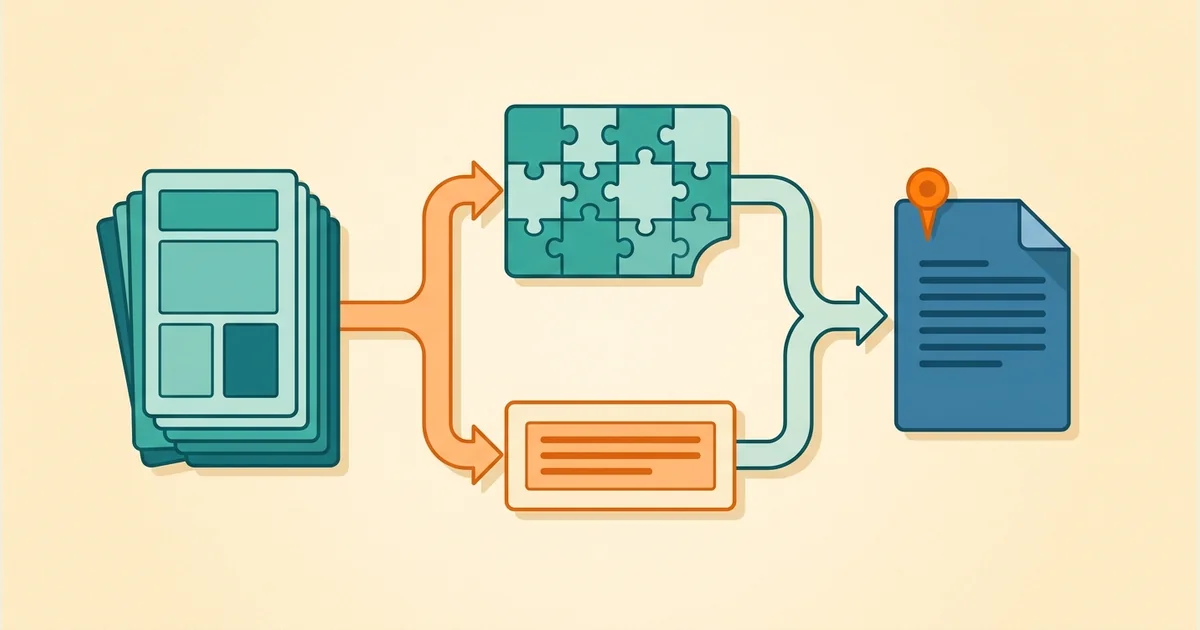
To avoid plagiarism, use sources by making clear which ideas are yours, which ideas come from others, and where each borrowed idea can be found. Paraphrase by changing both wording and structure, quote when exact language matters, and cite every source in the required style.
How to Avoid Plagiarism When Using Sources
You have five browser tabs open, three PDFs marked up, and a paragraph that suddenly sounds too much like the article you just read. The problem is not always laziness or dishonesty. Often, plagiarism happens because students take notes too close to the original wording, forget where an idea came from, or think changing a few words is enough. If your assignment asks for a literature review, research paper, seminar paper, or capstone project, you need to use other scholars’ work without letting it replace your own argument. That means separating your voice from source material, deciding when to quote, learning how to paraphrase properly, and keeping citations attached to claims from the first draft onward.
To avoid plagiarism, make every borrowed idea traceable and every source contribution visible. Use quotation marks for exact wording, paraphrase by rebuilding the idea in your own sentence structure, and cite both quoted and paraphrased material according to your required style.
In this guide
- What counts as plagiarism when you use sources
- How do you avoid plagiarism before you start writing
- What is the difference between quoting vs paraphrasing
- How can you practice paraphrasing without plagiarizing
- How do you use sources correctly in different types of academic papers
- What mistakes do students commonly make when avoiding plagiarism
- How do citations and reference lists prevent plagiarism
- How can you check your draft before submission
What counts as plagiarism when you use sources?
Plagiarism involves presenting another person’s words, ideas, data or distinctive reasoning without adequate attribution. Unmarked copying and excessively close paraphrase can remain problematic even when a source is listed. Reuse of your own submitted or published work is a separate disclosure and permission issue governed by the assignment and institutional rules.
Plagiarism is more than copied sentences
Direct plagiarism means copying exact wording without quotation marks and citation. If a student pastes a sentence from an article into a paper and adds only an in-text citation at the end, the problem is not fully solved: exact wording still needs quotation marks or block quote formatting.
Patchwriting means keeping the source’s sentence structure while swapping a few words. For example, changing “social support predicts lower academic stress among first-year students” to “peer support predicts reduced academic pressure among new university students” may still be too close if the structure and idea are lifted without proper transformation.
Idea plagiarism happens when a student uses an argument, framework, interpretation, or explanation from a source without citation. Even if the wording is original, the intellectual source still needs credit.
Common knowledge versus source-based claims
Common knowledge depends on the audience and discipline. Widely established facts may not need a citation, but a specific interpretation, research finding or distinctive explanation still does. If a detail is contested or you are unsure whether readers can be expected to know it, check an appropriate source and the course guidance.
A source-based claim is a claim that depends on research, interpretation, data, or a specific scholarly argument. For example, “remote work may reduce informal mentoring opportunities for junior employees” should be cited if you learned it from management research. The same applies to claims about medication adherence, learning outcomes, survey findings, case law interpretation, or psychological theories.
When unsure, cite. Over-citation can be revised, but missing attribution can create a serious academic integrity problem.
How do you avoid plagiarism before you start writing?
You avoid plagiarism before drafting by keeping sources, notes, and your own ideas separate from the beginning. Good source management makes it harder to accidentally copy wording or lose citation details. A paper plan also helps you use sources to support your argument instead of letting sources dictate the structure.
Build a source record before taking notes
Create a simple source record for every article, book chapter, report, or dataset you read. Include the author, year, title, journal or publisher, DOI or URL, page numbers, and the reason you saved the source. If your institution requires APA, MLA, Chicago, Harvard, or another style, collect the details needed for that style early.
Reliable source tracking also helps you avoid citing weak or non-academic material. If you are still gathering sources, the guide on reliable academic sources connected through DOI verification can help you check whether a source is suitable for academic use.
Use three separate note labels:
- Quote: exact words copied from the source, with page number.
- Paraphrase: your rebuilt version of the idea, with citation details.
- My point: your own interpretation, criticism, connection, or planned argument.
Plan paragraphs around your argument
Many plagiarism problems begin when a paragraph is built around one article rather than around a claim. A paragraph that simply follows a source sentence by sentence is likely to copy structure, even if the wording changes.
Start with your own paragraph purpose: what do you need this paragraph to prove, compare, define, or question? Then select source evidence that serves that purpose. For help making paragraph claims, evidence, and analysis work together, see academic paragraph structure.
Use a source-to-claim map
A source-to-claim map prevents accidental source dumping. It connects each source to the role it plays in your paper.
- Write your planned claim in your own words.
- List the sources that support, qualify, or challenge that claim.
- Add page numbers for exact details.
- Mark whether each source will be quoted, paraphrased, or used for background.
- Draft the paragraph from the claim first, then insert evidence.
This process is especially useful in literature reviews, where students often drift into summary. If your paper depends on comparing sources by theme, the article on source evidence synthesized into a central literature review claim may help you move from listing studies to building an argument.
What is the difference between quoting vs paraphrasing?
Quoting uses the source’s exact words inside quotation marks or a block quote, while paraphrasing restates the source’s idea in your own wording and sentence structure. Both require citation. The choice depends on whether the original wording itself matters or whether you mainly need the idea, finding, definition, or evidence.
When quoting is the better choice
Use a quote when the exact wording is significant. This may happen when a legal phrase, policy definition, interview excerpt, theoretical concept, or author’s phrasing is central to your analysis.
For example, a law seminar paper might quote a statutory phrase because the wording affects interpretation. A qualitative education paper might quote a teacher’s interview response because the participant’s exact language shows uncertainty, resistance, or meaning-making. A psychology paper might quote a short definition of a construct if the author’s wording is being examined directly.
Keep quotes short unless your instructor expects close textual analysis. A paragraph filled with long quotations often weakens your voice. After quoting, explain what the quote means and how it supports your claim.
When paraphrasing is the better choice
Paraphrase when the idea matters more than the original wording. Most research papers, capstone projects, and term papers rely more on paraphrase than quotation because academic writing usually asks you to interpret and connect sources.
A nursing student writing about medication adherence after hospital discharge might paraphrase several studies on patient education, follow-up calls, and family support. The exact wording of each study may not matter; the pattern across findings does.
A business student writing about remote employee onboarding might paraphrase research on socialization tactics, manager check-ins, and informal knowledge sharing. Again, the goal is not to reproduce the article’s phrasing but to use its findings as evidence.
Weak versus stronger source use
| Student version | Problem | Stronger rewrite |
|---|---|---|
| “The study says that stress is bad for students and affects their grades.” | Too vague; no clear source role; informal wording. | “Recent research links academic stress with lower self-reported wellbeing and reduced study engagement among first-year students (Author, Year).” |
| “Nurses should educate patients because education improves adherence.” | Broad claim with no context or evidence detail. | “In discharge planning, patient education appears most useful when paired with follow-up support, especially for older adults managing multiple medications (Author, Year).” |
| “The author states that remote work reduces collaboration.” | Depends too heavily on one source’s phrasing and gives no analysis. | “Remote work may reduce spontaneous collaboration when teams lack planned communication routines, although structured check-ins can partly offset this effect (Author, Year).” |
How can you practice paraphrasing without plagiarizing?
Paraphrasing without plagiarizing means reading the source, closing it, restating the idea from memory, changing the sentence structure, and checking that the meaning remains accurate. A good paraphrase is not a synonym exercise. It shows that you understand the idea well enough to rebuild it for your own argument.
Use a five-step paraphrasing process
An adequate paraphrase expresses the relevant meaning accurately in your own wording and structure and clearly attributes the source; a change of wording alone is not a guarantee.
- Read the source passage until you can explain it without looking.
- Identify the core idea, not every word.
- Close the source or move it out of view.
- Write the idea in a new sentence pattern that fits your paragraph.
- Reopen the source and check accuracy, citation details, and any technical terms.
Technical terms do not always need changing. In psychology, terms such as “working memory,” “self-efficacy,” or “cognitive load” have established meanings. In nursing, “medication adherence” and “discharge planning” are standard terms. Changing them into odd substitutes can make your writing less accurate.
Compare source wording with your paraphrase
Here is a realistic example of weak and stronger paraphrasing.
Source idea: “Students who receive timely formative feedback are more likely to revise their work before final submission.”
Weak: “Students who get quick formative feedback are more likely to change their assignments before submitting them.”
Stronger: “Revision before final submission is more likely among students receiving timely formative feedback (Author, Year).”
The weak version keeps the source’s structure and swaps only a few words. The stronger version changes the sentence pattern while retaining the association in the fictional source statement. It does not add a causal explanation. Replace the placeholder with a source you have read before using such a claim in a paper.
Keep the meaning narrower than you think
Students often overstate a source when paraphrasing. If a study found an association, do not rewrite it as proof of cause. If a sample involved first-year undergraduates at one university, do not make the claim about all students.
In a health sciences paper, “a patient reminder app was associated with improved appointment attendance in one outpatient clinic” is not the same as “apps improve healthcare compliance.” In a business paper, “employees reported stronger team connection after weekly manager check-ins” is not the same as “remote work problems can be solved by meetings.”
Accurate paraphrasing protects both academic integrity and argument quality.
How do you use sources correctly in different types of academic papers?
You use sources correctly by matching the source role to the paper type: background, theory, method justification, evidence, comparison, or interpretation. A research paper, literature review, seminar paper, and conceptual paper do not use sources in exactly the same way. The safest approach is to identify what each source is doing in your paragraph before drafting.
Source use in empirical research papers
In quantitative empirical work, sources often justify variables, hypotheses, measures, and interpretations. For example, a psychology student studying sleep quality and academic stress might cite previous research to define the variables, explain why a relationship is expected, and compare their findings with earlier results.
In qualitative empirical work, sources help frame the topic and interpret themes, but they should not replace participant data. An education student analysing teacher interviews about classroom AI tools might cite studies on technology adoption, then use participant quotes as primary evidence.
For undergraduate and master’s projects, your instructor may expect a clear distinction between previous research and your own findings. Citation helps maintain that boundary.
Source use in literature reviews
A literature review is not a chain of summaries. It uses sources to identify patterns, tensions, gaps, and debates. If each paragraph begins with a different author’s name and ends after one study, the review may read like an annotated bibliography rather than a structured argument.
Group sources by theme, method, theory, or finding. For example, a nursing literature review on medication adherence after discharge might group studies into patient education, caregiver involvement, digital reminders, and follow-up care. The paragraph should explain how the sources relate, not just what each one says.
Source use in theoretical or conceptual work
Theoretical and conceptual papers rely heavily on sources, but plagiarism risk can rise because the paper may discuss abstract ideas from many authors. If you borrow a model, definition, typology, or conceptual distinction, cite it.
A management paper comparing transformational leadership and servant leadership should not blend definitions without attribution. A conceptual education paper on learner autonomy should make clear which framework comes from which scholar and where the student’s own synthesis begins. For structure support, see theory-to-argument structure for a conceptual paper.
What mistakes do students commonly make when avoiding plagiarism?
Students commonly make plagiarism-related mistakes by changing wording too lightly, citing only at paragraph ends, losing page numbers, overusing quotations, or treating AI-generated summaries as source substitutes. These errors are usually fixable if caught early. The key is to make source boundaries visible in every paragraph.
Specific mistakes and better fixes
-
The synonym-swap paraphrase
Student example: “Motivated students demonstrate superior performance when encouraged by teachers.”
The source said, “Students perform better when motivated by teacher encouragement.”
Correction: Rebuild the idea: “In the source’s account, better performance is linked to motivation from teacher encouragement (Author, Year).” -
The paragraph-end citation pile-up
Student example: “Medication adherence is affected by education, family involvement, cost, and follow-up appointments. Older patients may forget instructions after discharge. Nurses can improve outcomes through counselling (Author, Year; Author, Year; Author, Year).”
Correction: Place citations next to the specific claims they support so readers can see which source supports which point. -
The quote without analysis
Student example: “The participant said, ‘I felt like nobody explained the new system properly.’ This shows technology issues.”
Correction: Explain the interpretive point: the quote suggests that resistance may reflect poor implementation support rather than rejection of the technology itself. -
The missing page number note
Student example: “Good quote about feedback from article — add citation later.”
Correction: Record page numbers immediately for direct quotes and for paraphrases based on specific passages. “Add citation later” often becomes “source lost.” -
The source-mask summary
Student example: “Some online summaries say this theory means people learn through observation.”
Correction: Read and cite the original or a credible academic source. Summaries can help orientation, but they do not replace scholarly evidence.
Before and after revision example
| Weak student draft | Stronger academic revision |
|---|---|
| “Many studies say feedback is good because students can improve their work. Feedback helps students understand mistakes and become more confident.” | “Formative feedback can support revision when students receive it early enough to act on it. In assessment research, feedback is treated not only as correction but as information students use to close the gap between current and expected performance (Author, Year).” |
| “The article talks about nurses and how patients do not take medicine correctly after leaving hospital.” | “Research on post-discharge care suggests that medication adherence can be affected by patient understanding, regimen complexity, and the availability of follow-up support (Author, Year).” |
How do citations and reference lists prevent plagiarism?
Citations and reference details identify the sources of borrowed material, but they do not by themselves correct unmarked quotations, inaccurate paraphrases or unsupported claims. Make source boundaries clear and follow the required citation style, including any exceptions to reference-list entries.
In-text citations connect claims to sources
An in-text citation is the brief source marker inside the body of your paper. Depending on the style, it may look like “(Author, Year),” a footnote number, or another format.
Use an in-text citation when you:
- quote exact wording;
- paraphrase an idea, finding, definition, or argument;
- use data, statistics, or a figure from another source;
- refer to a theory, model, framework, or method developed by others;
- summarise a study or compare multiple studies.
If you are using APA, the guide on APA 7 citation structure can help you format author names, years, page numbers, and reference entries.
Reference lists give the full trail
A reference list is the full list of sources cited in your paper. It usually appears at the end and includes enough information for a reader to locate each source.
Distinguish a reference list from a broader bibliography if your assignment uses both. Match citations and entries according to the required style, allowing its specific exceptions. Verify details against the version you consulted rather than adding unread sources from another article’s reference list.
A citation manager can reduce errors, but it will not decide whether a claim needs citation. That judgement still belongs to you.
Citation table: unclear versus clear attribution
| Unclear source use | Why it risks plagiarism | Clearer version |
|---|---|---|
| “Research proves that social media damages mental health.” | Overstates evidence and gives no source. | “Some studies associate heavy social media use with lower self-reported wellbeing among adolescents (Author, Year).” |
| “According to researchers, patients forget medication instructions.” | No identifiable source. | “Author (Year) found that older patients often struggled to recall discharge medication instructions during home recovery.” |
| “The theory says employees need autonomy.” | Theory not named or cited. | “Self-determination theory identifies autonomy as one condition linked to motivation (Author, Year).” |
| “This method is valid because it has been used before.” | No methodological support. | “The survey items were adapted from a previously published measure of work engagement (Author, Year).” |
How can you check your draft before submission?
Check your draft by reviewing every paragraph for source boundaries, quotation marks, citation placement, paraphrase quality, and reference-list matches. A plagiarism checker can detect some text overlap, but it cannot judge whether your paraphrase is conceptually fair or whether your citation supports the claim. Human review is still needed before submission.
Review paragraph by paragraph
Read each paragraph and ask: what is my claim, what came from a source, and where is the citation? If you cannot answer quickly, the paragraph needs revision.
Use colour coding if helpful. Mark your own claims in one colour, paraphrased source ideas in another, and direct quotes in a third. This makes overdependence on sources visible. If a paragraph is almost entirely source material, add your own analysis or restructure it around a clearer topic sentence.
Check that direct quotes are exact. Even small wording changes inside quotation marks can misrepresent the source. If you changed wording for grammar, use brackets or revise the sentence so the quote remains accurate.
Use similarity reports carefully
A similarity report is not the same as a plagiarism verdict. It may flag properly quoted material, reference entries, common phrases, or assignment titles. It may also miss close paraphrases that keep the original structure.
Look at the matched passages, not only the percentage. A low percentage can still hide a serious copied paragraph. A higher percentage may be acceptable if it comes from references, required templates, or correctly quoted passages. Follow your institution’s rules for draft checking and resubmission.
Before you move on: source use checklist
- I can identify which ideas in each paragraph are mine and which come from sources.
- Every direct quote has quotation marks or block quote formatting.
- Every quote includes a citation and page number where required.
- My paraphrases change sentence structure, not only individual words.
- I have not overstated what any source found or argued.
- Citations appear near the claims they support.
- Citations and reference entries match under the required style, including its stated exceptions.
- Every reference-list entry is cited in the paper.
- I recorded page numbers for specific passages, definitions, and quotations.
- I used sources to support my argument rather than letting them replace it.
- I checked my institution’s preferred citation style before final formatting.
Read the sources and guidance: These resources expand the discussion; apply them in relation to your paper type and course requirements.
Frequently Asked Questions
What is the difference between quoting and paraphrasing?
Quoting uses the source’s exact words, while paraphrasing restates the source’s idea in your own wording and sentence structure. Both need citations. Use quotes when the wording itself matters, and use paraphrase when the idea or finding is what you need.
How many words can I copy before it counts as plagiarism?
There is no safe number of copied words. If you use exact wording from a source, place it in quotation marks or a block quote and cite it. Even a short distinctive phrase may need quotation marks if it belongs to the source.
How long should a paraphrase be?
A paraphrase can be shorter, similar in length, or longer than the original passage, depending on what your paragraph needs. The main test is not length but independence: the wording and structure must be your own while the meaning remains accurate. A citation is still required.
Can undergraduate students use the same source several times in one paper?
Yes, when each use is relevant and the source remains clear. Under APA, a paraphrase may continue for several sentences without repeating the same citation if the attribution is unambiguous; reintroduce the citation in a new paragraph or when the source changes. Repeated use should serve the task rather than compensate for missing relevant evidence.
Do master’s students need page numbers for paraphrases?
Follow the required style, regardless of degree level. In APA 7, a page or paragraph number is optional for a paraphrase and can help locate a passage in a long or complex work; it is not made mandatory merely because the claim is specific. Direct quotations normally need a locator appropriate to the source.
Can plagiarism happen even if I include a reference list?
Yes, plagiarism can still happen if the body of the paper does not show where specific words or ideas came from. A reference list alone does not connect each claim to its source. You need in-text citations, quotation marks for exact wording, and accurate paraphrasing.