APA 7 connects author-date citations with reference entries for recoverable works. Check the actual author, date, title and source; format quotations by length and use an appropriate locator. Personal communications and your own research participants have different treatment. Never invent bibliographic details or copy a placeholder as a real source.
APA 7 citation: a complete guide for students
You finally found the source that supports your paragraph, but now the APA 7 citation feels like a puzzle: the journal article has eight authors, the website has no date, the report has an organisation instead of a person, and your lecturer still expects every bracket and full stop to be right. The problem is rarely that students do not care about citation. The problem is that APA looks simple until you need to apply it to messy real sources: online articles, edited books, datasets, policy reports, lecture materials, and sources quoted inside other sources. If you are planning or drafting a term paper, seminar paper, research paper, or capstone project, APA 7 works best when you treat citation as part of your writing process, not as formatting you rush through at the end.
APA 7 connects author-date citations to reference entries for recoverable works. Verify the source itself, identify its type and check the applicable pattern. Quotations need appropriate formatting and location information; personal communications and your own research participants are handled differently.
How to use the examples: names and years in citation-only exercises are fictional formatting examples. Sentences marked as practice claims are hypothetical, not research findings or clinical advice. Square-bracket fields such as [verified source] and [DOI if assigned] are instructions to replace, not publishable citations. The journal reference explicitly marked “Verified example” is a real bibliographic record.
In this guide
- What is APA 7 citation and when do students use it
- How do APA 7 in-text citations work
- How do you format an APA 7 reference list
- How do you cite common sources in APA 7
- How do APA reference examples differ for journals books websites and reports
- How do you cite sources in different academic fields using APA 7
- What mistakes do students commonly make when writing APA 7 citations
- How can you check and revise APA citation format before submission
What is APA 7 citation and when do students use it?
APA 7 citation is the author-date referencing style from the 7th edition of the American Psychological Association style manual. Students use it to show where ideas, evidence, quotations, tables, statistics, theories, and definitions come from. It is common in psychology, education, health sciences, business, social sciences, and many interdisciplinary courses.
The basic APA 7 logic
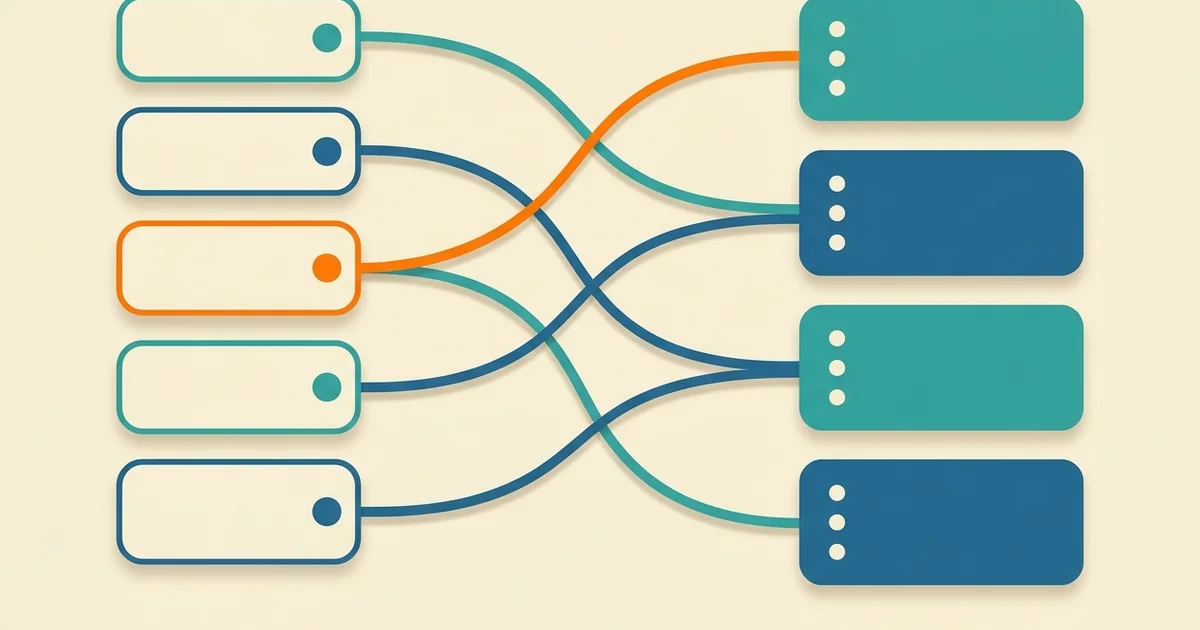
An in-text citation attributes material within the paper. A reference entry identifies the recoverable work. Check author, date, title and source against the work itself; these are the four reference elements described by APA.
Most citations and entries correspond, with exceptions. Personal communications, such as a private email unavailable to readers, are cited in text rather than listed as references. Quotations from your own research participants are research data: do not give them author-date or personal-communication citations or reference entries. Protect confidentiality and follow the study's agreements.
Where APA 7 appears in student papers
APA citation format appears throughout an academic paper, not only in the final reference list. You will use it in literature reviews, conceptual frameworks, methodology sections, findings discussions, and sometimes tables or figures.
For example, a psychology student writing about test anxiety may cite a theory in the introduction, several empirical studies in the literature review, a measurement scale in the method section, and statistical reporting guidance in the results. If you are still building the evidence base for a literature review, it helps to connect citation work with source evaluation rather than saving it for the final edit. Texio’s guide on finding and checking academic sources is useful when you need to check whether a source is scholarly enough before adding it to your paper.
APA 7 citation versus plagiarism prevention
Citation does not automatically make source use ethical. Paraphrase accurately, format exact wording as a quotation, and acknowledge borrowed ideas and structure. Short quotations and block quotations use different layouts, as explained below.
Attribute borrowed ideas, findings, wording and data clearly. What counts as common knowledge depends on the audience and discipline; when uncertain, check the source and assignment expectations rather than assuming that a broad sentence needs no support. A precise empirical claim needs evidence that actually supports it.
How do APA 7 in-text citations work?
Use an author and year for the work you are citing, with a locator for exact quotations. Choose parenthetical or narrative form to fit the sentence. A formatted citation does not establish that a source exists or supports the claim.
Parenthetical and narrative citations
In a parenthetical citation, the author and year appear in parentheses: (Rivera, 2022). In narrative form, the author is part of the sentence: Rivera (2022). Rivera is a fictional name used here to show syntax.
These practice claims illustrate the difference between broad and specific writing. They deliberately use evidence placeholders rather than invented studies:
| Weak student version | More precise practice version |
|---|---|
| “Anxiety affects students.” | “In [specified sample], [verified source] reported an association between test-anxiety scores and [measured outcome].” |
| “Communication training helps nurses.” | “In [specified setting], [verified source] compared [training] with [comparison] using [measured communication outcome].” |
| “Social media affects business.” | “In [specified sample], [verified source] reported a relationship between [engagement measure] and [purchase-intention measure].” |
Precision is useful only when the source supports the details. Replace every field with checked information and use causal language only when the evidence and design justify it.
One author, two authors, and three or more authors
For a fictional one-author work: (Patel, 2023) or Patel (2023). For two authors: (Garcia & O’Neill, 2020) or Garcia and O’Neill (2020). Include both surnames each time.
For three or more authors, normally use the first surname and “et al.” from the first citation: (Chen et al., 2021). Do not italicize “et al.”; the period follows “al.” If two works would shorten to the same form, add names to distinguish them. Check APA's author-date rules for ambiguity, same-author/year letters and group abbreviations. Reference entries use separate author-count rules.
Direct quotations and page numbers
For a quotation from a paginated source, give the page number. Without pages, use a suitable locator such as a paragraph number or section heading; do not invent a page. A paraphrase normally needs author and year, with a locator optional when it helps readers.
Invented wording for formatting practice: “The draft needs a clearer link” (Rivera, 2022, p. 48). This is not a quotation from a real work.
Under APA's quotation guidance, quotations below 40 words use quotation marks; 40 words or more use a separate indented, double-spaced block without quotation marks. For a parenthetical block citation, put the citation after the final punctuation. Select quotations because their wording matters and explain their relevance.
Multiple sources in one citation
For different-author works supporting the same point, alphabetize the parenthetical citations and separate them with semicolons. Fictional syntax example: (Ahmed, 2020; Lopez & Grant, 2021; Peters et al., 2019). Each work must support the claim and have an appropriate entry.
Citation chains do not replace synthesis. The guide on building an academic paragraph can help connect sources to a central point.
If you only read a later work that quotes an unavailable original, identify the original in text and use “as cited in” the work you actually read. List only that consulted work. APA's secondary-source guidance recommends finding and reading the original where possible.
How do you format an APA 7 reference list?
Start a new page headed References, centered and bold. Double-space the list, alphabetize entries and use a 0.5-inch hanging indent. Match entries to cited works, accounting for the exceptions above. Follow any additional assignment requirements.
The four-part reference pattern
Use the author, date, title and source elements, adapting them to the work's type. A journal entry identifies the journal and publication details; a book identifies its publisher; a webpage identifies the site where needed and a URL. Missing information changes the pattern rather than licensing a guess.
In reference entries, list surnames and initials for up to 20 authors. With 21 or more, give the first 19, an ellipsis, then the final author, without an ampersand. These rules differ from in-text “et al.” See APA's reference-element guidance.
Reference list formatting rules students forget
Use sentence case for article, chapter, book and webpage titles; capitalize proper nouns and the first word after a colon. Journal titles use title case. Italicize book and webpage titles; for journal articles, italicize the journal title and volume, not the article title or issue number.
Present an assigned DOI as a DOI URL. A template such as https://doi.org/[assigned DOI] is not a real identifier. Never invent one.
Most URLs do not need “Retrieved from.” A retrieval date is for content designed to change that has no archived version. Use the date attributable to the cited content rather than a site's general copyright or review date.
Alphabetising and matching entries
Order entries by the first author's surname or the full group author. For a work without an author, use the title and disregard an initial “A,” “An” or “The” when alphabetizing. Use the full group name in the reference entry even if you introduce an abbreviation in the text.
Check narrative as well as parenthetical citations. Match recoverable works in both directions, and handle personal communications, participant quotations and secondary sources according to their specific rules. A separate bibliography requested by an instructor is not the same as an APA reference list.
How do you cite common sources in APA 7?
To cite common sources in APA 7, identify the source type first and then apply the matching reference pattern. Journal articles, books, edited book chapters, websites, and reports each arrange the same basic information differently. The safest method is to build the reference from the source itself rather than copying a citation from a database without checking it.
Journal article with DOI
Identify the journal title, volume, issue when supplied, page range or article number, and assigned DOI. Do not manufacture missing publication details.
Verified example, checked against the publisher's record:
Sijtsma, K. (2009). On the use, the misuse, and the very limited usefulness of Cronbach’s alpha. Psychometrika, 74(1), 107–120. https://doi.org/10.1007/s11336-008-9101-0
In-text: (Sijtsma, 2009) or Sijtsma (2009). This reference demonstrates formatting; read the paper before using it to support a substantive claim.
Use APA's journal examples for variations such as article numbers and advance online publication.
Book and ebook
Template, not a published book:
Author, A. A. (Year). Title of book (edition other than the first, if supplied). Publisher. [DOI or appropriate URL if applicable]
Print and ebook entries follow the same basic pattern. Include a DOI when assigned; an ordinary academic-database ebook without one usually ends with the publisher. An ebook available at a suitable stable public URL can include it. Omit the device, file format and publisher location. Check APA's book examples.
Edited book chapter
Template, not a published chapter:
Chapter Author, A. A. (Year). Title of chapter. In E. E. Editor & F. F. Editor (Eds.), Title of book (pp. [first page]–[last page]). Publisher. [DOI or appropriate URL if applicable]
Use the chapter author in text when citing that chapter. The book editors belong in the reference's source element. For a chapter in a single-author book, check whether the whole authored book should be referenced instead.
Website or webpage
For an ordinary webpage, italicize the page title, not the website name. Use a content-specific publication/update date when available; do not substitute a general website footer date.
Template, not a real webpage:
Group Author. (Year, Month Day). Title of page. Site Name. [URL of the page]
If author and site name are identical, omit the site name. With an individual author, use that person's name. Consult APA's webpage examples, including the rule for changing, unarchived content.
How do APA reference examples differ for journals books websites and reports?
APA reference examples differ because each source type gives readers different retrieval information. A journal article needs journal, volume, issue, pages, and DOI; a book needs a publisher; a webpage needs a site name and URL; a report may need a report number and organisational publisher. The punctuation looks fussy, but the structure follows the reader’s route back to the source.
Side-by-side source comparison
These are replacement templates, not references to real works. Bracketed fields must be completed from the actual source; omit elements that the applicable APA pattern does not require.
| Source type | In-text pattern | Reference pattern | Check |
|---|---|---|---|
| Journal article | (Author, Year) | Author, A. A. (Year). Article title. Journal Title, volume(issue), [pages or article number]. [Assigned DOI] | Italicize journal and volume, not article title |
| Book | (Author, Year) | Author, A. A. (Year). Book title. Publisher. [DOI if assigned] | No publisher location |
| Edited chapter | (Chapter Author, Year) | Chapter Author, A. A. (Year). Chapter title. In E. Editor (Ed.), Book title (pp. [pages]). Publisher. [DOI if assigned] | Cite the chapter author |
| Webpage | (Group Author, Year) | Group Author. (Year, Month Day). Page title. [Site name if different]. [URL] | Date belongs to the page's content |
| Report | (Group Author, Year) | Group Author. (Year). Report title ([Report number if supplied]). [Publisher if different]. [DOI or URL if applicable] | Do not invent a report number |
Reports and organisational authors
Check whether the report names individual authors or a group. Include a supplied report number after the italicized title. Do not repeat a publisher that is identical to the author. For government reports, distinguish the responsible agency from a parent agency that may appear as publisher; see APA's government-report example.
A source's being a report does not establish its credibility or make it equivalent to a peer-reviewed study. Evaluate its methods and relevance separately.
No author, no date, and missing information
Use “n.d.” when no publication date can be established. With no author, move the title to the author position and use a shortened title in text when appropriate. With no title, supply a bracketed description. Do not treat missing bibliographic information as proof that a source is false, or fill a gap with invented information.
Follow APA's missing-information guidance. For journal articles without DOIs obtained from ordinary academic databases, usually omit database URLs. Proprietary or limited-circulation database material can have different requirements. Use APA's DOI/URL decision rules rather than adding any available link.
How do you cite sources in different academic fields using APA 7?
APA 7 citation works across disciplines, but source use differs by field. Psychology papers often cite empirical journal articles and measurement scales, health science papers cite clinical guidelines and systematic reviews, and business or education papers may cite reports, case studies, or policy documents. The citation format stays consistent while the type of evidence changes.
Social sciences and psychology example
Hypothetical planning exercise: a paper on social-media use and sleep might need sources for a construct, a measurement instrument and an observed relationship. Those are different evidential roles. Do not replace them with a made-up author-year citation.
Practice sentence: “In [sample], [verified source] reported an association between [defined use measure] and [sleep measure].” Fill the fields only after reading the source. Use the guide on defining quantitative variables to connect constructs with the measures actually used.
Health sciences and nursing example
Hypothetical planning exercise: a nursing paper might compare a study, a guideline and a hospital policy. Identify which kind of work supports each sentence. A study about a defined outcome is not automatically a practice recommendation, and a policy is not automatically evidence that an intervention works.
Practice sentence: “[Verified source] evaluated [intervention] in [setting], using [outcome].” This is a writing prompt, not a clinical finding. Cite the actual individual or organizational author and verify the version/date of any guideline.
Education and business example
Hypothetical planning exercises: an education paper could investigate feedback and revision; a business paper could investigate service recovery and purchase intention. Find evidence for the specific measures, sample and relationship before writing the sentence.
Practice sentence: “[Verified source] reported [relationship] between [measure A] and [measure B] in [sample].” Do not turn an association into a causal effect by changing the wording. The citation must identify a real work you consulted.
What mistakes do students commonly make when writing APA 7 citations?
Students commonly make APA 7 citation mistakes when they copy a format without identifying the source type, cite too broadly, or fail to match in-text citations with the reference list. The errors are usually fixable once you check the author, date, title, and source details. The biggest risk is leaving citation checks until the night before submission.
Mistake patterns and corrections
- A precise claim with an unverified citation: check the actual source and passage. A realistic author, year or DOI-shaped string is not evidence.
- Wrong author for a chapter: cite the chapter author in text, and put the editors in the reference's source element.
- Using “et al.” in a reference entry: apply the reference-entry author rules instead of the shorter in-text rule.
- An unsuitable database link: include an assigned DOI where available; apply the DOI/URL rules when no DOI exists.
- Quotation without location or correct layout: verify exact wording and locator, then choose short-quotation or block format by length.
Before-and-after citation repair
Do not repair an incomplete reference by guessing initials, page ranges, a journal or a DOI. Make an evidence checklist instead:
Incomplete record: [Author surname], [topic note], [unverified date], [database search link].
Repair task: open the actual work; transcribe its author and publication details; identify its type; then apply the relevant APA format. Leave unresolved fields marked in your working notes rather than disguising them as a finished reference.
The verified journal example above shows a completed entry. Templates elsewhere in this guide are not ready-to-submit references.
How can you check and revise APA citation format before submission?
You can check APA citation format by comparing every in-text citation with the reference list, verifying source types, and correcting punctuation, italics, dates, and DOI or URL format. Citation software can help, but it still needs human checking. A clean citation check is fastest when you work systematically rather than rereading randomly.
A practical APA citation checking process
Use this process after your draft has a stable structure. If you are still moving whole sections around, first make sure your paper plan and argument flow are set; the guide on turning assignment requirements into a plan can help if your sources are not yet tied to the task.
- Review both narrative and parenthetical citations. Searching only for an opening parenthesis can miss author names integrated into a sentence. Check author, year and quotation locators.
- Open your reference list beside the draft. Match citations for recoverable works to entries, applying the personal-communication, participant-data and secondary-source rules above.
- Check the reverse direction. Every reference list entry should appear in the paper unless your instructor allows background reading lists.
- Identify each source type. Mark journal article, book, edited chapter, webpage, report, dataset, or other source.
- Compare each entry with the correct APA pattern. Fix italics, title case, sentence case, issue numbers, publishers, DOI, and URL.
- Check duplicate years by the same author. Use 2022a and 2022b when required.
- Review quotations separately. Check wording and locator; use quotation marks for short quotations and block layout without quotation marks at 40 words or more.
- Run a final alphabetisation check. Reference entries must follow APA ordering rules.
Before you move on: APA 7 citation checklist
- Citations and entries correspond, with personal communications, participant data and secondary sources handled correctly.
- Every reference list entry is cited in the paper.
- Author surnames and publication years match exactly.
- Quotations have appropriate location information and short-versus-block formatting.
- Journal article references include journal title, volume, issue, pages, and DOI where available.
- Book references include the title in italics and the publisher.
- Edited chapter references cite the chapter author, not only the editor.
- Webpage references include author, date, page title, site name where needed, and URL.
- Titles use APA sentence case or title case depending on the element.
- Each DOI matches the source and uses DOI URL form.
- The reference list is alphabetised and uses hanging indents.
- Every entry identifies a checked source; no fictional example, invented DOI or unresolved placeholder remains in the submitted work.
What citation tools can and cannot do
Citation generators, library databases, and reference managers can save time, especially with journal articles. They often import titles, author names, and DOIs correctly.
They also make errors. Common tool errors include wrong capitalisation, missing issue numbers, incorrect webpage dates, database URLs instead of DOIs, and confusion between edited books and chapters. Treat generated citations as drafts, not final answers.
If citation checking reveals that many of your sources are weak, the issue may be deeper than APA formatting. A literature review, for example, needs source selection, synthesis, and gap identification before citation polish. The guide on organizing a literature review can help you place sources into a clearer academic structure.
Official guidance
Use the linked APA pages for the particular source category and citation situation. The examples here are a starting point; your instructor may also specify assignment requirements.
Frequently Asked Questions
What is the difference between APA 6 and APA 7 citation?
APA 7 changed several student-facing rules, including how many author names appear before “et al.” in in-text citations and how publisher locations are handled. APA 7 no longer requires the city and state or country for book publishers. It also uses DOI URL form for assigned identifiers.
How many authors do I list in an APA 7 in-text citation?
Use one or both surnames for one- or two-author works. For three or more authors, normally use the first surname plus “et al.” from the first citation, expanding names when needed to distinguish works. Reference entries have different author-count rules.
Do undergraduate students need page numbers in APA citations?
The quotation rule does not depend on degree level. Give a page number for a quotation from a paginated source, or an appropriate other locator when pages are absent. A locator is normally optional for a paraphrase but can help readers find a passage.
Can I cite websites in a master’s-level paper using APA 7?
Yes, when the work is appropriate to the task. Evaluate authorship, evidence, date and relevance, and follow required source types. Reading a journal article on a website does not turn it into an ordinary webpage; use its actual source category.
How long should an APA reference list be for a term paper?
APA does not set a universal source total by paper length or degree. Follow any assignment minimum, maximum and source-type rules, then check that your argument and method have appropriate evidence. Do not pad the list to reach an invented norm.
Do I include every source I read in the APA reference list?
No. An APA reference list identifies cited works, subject to the specific exceptions above; it is not a reading diary. A separately requested bibliography may have a different purpose. Do not list an original study you only encountered through a secondary source as though you read it.