In-text citations identify source use within a paper; reference entries provide the publication details required by the citation style. Match them using that style’s rules and exceptions, then read the source to assess whether it supports the claim. A matching entry alone does not establish valid evidence.
In-text citation vs reference list: what students need to know
You add a source in the paragraph, then your instructor writes, “Where is this in the reference list?” Or the opposite happens: the source appears at the end, but nobody can tell which sentence used it. That confusion is exactly where the in-text citation vs reference list problem starts. Many students know they need “citations,” but they are less sure which details belong in the paragraph, which details belong at the end, and why a missing match can look like careless source use. The result is often a paper that has enough reading behind it but does not make the evidence trail clear.
An in-text citation is the short source marker placed in the body of your paper; a reference list is the full source record placed at the end. They work as a pair: the in-text citation tells readers which claim uses which source, and the reference list gives enough publication details for readers to locate it.
In this guide
- What is the difference between an in-text citation vs reference list
- How do in-text citations work in an academic paper
- What information belongs in a reference list
- What is the difference between reference list vs bibliography
- How do citation styles change in-text citation examples
- How can citations support evidence, synthesis, and argument
- What mistakes do students commonly make with in-text citations and reference lists
- How can you check citations before submitting a draft
What is the difference between an in-text citation vs reference list?
An in-text citation is a brief source marker placed inside the paragraph where you use information, ideas, data, or wording from a source. A reference list supplies publication details for the cited works that require entries under the chosen style; some sources follow exceptions. The key difference is location and purpose: the in-text citation points; the reference list identifies.
The basic pair students need to match
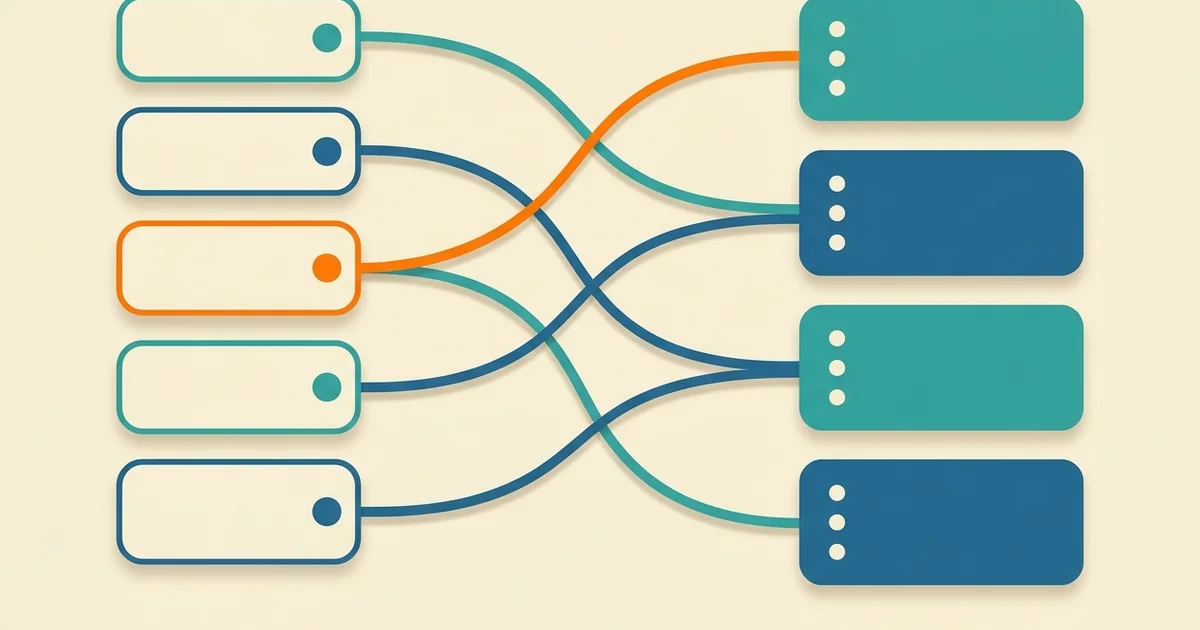
Think of the in-text citation as a signpost and the reference entry as the address. The signpost appears exactly where the source is used; the address appears once in the reference list.
The names, titles, dates and quotations in the teaching examples below are illustrative, not verified publications or findings. They demonstrate formatting and source placement; replace them with sources you have read.
For example, in APA style, a student might write:
Students often struggle to evaluate online sources because search ranking does not always reflect academic credibility (Harris, 2021).
The matching reference entry might look like this:
Harris, L. (2021). Evaluating digital information in undergraduate research. Journal of Academic Literacy, 15(2), 44–59.
The paragraph does not need the journal issue, page range, or full title unless the style asks for it in a special case. The reference list does not explain your argument; it only records the sources cited.
Citation versus reference in plain terms
The difference between citation and reference is easiest to see when you separate function from format. A citation is the pointer inside the writing. A reference is the fuller record that the pointer leads to.
| Student situation | In-text citation | Reference list entry | What the reader can do |
|---|---|---|---|
| Paraphrased journal article in psychology | (Nguyen & Patel, 2022) | Nguyen and Patel’s full article details | Find the article and verify the claim |
| Direct quote from a book chapter | (Morgan, 2020, p. 88) | Morgan’s chapter or book details | Locate the exact quoted page |
| Report used in a nursing paper | (Public Health Agency of Canada, 2023) | Full agency report details with title and URL | Check the report source |
| Business case analysis using market data | (Deloitte, 2022) | Full report details | Identify the report used as evidence |
For recoverable sources in APA, the citation normally corresponds to a reference entry. Personal communications are cited in text only, and quotations from your own research participants follow different rules. A complete footnote may identify a source without a separate end entry where the required notes system allows it. Apply the specific style rather than treating every unmatched marker as an error.
How do in-text citations work in an academic paper?
In-text citations work by linking a specific sentence, clause, paragraph, statistic, quotation, or idea to its source. They show where borrowed material enters your own writing. They also help readers distinguish your claim from the evidence you used to support it.
Source markers inside your paragraphs
In-text citations usually appear in one of two forms: parenthetical or narrative. A parenthetical citation places the source details in brackets or parentheses, usually at the end of the sentence. A narrative citation names the author in the sentence itself and places the year or page detail nearby.
Parenthetical example:
Students’ confidence in statistics may affect how they interpret quantitative findings (Lee, 2020).
Narrative example:
Lee (2020) found that students’ confidence in statistics may affect how they interpret quantitative findings.
Both versions can be correct. The choice depends on whether the author’s name matters to the flow of your sentence. If the author is central to your discussion, narrative citation often reads more smoothly. If the evidence matters more than the author’s identity, parenthetical citation may be less disruptive.
Where the citation belongs
A citation belongs as close as possible to the borrowed idea. Placing one citation at the end of a long paragraph can be unclear if the paragraph contains several claims, examples, or sources.
Weak placement:
Social media affects student wellbeing in several ways. It can increase comparison, reduce sleep, and expose students to peer support. These effects are complicated by age, gender, and platform use. Students also report different patterns during exam periods. (Ali, 2021)
Stronger placement:
Social media use may increase comparison and reduce sleep among university students (Ali, 2021). During exam periods, however, some students also report using peer messaging for emotional support (Ali, 2021).
The stronger version shows which part of the paragraph comes from the source. It also avoids making one final citation carry too much weight.
When you need a citation
Cite borrowed ideas, findings, data, frameworks and wording, with quotation formatting where required. Your own analysis may still need citations to the evidence it interprets; labeling a sentence as your interpretation does not remove that need. Common knowledge depends on the intended audience and context.
A psychology paper might cite a source when discussing working memory theory or reporting a study’s findings. A nursing paper on medication adherence after hospital discharge would cite clinical guidelines, systematic reviews, or patient-safety studies. A business paper analysing remote work policies would cite organizational behaviour research, labour statistics, or company reports.
When reading sources, keep notes that separate “what the source says” from “what I think this means for my paper.” If you struggle with that separation, the reading strategies in Evidence and method nodes converging into a central claim can help you record usable evidence without losing the source trail.
What information belongs in a reference list?
A reference list gives the complete source details required by your citation style. Most entries include author, year or date, title, publication container, publisher or journal information, DOI, URL, or access details when relevant. The exact order and punctuation depend on the required style.
The core details behind each entry
A reference entry is the full bibliographic record for one source. It should give readers enough information to identify and retrieve the source without guessing.
For a journal article, that usually means:
- Author or authors.
- Year of publication.
- Article title.
- Journal title.
- Volume and issue.
- Page range or article number.
- DOI or stable URL when available.
For a book, it usually means author, year, title, edition if relevant, and publisher. For a report, it may include the organization as author, report title, publication date, and URL. For a chapter in an edited book, it includes the chapter author, chapter title, editor, book title, page range, and publisher.
Concrete reference list examples
Different source types look different because they contain different retrieval information. A journal article needs volume and issue details; a website may need a publisher or organization; a government report may use an institutional author.
Here are simplified examples to show the type of information involved:
| Source used in the paper | In-text citation example | Reference list needs |
|---|---|---|
| Journal article on anxiety and test performance | (Khan & Brooks, 2021) | Authors, year, article title, journal, volume, issue, pages, DOI |
| Nursing guideline on falls prevention | (National Institute for Health and Care Excellence, 2022) | Organisation, year, guideline title, publisher/site, URL |
| Education book chapter on formative assessment | (Reed, 2019) | Chapter author, year, chapter title, editors, book title, pages, publisher |
| Business report on hybrid work | (Chartered Institute of Personnel and Development, 2023) | Organisation, year, report title, publisher/site, URL |
Your assignment instructions may specify a style such as APA 7, MLA, Chicago, Harvard, OSCOLA, or Vancouver. If the brief is unclear, check your course handbook before drafting the reference list.
Why accuracy matters beyond formatting
Reference accuracy is not just a cosmetic issue. A missing DOI, wrong year, or misspelled author name can make a source harder to locate and can weaken the credibility of your draft.
This matters most in literature reviews, where readers expect a clean record of what you searched, read, compared, and used. If you are building source groups for a review, the approach in Thematic source clusters and research gap for a literature review pairs well with citation tracking because each theme still needs traceable evidence.
For empirical papers, reference accuracy also supports method and results sections. A quantitative paper that cites a validated scale must let readers find that scale. A qualitative paper that cites a thematic analysis framework must show which source shaped the coding approach.
What is the difference between reference list vs bibliography?
A reference list contains only the sources you cited in the text. A bibliography may include sources you consulted but did not directly cite, depending on the style and assignment requirements. Many undergraduate and master’s assignments ask for a reference list, not a broader bibliography.
The practical distinction
The reference list answers the question: “Which sources did this paper cite?” A bibliography may answer a broader question: “Which sources informed the research process?”
APA uses a reference list; Chicago notes and bibliography uses notes with an accompanying bibliography as required. Course terminology can differ, so follow the requested system and scope rather than assuming “bibliography” always means all material consulted.
If your assignment says “include all sources cited,” treat it as a reference list even if a instructor informally says bibliography. If it says “include sources consulted,” ask whether uncited background reading should appear.
Why adding extra uncited sources can backfire
Some students add sources to the end to make the paper look better read. That can create problems. If a source appears in the reference list but not in the text, the marker may wonder where it was used or whether it was included by accident.
Weak version:
A student cites five sources in the paper but lists twelve at the end, including three articles they skimmed but never used.
Stronger version:
The student lists only the five cited sources, then adds two more in-text citations where additional sources genuinely support the argument.
This is also an academic honesty issue. A reference list should reflect actual source use, not a display of reading that did not shape the paper.
What to do when your department uses different wording
Different English-speaking institutions use slightly different terms. A US psychology course may say “references.” A UK business course may say “reference list.” A law assignment may require a bibliography alongside footnotes, especially under OSCOLA-style expectations.
Your best move is to treat the assignment instructions as the controlling document. If the brief asks for a plan before drafting, turn its requirements into a working structure and citation plan early. The process in Assignment brief requirements turning into a paper plan is useful for mapping where sources will be needed before you start writing full paragraphs.
How do citation styles change in-text citation examples?
Citation styles change the order, punctuation, and placement of source details, but the purpose stays the same. In-text citations still point to sources, and the reference list or bibliography still gives the full records. The main differences are author-date, footnote, and numbered systems.
Author-date systems
Author-date systems place the author and year near the borrowed material. APA and many Harvard variants use this pattern.
APA-style paraphrase:
Students who receive formative feedback may revise more effectively when comments focus on specific criteria (Brown, 2021).
APA-style narrative citation:
Brown (2021) argues that formative feedback is more useful when comments focus on specific criteria.
APA-style direct quote:
Brown (2021) states that feedback is most useful when it “names the criterion being revised” (p. 42).
Author-date systems are common in psychology, education, social sciences, business, and many health sciences papers. If you are using APA, the structure in APA 7 citation structure gives more specific formatting guidance.
Numbered and footnote systems
Some disciplines use numbered citations. Vancouver style, common in medical and health sciences writing, uses numbers in the text that correspond to a numbered reference list.
Vancouver-style example:
Medication reconciliation at discharge can reduce avoidable errors in older patients.¹
Law often uses footnotes rather than author-date parentheses. In an undergraduate law essay on employment contracts, a student might place a superscript footnote after a legal claim, with full case or statute details in the note. In OSCOLA, longer works generally use preliminary tables for primary legal sources and a bibliography for secondary sources; shorter articles or essays may require only footnotes. Follow the assignment and the specified edition.
These systems can feel different, but they still need consistency. A numbered citation must point to the correct numbered entry. A footnote must give enough legal or bibliographic detail for the claim being made.
Side-by-side style differences
The same source can appear differently across styles. Do not mix systems in one paper unless your department gives a special instruction.
| Style context | In-text version | End entry pattern |
|---|---|---|
| APA psychology paper | (Miller & Chen, 2020) | Alphabetical reference list by author surname |
| Harvard business report | (Miller and Chen, 2020) | Alphabetical reference list, local punctuation rules vary |
| Vancouver nursing paper | Superscript or bracketed number, e.g., [3] | Numbered list in order of first citation |
| Chicago notes history paper | Superscript footnote number | Notes plus bibliography, depending on requirement |
| OSCOLA law essay | Superscript footnote number | Footnotes; tables and bibliography where required by the work and assignment |
Style guides can feel fussy, but the logic is simple: use one system, apply it consistently, and make every source traceable.
How can citations support evidence, synthesis, and argument?
Citations support argument when they show exactly which evidence backs each claim and how sources relate to one another. They do not replace your analysis. A paragraph still needs your own topic sentence, source integration, explanation, and link back to the paper’s purpose.
Citations are not a substitute for analysis
A paragraph packed with citations can still be weak if it only lists what authors said. The reader needs to see what you are doing with those sources.
Weak version:
| Weak student version | Stronger rewrite |
|---|---|
| “Many studies discuss stress in nursing students. Smith (2020) says stress is high. Ahmed (2021) says placements are stressful. Lopez (2022) says sleep is affected.” | “Placement-related stress appears to affect nursing students through both workload and disrupted recovery time. Smith (2020) links stress to assessment pressure, while Ahmed (2021) connects stress to clinical-placement expectations. Lopez’s (2022) findings on sleep disruption suggest that the issue is not only emotional but also physiological.” |
The stronger version does not merely place citations beside claims. It compares the sources and draws a controlled inference.
Discipline-specific examples
In a social psychology paper on stereotype threat and exam performance, citations might support a claim about the relationship between identity cues and test anxiety. The student still needs to explain whether the cited study measured anxiety, performance, or both.
In a nursing paper on medication adherence among older adults discharged to home care, citations might support claims about patient education, polypharmacy, and follow-up calls. The reference list would need clinical guidelines, empirical studies, or review articles that readers can trace.
In a business management paper on hybrid work and employee retention, citations might support claims about autonomy, communication norms, and turnover intention. A company report may provide context, but peer-reviewed organizational behaviour research may carry more weight for theory-based claims.
Connecting sources in a paragraph
A useful source-based paragraph often follows this pattern:
- State your claim in your own words.
- Add a source that supports or complicates the claim.
- Add a second source if comparison is needed.
- Explain the relationship between the sources.
- Link the evidence back to your research question or assignment task.
This structure keeps citations attached to argument rather than scattered through the paragraph. If your paragraphs feel like separate source summaries, the model in academic paragraph structure can help you connect evidence, explanation, and section purpose.
What mistakes do students commonly make with in-text citations and reference lists?
Students commonly make citation mistakes by breaking the link between the paragraph and the end list. The most frequent problems are missing matches, vague source placement, overquoting, style mixing, and padding the reference list with unused sources. Each one can make a well-researched paper look less reliable than it is.
1. The orphan citation
Mistake: A source appears in the text but has no matching reference entry.
Student example:
Motivation affects learning outcomes in online courses (Perez, 2021).
The reference list contains no Perez entry.
Correction: Locate and read the source material, then add the entry required by the style if it supports the sentence. If it cannot be checked, revise or omit the unsupported claim as well as the citation; removing a citation alone does not supply evidence.
2. The ghost reference
Mistake: A source appears in the reference list but is never cited in the paper.
Student example:
The reference list includes:
Taylor, S. (2020). Student engagement in blended learning.
No paragraph cites Taylor.
Correction: Use the source in the text if it genuinely supports a claim, or remove it from the reference list. A reference list is not a reading diary.
3. The paragraph-end blanket citation
Mistake: One citation at the end of a paragraph is used to cover several different claims.
Student example:
Remote work changes communication patterns, reduces commuting stress, affects promotion opportunities, and increases the need for digital monitoring (James, 2022).
Correction: Split the claims and cite each source where it belongs. If James only studied communication patterns, do not use that citation to support claims about promotion or monitoring.
4. The style mash-up
Mistake: The student mixes APA, Harvard, and numbered citation habits in one paper.
Student example:
Green (2020) found similar results [4], while (Singh, 2021) disagrees.
Correction: Choose the required style and apply it throughout. If your course asks for APA, use author-date citations and an alphabetical reference list; do not add numbered citations.
5. The unsupported definition
Mistake: A specialised concept is defined without a source.
Student example:
Executive function means the brain’s ability to organise tasks and control behaviour.
Correction: Cite the source of the definition, especially in psychology, education, health sciences, and law. If you adapt the definition in your own words, the source is still needed.
How can you check citations before submitting a draft?
Check citations by comparing every in-text citation with the reference list and every reference entry with the body of the paper. Then check that each citation is close to the claim it supports and formatted in the required style. A final citation pass can catch errors that normal proofreading misses.
A practical citation audit
Audit both directions under the chosen style. For APA, match recoverable works cited in the body, tables, figures, notes and appendices with their reference entries, while recognizing exceptions such as personal communications. For notes systems, check the required note and bibliography rules. Then read the source passages: matching names or numbers does not establish claim support.
A simple process works well:
- Print or export the draft as a PDF so page shifts do not distract you.
- Highlight every in-text citation or footnote marker.
- Tick the matching entry in the reference list.
- Circle any citation with no matching entry.
- Start from the reference list and search the draft for each source.
- Investigate entries not found in the text, including figures, notes and appendices; remove unused items unless the required bibliography includes them.
- Check style details: order, punctuation, italics, DOI, URL, and page numbers.
- Recheck direct quotes for page numbers or location markers where required.
This is slower than a normal spellcheck, but it targets the exact errors instructors notice.
Before you move on: citation and reference list checklist
- Citations match the entries required by the chosen style, with its exceptions applied.
- Every reference list entry is cited somewhere in the paper.
- Each citation sits close to the claim, quote, statistic, or idea it supports.
- Direct quotes include page numbers or required location details.
- Paraphrases still include citations when the idea comes from a source.
- The paper uses one citation style consistently.
- Author names and publication years match between text and reference list.
- Journal articles include required volume, issue, page, and DOI details where available.
- Reports and web sources include organisation, title, date, and stable URL where required.
- The reference list does not include sources used only for background reading unless the assignment asks for a bibliography.
- Special source types, such as legal cases, clinical guidelines, or datasets, follow the required discipline format.
- The final draft keeps your own analysis separate from source wording and source findings.
What citation checking can and cannot fix
Citation checking can fix broken links, missing entries, and inconsistent formatting. It cannot fix a weak argument by itself. If your paragraph only reports sources without explaining what they mean, accurate citations will not solve the deeper writing problem.
Use the citation pass as part of a larger revision. Ask whether each source earns its place: Does it support a claim? Provide a method? Define a concept? Offer a counterpoint? If the answer is unclear, the problem may be source integration rather than citation format.
Read the sources and guidance: These resources expand the discussion. Apply citation and checking rules in relation to the paper and course requirements.
Frequently Asked Questions
What is the difference between an in-text citation and a reference?
An in-text citation is the short marker in the body of your paper, while a reference is the full source record in the end list. The citation points readers to the source; the reference gives the details needed to find it. Most academic papers need both.
How many references should an undergraduate paper have?
The required number depends on the assignment length, level, discipline, and grading criteria. A short undergraduate paper may need only a small set of relevant sources, while a longer research paper may require more. Quality and relevance matter more than adding sources to reach an arbitrary number.
Do master’s students need more detailed citations than undergraduate students?
Citation details follow the required style and source type, not a degree-based format. Both undergraduate and graduate work need accurate attribution and traceable evidence. A research assignment may require deeper engagement with sources, but the degree label alone does not establish a different citation rule.
Can I include a source in the reference list if I only read it for background?
Usually no, if the assignment asks for a reference list. A reference list normally includes only sources cited in the text. If your assignment asks for a bibliography, it may allow consulted but uncited sources, but you should check the brief.
Do I need an in-text citation for every sentence in a paragraph?
No. Under APA, several sentences may continue a clearly attributed paraphrase without repeating the same citation. Reintroduce it in a new paragraph or when attribution could become unclear. Distinguish your interpretation from the source’s claim while retaining citations to the evidence on which that interpretation depends.
What should I do if my source has no DOI?
Use the rules of your required citation style for sources without a DOI. Many styles allow a stable URL for online sources, while print-only sources may not need one. Do not invent a DOI or copy an unrelated link.