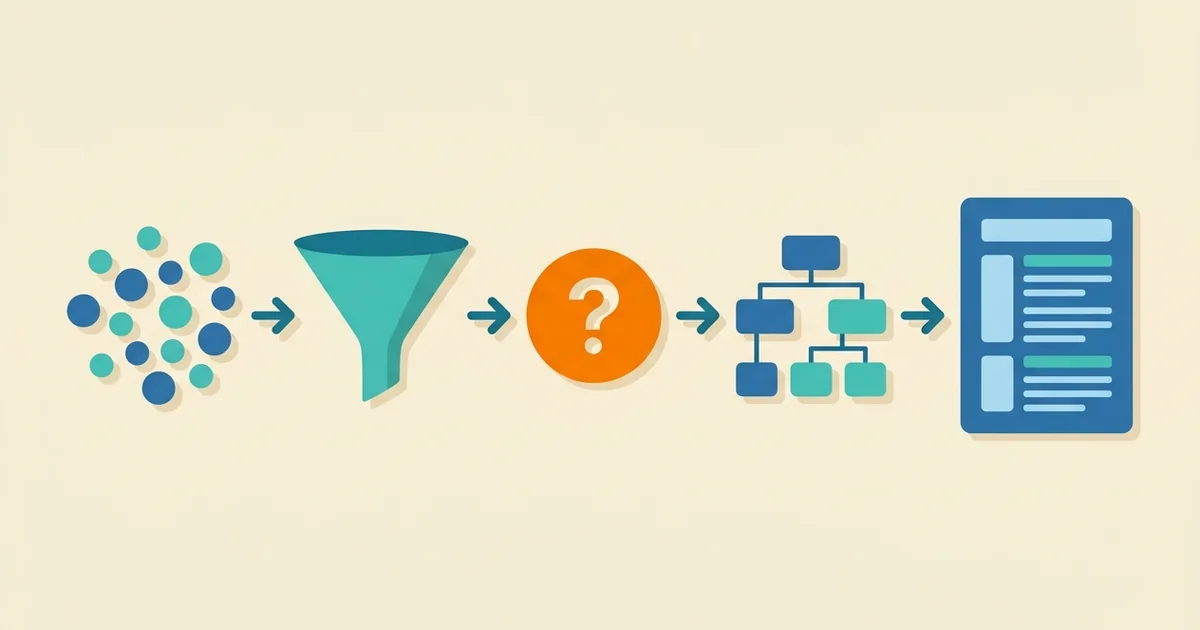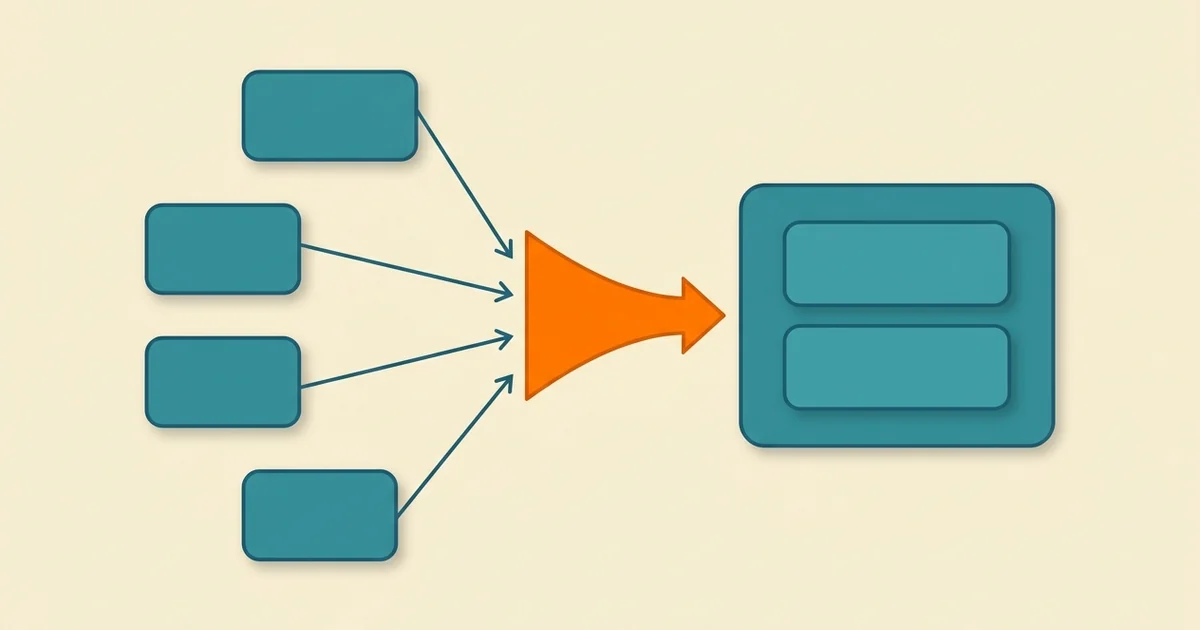
To understand an assignment brief, identify the task command, topic limits, required sources, assessment criteria, and submission rules before drafting. Then turn those requirements into a research question, working thesis, section outline, evidence plan, and revision checklist.
How to Understand an Assignment Brief and Turn It Into a Paper Plan
You open the assignment brief, read it twice, and still cannot tell whether your lecturer wants an argument, a report, a literature review, or "just an essay." The deadline is clear, the word count is clear, but the actual writing task feels buried under verbs like "analyse," "evaluate," "discuss," and "critically reflect." That confusion is where many undergraduate and master's papers go wrong: students start collecting sources before they know what the brief is asking them to prove, compare, explain, or apply. Learning how to understand an assignment brief is less about reading harder and more about translating instructions into decisions: topic scope, question, structure, evidence, and assessment priorities.
To turn an assignment brief into a paper plan, separate the brief into task, topic, scope, evidence, format, and marking criteria. Then convert each requirement into a planning decision: what question you will answer, what sections you need, what sources count, and how your argument will be assessed.
In this guide
- What does an assignment brief actually ask you to do
- How do you do an assignment brief breakdown before writing
- How do command words change the paper you need to write
- How do you turn the topic in the brief into a focused research question
- How do you plan an essay from the brief without overcomplicating it
- How do assessment criteria shape your writing plan
- What mistakes do students commonly make when interpreting an assignment brief
- How can you check whether your plan matches the brief before drafting
What does an assignment brief actually ask you to do?
An assignment brief asks you to produce a specific academic response under defined limits. It tells you the task type, topic area, scope, evidence expectations, formatting rules, and marking priorities. Your job is to turn those details into writing choices before you start drafting.
The brief is a set of constraints, not just instructions
An assignment brief, assignment prompt or set of assignment instructions describes the required work and its conditions. Read it together with the rubric and course policies. In US courses, a prompt may already supply the question; narrowing or replacing it requires permission where the task fixes its scope.
Students often treat the brief as background information and the title as the only real task. That is risky. The title may say, "Discuss the role of leadership in organisational change," while the rubric gives more precise expectations: use peer-reviewed sources, compare at least two theories, apply the discussion to a named case, and show critical evaluation. If those details are ignored, the paper can sound relevant while failing the actual criteria.
A useful first move is to mark the brief in layers. Circle the task verb, underline the topic, box the limits, and list the deliverables. This turns the brief from a block of text into a decision map.
The hidden question behind the visible wording
Many assignment briefs do not state a neat research question. They give a prompt, topic, or scenario and expect you to create a focused response. For example, "Evaluate interventions to improve medication adherence among elderly patients discharged to home care" is not asking for every possible intervention. It asks for a judgement about which interventions appear most effective, under what conditions, and based on what evidence.
In social sciences, a psychology brief might say, "Discuss the relationship between social media use and adolescent self-esteem." That wording still needs narrowing. Are you examining frequency of use, passive scrolling, upward comparison, gender differences, or intervention implications?
In business or management, "Analyse the impact of remote work on employee productivity" may require a conceptual paper, a case-based report, or a research proposal depending on the rest of the brief. The visible wording starts the task; the brief tells you what form the answer must take.
How do you do an assignment brief breakdown before writing?
An assignment brief breakdown means separating the brief into smaller requirement categories before planning the paper. The main categories are task command, topic, scope, evidence, structure, formatting, and marking criteria. This prevents you from writing a paper that answers only part of the assignment.
A six-part breakdown method
Use this numbered process before opening a blank document:
- Identify the command verb. Decide whether you need to describe, analyse, compare, evaluate, argue, reflect, or apply.
- Define the topic object. Name the main concept, theory, problem, population, case, text, policy, or method.
- Mark the scope limits. Look for time period, country, field, population, organisation type, module theme, or source limits.
- Find the required evidence. Note whether the brief asks for peer-reviewed literature, empirical research, legal cases, policy documents, datasets, or course readings.
- Extract deliverables. Check whether you need an essay, report, literature review, proposal, presentation script, or chapter-style paper.
- Translate the rubric. Turn criteria into planning and revision checks; some apply throughout the paper rather than requiring a separate section.
Allow the time needed to resolve task, scope, evidence and submission requirements. There is no fixed duration that guarantees understanding. Return to the brief as reading and drafting reveal new questions.
A concrete breakdown example
Suppose the brief says:
"Critically evaluate the effectiveness of school-based mindfulness interventions in reducing anxiety among secondary school students. Use recent peer-reviewed research and discuss implications for educational practice. 2,500 words."
A rushed student might plan: introduction, mindfulness definition, anxiety definition, benefits, problems, conclusion. That plan is not terrible, but it does not fully respond to "critically evaluate," "effectiveness," "secondary school students," or "educational practice."
A better breakdown looks like this:
| Brief element | What it means for the plan | Concrete planning decision |
|---|---|---|
| "Critically evaluate" | Make a judgement, not a list | Compare evidence quality and limits |
| "Effectiveness" | Focus on outcomes | Define anxiety reduction as the main outcome |
| "School-based" | Setting is limited | Exclude clinical mindfulness programmes outside schools |
| "Secondary school students" | Population is limited | Avoid evidence on university students or adults |
| "Educational practice" | End with application | Include a section on classroom implementation |
This table shows why understanding essay questions is not just about vocabulary. The whole paper changes once each phrase becomes a writing decision.
How do command words change the paper you need to write?
Command words tell you the intellectual action expected in the paper. "Describe" asks for accurate explanation, while "evaluate" asks for judgement using criteria. Misreading the command word often leads to papers that contain relevant material but perform the wrong task.
Common command words and what they demand
Command word means the verb in the brief that defines the type of academic response. It usually appears near the start of the question: analyse, discuss, compare, evaluate, explain, justify, reflect, or apply.
Here is a practical comparison:
| Command word | Weak response pattern | Stronger response pattern |
|---|---|---|
| Discuss | "There are many views about remote work." | Presents key positions, compares them, and explains where the debate stands |
| Analyse | "This policy affects nurses in several ways." | Breaks the policy into causes, mechanisms, effects, and tensions |
| Evaluate | "Mindfulness has benefits and disadvantages." | Judges effectiveness using evidence quality, outcomes, and context |
| Compare | "Theory A is about motivation. Theory B is about leadership." | Uses the same criteria to show similarities, differences, and implications |
| Apply | "The theory is relevant to the case." | Uses concepts from the theory to interpret specific case details |
A paper can include description, but description alone rarely satisfies "analyse" or "evaluate." If the brief says "critically discuss," the expected work is usually: explain the issue, present different perspectives, weigh evidence, and develop a reasoned position.
Weak versus stronger interpretation
| Student version | Stronger rewrite |
|---|---|
| "I will write about the effects of social media on mental health." | "I will evaluate whether passive social media use is associated with lower self-esteem among adolescents, focusing on peer comparison and evidence from recent psychology studies." |
| "This essay will discuss nursing communication." | "This paper will analyse how discharge communication affects medication adherence among older adults receiving home care, using nursing research on patient education and follow-up support." |
| "I will compare leadership theories." | "I will compare transformational and transactional leadership using employee motivation, change readiness, and limitations in small service firms as criteria." |
The stronger versions do more than sound academic. They identify scope, evidence type, and the basis for comparison or judgement. That is the difference between a topic and a plan.
Verbs that often confuse students
"Discuss" is not permission to write everything you know. It asks you to organise a balanced academic conversation around a clear issue. "Critically" does not mean being negative; it means examining assumptions, evidence quality, limits, and alternative interpretations.
"Evaluate" needs criteria. For example, in health sciences, evaluating a fall-prevention programme in hospital wards might use patient safety outcomes, staff workload, cost, and implementation barriers. Without criteria, evaluation turns into opinion.
"Analyse" means breaking something into parts and showing relationships. In law, analysing a negligence problem question may require duty of care, breach, causation, defences, and remedy. A descriptive answer that simply defines negligence will not match the task.
How do you turn the topic in the brief into a focused research question?
Turn the topic into a research question by narrowing the population, context, concept, relationship, or time period. Then phrase the question so it can be answered within the word count and evidence requirements. A focused question helps you decide what to include and what to leave out.
From topic area to answerable question
A research question is the specific question your paper answers. In a term paper, research paper, capstone project, or seminar paper, it acts as the bridge between the assignment brief and the final argument.
If the brief gives a broad topic, use the narrowing funnel: topic area → issue → specific context → question. For more detail on this move, see broad idea narrowing into a focused research problem and funnel narrowing broad ideas into one research question.
Example in psychology:
- Broad topic: social media and mental health
- Issue: self-esteem and peer comparison
- Context: adolescents aged 13–18
- Question: "How does passive social media use relate to self-esteem among adolescents, and what role does upward social comparison appear to play?"
This question is still broad enough for a literature-based paper but narrow enough to guide source selection.
Matching research type to the brief
Different briefs point toward different research types. A quantitative empirical plan needs suitable variables, measures and an analysis rationale; hypotheses are relevant when the study tests specified expectations, not mandatory for every descriptive or exploratory task. A qualitative empirical plan needs participants, setting, data type, and analytic focus. A theoretical or conceptual paper needs concepts, assumptions, and argument structure. A literature review needs themes, source clusters, and a gap.
For quantitative work, a business brief on remote work might become: "To what extent is the number of remote workdays per week associated with self-reported productivity among customer support employees?" That question implies variables and measurement. If you need help distinguishing predictor and outcome roles where the design uses them, the independent and dependent variables can help clarify the logic.
For qualitative work, an education brief might become: "How do first-year undergraduate students describe the challenges of receiving feedback in large introductory courses?" That question invites interviews, themes, and interpretation rather than measurement.
For a literature review, a nursing brief might become: "What does recent nursing research suggest about discharge education strategies that improve medication adherence among older adults receiving home care?" That question guides source selection and thematic organisation.
How do you plan an essay from the brief without overcomplicating it?
Plan an essay from the brief by converting requirements into sections, not by creating a separate idea for every sentence in the prompt. Use the command word to define the paper’s movement and the scope limits to control what belongs in each section. The plan should be detailed enough to guide drafting but flexible enough to change after reading.
The minimum working plan
A paper plan is a provisional structure that links your research question, thesis, sections, evidence, and assessment criteria. It is not a full draft. It is a map that keeps drafting aligned with the brief.
For most undergraduate and master's assignments, a workable plan has five parts:
- Working title or focused question
- One-sentence working argument
- Section outline with word ranges
- Evidence plan for each section
- Revision checks based on the rubric
If the brief asks for a research paper or capstone project, your outline may include introduction, literature review, method, findings plan, discussion, and limitations. If it asks for a theoretical essay, your sections may be concept explanation, debate, analysis, and argued position. For help building a section structure that does not collapse halfway through drafting, see the horizontal hierarchy of academic paper sections.
Turning requirements into sections
Imagine a 3,000-word management assignment:
"Analyse how transformational leadership affects employee change readiness in small service organisations. Use academic literature and discuss limitations."
A plan based directly on the brief might look like this:
- Introduction: problem, scope, research question, argument
- Transformational leadership: concept and key dimensions
- Change readiness: definition and relevance in small service organisations
- Analysis: mechanisms linking leadership behaviours to readiness
- Limitations: sector variation, employee differences, evidence limits
- Conclusion: answer to the research question and implications
This is not just a list of headings. Each section exists because the brief requires it. "Analyse" creates the mechanism section. "Small service organisations" creates the scope boundary. "Discuss limitations" creates a specific critical section instead of a rushed final paragraph.
Keeping the plan proportionate
Word count controls depth. A 1,500-word seminar paper cannot handle five theories, three case studies, and a full historical background. A 5,000-word capstone paper can support more sections, but each section still needs a job.
A useful rule is to assign rough word ranges before drafting. For example, in a 2,500-word paper, the introduction might be 250 words, background 400, main analysis 1,200, critical evaluation 450, and conclusion 200. These numbers can change, but they prevent the common problem of spending half the paper defining concepts.
Download a free planning sheet
Use the Before the draft planning sheet — one-page PDF, with no sign-up. Fill in the assignment requirements, focused question, evidence needed, and purpose of each section. The sheet is for a literature review or literature-based course paper; empirical projects also need a separate data and methods plan. Use it to organize and check your thinking alongside the course instructions and original sources.
If the assignment prompt leaves you unsure which paper type fits, the work type finder can help you choose a path from the brief and materials you have. You can use the sheet independently of Texio’s paid service.
How do assessment criteria shape your writing plan?
Assessment criteria tell you how the paper will be judged, so they should shape the outline, evidence choices, and revision checks. If the rubric values critical analysis, source quality, structure, and referencing, each of those needs visible space in the plan. Treat the rubric as a checklist for design, not as feedback you read after submitting.
Converting rubric language into actions
A marking rubric is a set of criteria used to assess the assignment. It may mention knowledge, analysis, argument, use of sources, structure, presentation, referencing, and academic style.
Rubric words can feel vague, but they usually translate into concrete actions:
- "Critical analysis" → include comparison, limitations, assumptions, and reasoned judgement
- "Use of evidence" → assign sources to claims, not just to paragraphs
- "Coherent structure" → make each section answer part of the question
- "Original argument" → state your position rather than repeating source conclusions
- "Academic presentation" → follow citation style, formatting, and submission rules
If a rubric gives 40% to analysis and 10% to presentation, your planning time should reflect that. Perfect formatting cannot rescue a paper that mostly describes background material.
Aligning sources with the brief
Source requirements often sit quietly in the brief: "peer-reviewed literature," "minimum eight academic sources," "recent sources preferred," "course readings must be included," or "policy documents may be used." These rules affect your search strategy.
A literature review assignment might need source clusters by theme rather than a chronological list. For that task, thematic source clusters with a visible research gap is a useful model. If the brief asks you to identify a gap, look for disagreement, under-researched populations, limited settings, or methodological limitations.
For example, in a nursing paper on medication adherence after discharge, your source plan might include: discharge education, caregiver involvement, digital reminders, and follow-up calls. In an education paper on feedback, the source plan might include feedback timing, student interpretation, teacher workload, and assessment literacy.
Planning for revision from the start
Revision becomes easier when each criterion has a matching question. Instead of rereading your draft vaguely, ask: Does each section answer the assignment question? Have I used evidence to support claims? Have I evaluated rather than only described? Have I stayed inside the stated scope?
You can also create a "brief alignment column" next to your outline. In that column, write the exact phrase from the brief that each section addresses. If a section cannot be linked to any part of the brief, it may be background, padding, or an interesting distraction.
What mistakes do students commonly make when interpreting an assignment brief?
Students commonly misread the command word, ignore scope limits, plan around a topic instead of a question, and treat the rubric as optional. These mistakes usually happen before drafting starts. Fixing them early prevents major rewrites later.
Specific mistakes and corrections
-
Mistake: treating "discuss" as "write everything you know."
Student example: "This essay will discuss social media, mental health, online bullying, addiction, sleep, relationships, and school performance."
Correction: Choose a central issue and organise perspectives around it, such as passive social media use, peer comparison, and adolescent self-esteem. -
Mistake: ignoring the population named in the brief.
Student example: A brief asks about "older adults discharged to home care," but the plan uses studies on general hospital patients and university students.
Correction: Use the named population as a filter. Broader sources can define concepts, but core evidence must match the group in the brief. -
Mistake: using the first interesting source to redefine the task.
Student example: The brief asks for "school-based anxiety interventions," but the student shifts to clinical therapy because the best sources they found were about CBT clinics.
Correction: Let the brief control the search. If sources are hard to find, narrow within the permitted setting rather than moving to a different one. -
Mistake: writing a thesis before decoding the command word.
Student example: "Transformational leadership is the best leadership style for all organisations."
Correction: If the task says "analyse," build a more careful claim: "Transformational leadership may support change readiness through vision, individual consideration, and trust, but its effects depend on organisational size and employee workload." -
Mistake: copying rubric words into the plan without action.
Student example: "Section 3: Critical analysis."
Correction: Name the actual critical move: "Evaluate whether evidence on productivity relies too heavily on self-report measures and short-term studies."
Why these mistakes cause late-stage panic
A misread brief often looks fine for the first few paragraphs. The problem appears later, when the student cannot decide what belongs in the middle, why sources do not fit, or why the conclusion feels vague. That is why turning a brief into a plan matters before source collection becomes too large to manage.
A useful warning sign is a plan with headings such as "Introduction," "Main body," and "Conclusion" but no claim, criteria, or evidence purpose. Another warning sign is a reference list that looks impressive but does not match the population, setting, or task verb in the brief.
How can you check whether your plan matches the brief before drafting?
Check your plan against the brief by testing each section for task fit, scope fit, evidence fit, and assessment fit. Every main section should answer part of the question and connect to at least one marking criterion. If a section cannot pass that test, revise the plan before writing.
The alignment test
Use a four-question test for every planned section:
- Which exact phrase in the brief does this section answer?
- What claim, comparison, explanation, or judgement will this section make?
- What kind of evidence does the brief require here?
- Which marking criterion does this section support?
If the answer to the first question is unclear, the section may not belong. If the answer to the second question is only "background," the section may need a sharper purpose. Background is useful only when it prepares the reader for analysis.
For example, in a psychology paper on passive social media use and self-esteem, a section on "history of the internet" would probably fail the alignment test. A section on "social comparison as a mechanism linking passive use and self-esteem" would fit much better.
Before you move on: assignment brief to paper plan checklist
- I have identified the main command word and what action it requires.
- I have separated the topic, population, setting, and time limits.
- I have checked whether the assignment requires an essay, report, literature review, research paper, capstone project, or seminar paper.
- I have turned the brief into a focused research question or guiding problem.
- I have written a one-sentence working argument or expected answer.
- I have created section headings that match the brief, not just my reading notes.
- I have assigned likely evidence types to each section.
- I have checked source requirements, including academic, peer-reviewed, recent, or course-specific sources.
- I have matched each major section to at least one assessment criterion.
- I have removed ideas that are interesting but outside the brief.
- I have planned revision checks for argument, evidence, structure, referencing, and scope.
A final pre-draft check
Read the assignment brief aloud, then read your plan aloud. The two should sound like a question and an answer. If the brief asks you to "evaluate," but your plan only "describes," revise before drafting. If the brief names secondary school students, older adults, small firms, or a specific legal jurisdiction, those limits should appear in the research question, outline, and source plan.
Turning a brief into a plan does not remove all uncertainty. Academic writing always involves decisions. The goal is to make those decisions visible early, so your reading, drafting, and revision all point toward the same assessed task.
For further guidance, see understanding assignments — UNC Writing Center and reorganizing drafts — UNC Writing Center. Use them alongside the assignment and research approach, rather than as a fixed template.
Frequently Asked Questions
How long should I spend reading an assignment brief before planning?
Spend enough time to identify what is required and resolve consequential ambiguities. Complexity, unfamiliar methods and multiple deliverables can require further reading or instructor clarification. Revisit the instructions during planning rather than treating a timed first reading as complete.
What is the difference between an assignment brief and an essay question?
An essay question is usually the main prompt you answer, while an assignment brief includes the wider rules around that prompt. The brief may include word count, evidence requirements, format, learning outcomes, marking criteria, and submission instructions. You need both: the question tells you the focus, and the brief tells you how the response will be judged.
How many sections should an essay plan have?
Choose sections according to the question, genre, evidence and assignment rules. A short essay may not need displayed headings at all; an empirical report may require named sections. There is no universal four-to-six-section rule.
Can master's students use the same brief breakdown method as undergraduates?
Yes, master's students can use the same breakdown method, but the expected depth is usually higher. A master's plan often needs clearer theory use, sharper source evaluation, and more explicit limitations. The basic process remains the same: decode task, scope, evidence, structure, and criteria before drafting.
What should I do if the assignment brief is vague?
Ask your instructor a specific question based on your attempted interpretation. Instead of saying, "I don't understand the brief," ask, "Does 'evaluate' here mean comparing two interventions, or can I focus on one intervention and assess its evidence?" A precise question shows that you have already tried to decode the task.