Texio academic writing support helps undergraduate and master's students turn an initial topic into a workable academic plan, then into a structured first draft. The workflow supports research questions, hypotheses, outlines, literature review planning, drafting, and revision guidance without replacing the student's judgement or responsibility.
Texio Academic Writing: How Students Move from Topic to Structured First Draft
You know the topic area, but the document still feels like a blank wall: every possible angle looks too broad, every source seems relevant, and the first paragraph refuses to settle into an argument. That gap between “I have an idea” and “I have a draft” is where many undergraduate and master’s students lose time. Texio academic writing support is designed for that middle space: shaping a topic, testing its scope, building a research question, planning chapters or sections, organising sources, and producing a structured first draft that can be reviewed and improved. It does not submit work for you or promise a grade. It helps you make the writing process visible enough to manage.
Texio provides a guided paper workflow: enter the order details and pay, develop and approve a research plan, then receive a structured first draft and accompanying reports. Planning fields and outputs depend on the work type. Review the draft, verify its sources and follow your course rules before using it.
This guide distinguishes a student’s general writing process from the Texio order. Texio orders a complete model paper: paper details and payment come before plan review, editing and approval, then drafting. Planning fields, companion documents and reports depend on the work type and available checks; they are not a promise of a fully verified or submission-ready paper. Texio does not offer a standalone chapter, research proposal, thesis, dissertation or capstone/final project, or perform statistical analysis or qualitative coding. Follow your course’s AI policy and disclosure requirements; rewriting AI text alone does not make a prohibited use permissible.
In this guide
- What does Texio academic writing support do from topic to draft
- How do you turn a broad topic into a workable academic focus
- How does a research question shape the whole draft
- How do hypotheses, aims, and objectives fit into the workflow
- How does an outline become a structured first draft
- How should sources be used before the first draft is written
- What mistakes do students commonly make when moving from topic to draft
- How do different research types change the drafting process
- How can you review a structured first draft before revising
What does Texio academic writing support do from topic to draft?
Texio academic writing support helps students convert an early topic idea into an organised academic draft through a guided workflow. It supports planning, research question development, hypothesis or objective formulation, outlining, literature review structure, drafting, and quality review. Supported coursework routes include term/research papers, seminar papers and other work types shown in the order form. A capstone/final project or thesis is not an offered order type.
From scattered decisions to a writing sequence
Most academic papers break down because the student tries to solve every writing problem at once. They search for sources before knowing the question, write an introduction before defining the scope, or draft body paragraphs without knowing which section each paragraph belongs to. A workflow reduces that overload by separating decisions into stages.
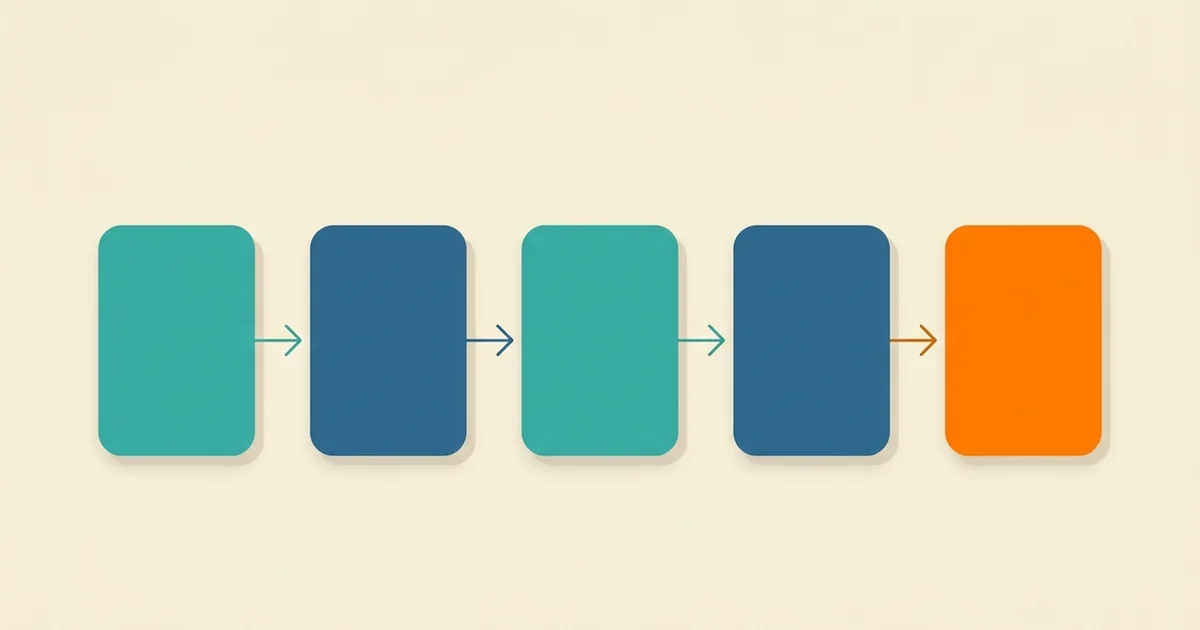
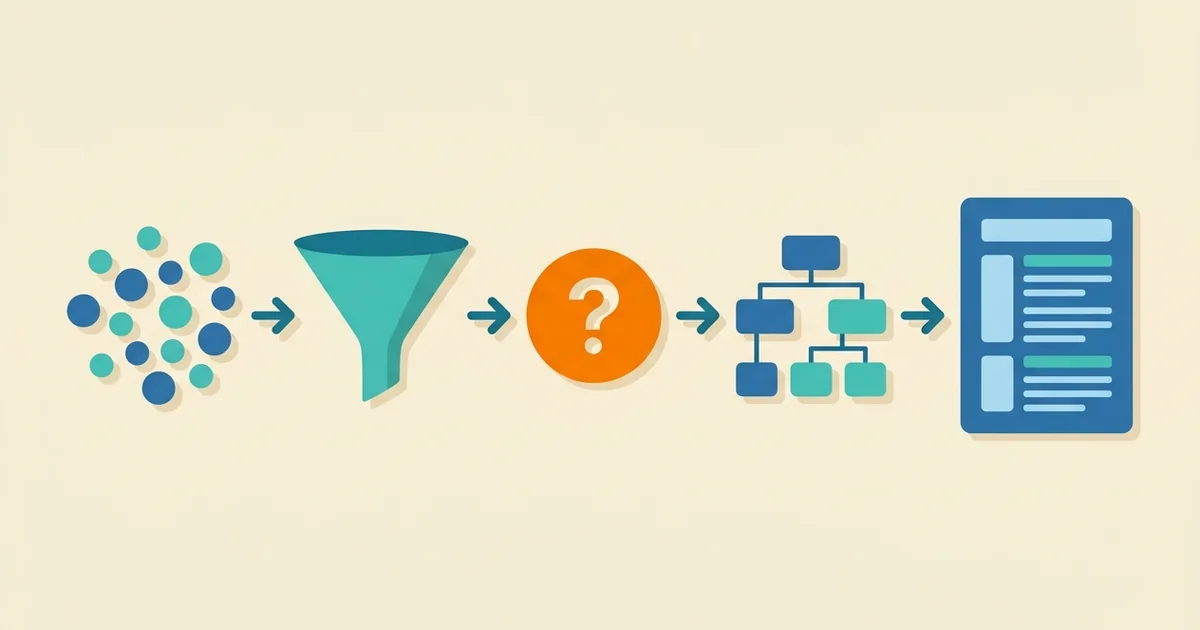
Academic writing workflow tool means a system that organises the writing process into linked steps rather than treating drafting as one large task. In a topic-to-draft workflow, each step should narrow or clarify the next one. A topic leads to a focus, the focus leads to a research question, the research question shapes the method or argument, and the outline gives the draft its structure.
That sequence matters because a first draft is not only a set of paragraphs. It is a visible version of your thinking. If the thinking is still scattered, the draft usually becomes a patchwork of definitions, quotations, and claims that do not build toward one answer.
What “structured first draft” means
A structured first draft is an early full version of a paper that follows a planned section order and connects each part to the central question. It is not expected to be final, polished, or error-free. Its purpose is to give you a complete document to test for logic, evidence, balance, and fit with the assignment brief.
For example, a business student writing about remote work and employee engagement may start with a broad interest in hybrid teams. A structured first draft would not simply describe remote work. It would introduce a narrowed focus, define engagement, explain the chosen context, organise sources by themes, and build sections toward a reasoned answer.
Plan review gives you an opportunity to check scope, overlaps and missing information before drafting. Inspect the suggestions yourself: the workflow does not guarantee that every problem will be identified.
How do you turn a broad topic into a workable academic focus?
A broad topic becomes workable when it is narrowed by context, population, concept, timeframe, method, or academic debate. The aim is not to make the topic small for its own sake, but to make it answerable within the paper length and research type. A workable focus gives the paper a clear boundary and prevents the draft from becoming a general overview.
The narrowing choices that matter
Students often begin with topics such as “social media and mental health,” “nursing shortages,” or “AI in education.” These are not bad interests, but they normally need a clearer focus for a bounded coursework paper. The first task is to decide which slice of the topic can be handled with the available word count, sources, and method.
A useful narrowing move adds the boundaries justified by the question; there is no minimum of two. In psychology, “social media and mental health” could become “the relationship between passive Instagram use and self-reported loneliness among first-year university students.” In health sciences, “nursing shortages” could become “how shift length affects reported burnout among hospital nurses in acute care settings.” In education, “AI in education” could become “teacher perceptions of AI-assisted feedback tools in first-year composition courses.”
If you need a deeper topic-narrowing process, Texio’s article on a broad idea narrowing into a focused research problem gives additional examples of scope control.
Weak and stronger topic versions
The difference between a weak and stronger topic is usually visible in the nouns. Weak topics rely on broad labels. Stronger versions name a context, group, relationship, or debate.
| Weak student version | Stronger rewrite |
|---|---|
| “Social media affects students.” | “The relationship between passive TikTok use and academic procrastination among first-year undergraduates.” |
| “Nurses are stressed at work.” | “Perceived workload and burnout symptoms among emergency department nurses working rotating shifts.” |
| “Online learning is good or bad.” | “Student participation patterns in asynchronous discussion boards in undergraduate business courses.” |
| “Companies need sustainability.” | “How small hospitality businesses communicate sustainability practices to customers on booking platforms.” |
The stronger versions are not automatically perfect, but they give the paper something to do. They make it possible to choose sources, define variables or concepts, and build an outline that does not drift.
Testing whether the focus fits the assignment
A focused topic still has to match the assignment brief. A shorter paper often needs tighter scope, but assignment labels and example word counts do not establish a universal scope rule. A theoretical paper cannot pretend to test survey hypotheses unless the assignment asks for empirical work. A literature review needs a reviewable body of sources, not a personal opinion topic.
Before committing, check the paper type, word count, required source count, method expectations, citation style, and assessment criteria. If the assignment brief is dense, the process in assignment brief requirements turning into a paper plan can help you translate the brief into concrete writing tasks.
How does a research question shape the whole draft?
A research question shapes the draft by deciding what the paper must answer, what evidence is relevant, and what belongs outside the scope. It acts as the control point for the introduction, literature review, methodology or argument, findings, discussion, and conclusion. Without a clear question, the draft often becomes descriptive rather than analytical.
The research question as a filter
A research question is the main question your paper attempts to answer through evidence, reasoning, or analysis. It is not the same as a topic. “Remote work” is a topic; “How do hybrid work arrangements affect perceived team belonging among early-career employees?” is a research question.
A good question filters the entire draft. If a source does not help answer it, the source may still be interesting, but it probably does not belong in the core argument. If a paragraph does not connect back to it, the paragraph needs a clearer purpose or should be removed.
For instance, in a psychology paper on passive social media use and loneliness, a paragraph about the history of all social platforms would likely be too broad. A paragraph comparing active and passive use, however, helps define the mechanism the paper is examining.
From topic to question in concrete steps
A practical question-building process can look like this:
- Write the topic in one plain sentence.
- Identify the main concept or relationship you want to examine.
- Add a context, population, or setting.
- Specify the evidence and analytic purpose; empirical analysis can use existing data, and a literature review may also include theoretical work.
- Turn the focus into a question that can be answered with the available evidence.
- Check whether the question is too broad, too narrow, or too descriptive.
- Revise the wording until the question points toward analysis.
A student may begin with “I want to write about job satisfaction.” That can become “How does perceived manager support relate to job satisfaction among part-time retail employees?” The second version points toward variables, sources, and a possible quantitative design.
When the question still feels vague
Vagueness often hides in words like “impact,” “effect,” “success,” “quality,” and “experience.” These words can work, but only if the paper defines what they mean. “What is the impact of online learning on students?” leaves too much open. “How do asynchronous discussion boards affect perceived peer connection among first-year education students?” gives the draft a clearer job.
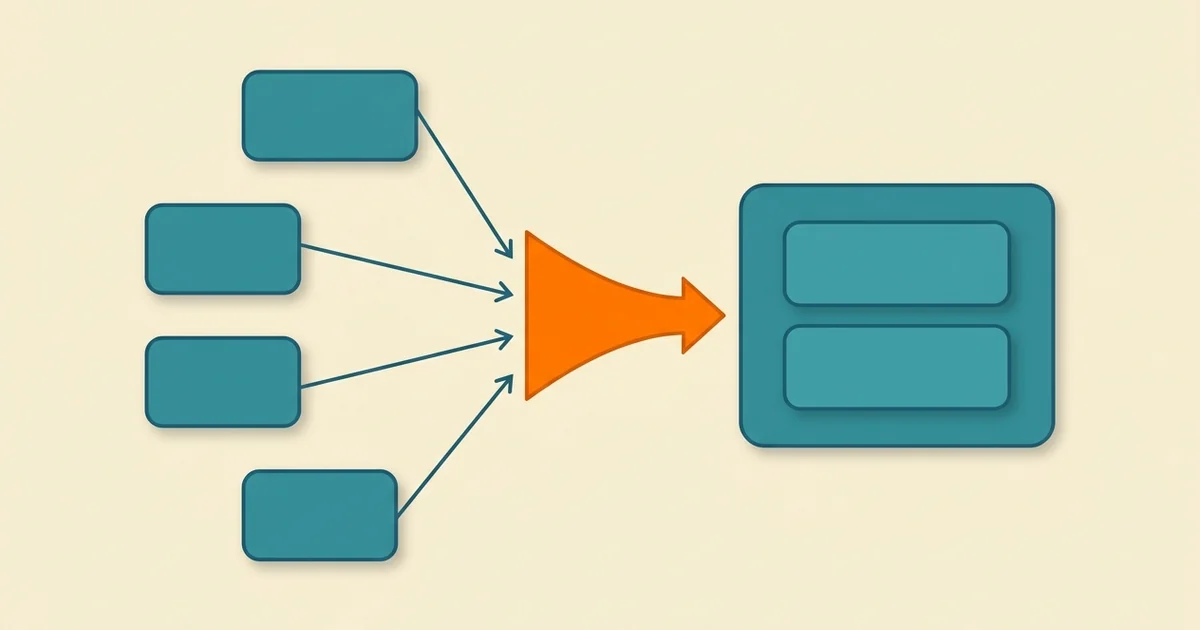
For more question-specific examples, see the article on a funnel narrowing broad ideas into one research question. The same logic applies across undergraduate and master’s papers: the question should match the method, the evidence, and the available space.
How do hypotheses, aims, and objectives fit into the workflow?
Hypotheses, aims, and objectives translate the research question into a more precise plan. Aims state the overall purpose, objectives break that purpose into tasks, and hypotheses make testable predictions for many quantitative studies. They help the draft avoid loose promises that cannot be supported later.
Key terms with short definitions
Research aim means the broad purpose of the study or paper. It often begins with a verb such as examine, analyse, compare, or evaluate.
Research objectives are the smaller tasks that help fulfil the aim. They usually describe what the paper will identify, compare, assess, or explain.
Hypothesis means a testable prediction about a relationship or difference. It is most common in quantitative empirical research, though not every quantitative paper requires formal hypotheses.
A nursing student might ask, “How does discharge education relate to medication adherence among older adults receiving home care?” The aim could be to examine the association between discharge education clarity and medication adherence. Objectives might include defining adherence, reviewing patient education literature, and analysing patterns in survey responses. A hypothesis could predict that higher perceived clarity of discharge education is associated with higher self-reported adherence.
Matching the tool to the research type
Not every paper needs hypotheses. A qualitative paper normally uses research questions or objectives rather than predictive hypotheses. A theoretical paper may use an argument aim rather than a variable-based prediction. A literature review may use review questions and inclusion boundaries.
A management paper using survey data might need hypotheses such as, “Perceived supervisor support is positively associated with affective commitment.” A law paper analysing access to justice policies would not usually test hypotheses; it might instead ask how procedural barriers affect self-represented litigants in small claims courts.
For quantitative projects, the relationship between aims, objectives, and hypotheses needs careful alignment. Texio’s article on research aims and objectives branching into hypotheses gives more detail on how these parts connect.
Preventing mismatch before drafting
Check what a question actually asks rather than choosing a method from its opening word: quantitative designs can also address how and why questions, within their assumptions. Another happens when the hypothesis predicts a causal effect, but the design is cross-sectional and cannot support causal wording.
Before drafting, compare these three elements:
- What does the question ask?
- What can the data or sources actually show?
- What claim would be reasonable at the end?
If those answers do not line up, the draft will likely overclaim. Fixing the alignment before writing saves more time than repairing it after several sections have already been written.
How does an outline become a structured first draft?
An outline becomes a structured first draft when each heading is converted into a purposeful section with claims, evidence, explanation, and links back to the research question. The outline gives the document its architecture; drafting fills that architecture with argument and analysis. A useful outline prevents the first draft from becoming a pile of paragraphs in random order.
Building sections before sentences
An academic outline is a planned hierarchy of sections and subsections. It shows what each part of the paper must do before the writer starts composing full paragraphs. In most student papers, the outline should mirror the assignment type: introduction, literature review or background, method or approach, analysis or findings, discussion, and conclusion.
For a research paper or capstone project, the outline may need a methods section. For a theoretical paper, the outline may need concept definitions, argument stages, counterarguments, and synthesis. For a seminar paper, the outline may be shorter but still needs a clear progression.
A simple outline for an education paper on AI-assisted feedback might include:
- Introduction and research question
- Background on feedback in first-year writing
- Literature themes on AI feedback tools
- Method or source selection approach
- Analysis of perceived benefits and concerns
- Discussion of implications for teaching practice
- Conclusion and limitations
The heading order already suggests the argument path. If section 5 appears before the literature themes, the reader may not have enough context. If the paper jumps from background to conclusion, the analysis is missing.
Turning headings into paragraph tasks
A heading is not a paragraph plan by itself. Each section needs a function. Ask what the reader should understand after finishing that section. Then break the section into paragraph tasks.
For example, a literature review section called “Teacher concerns about AI feedback” might need paragraphs on reliability, student dependence, bias, and workload. Each paragraph needs a topic sentence, evidence, explanation, and connection to the paper’s question. The article on academic paragraph structure offers a useful model for building paragraphs that do more than list sources.
The first draft should not aim for perfect wording. It should aim for visible structure: each section has a role, each paragraph supports that role, and the paper moves toward an answer.
Where outlines fail during drafting
Outlines fail when they are only decorative. A list of headings such as “Introduction,” “Main body,” and “Conclusion” gives almost no guidance. A better outline tells you what each part will argue or explain.
Compare these two outline entries:
Weak: “Literature review — discuss articles about burnout.”
Stronger: “Literature review — compare research on workload, emotional exhaustion, and staffing ratios to show why emergency nursing burnout needs a shift-pattern focus.”
The stronger version gives the writer direction. It names themes and points toward a gap. That makes the first draft easier to produce and easier to revise.
How should sources be used before the first draft is written?
Sources should be used before drafting to define concepts, identify debates, locate gaps, and support the structure of the argument. They should not be pasted into the draft as isolated summaries. A source plan helps the first draft sound analytical rather than like a reading log.
From reading list to source roles
A literature review is not a list of everything you read. It is a structured discussion of what existing scholarship says about your topic, where scholars agree or disagree, and what gap or focus your paper addresses.
Before drafting, sort sources by role. Some sources define key terms. Some provide background. Some report empirical findings. Some support your method. Some offer a theory or framework. Some disagree with each other and create a debate the paper can analyse.
In a health sciences paper on medication adherence after discharge, one source might define adherence, another might examine patient education, another might discuss health literacy, and another might report barriers in home care settings. The paper becomes stronger when those sources are connected by themes rather than dropped into separate paragraphs.
Synthesis before writing
Synthesis means relating sources to explain agreement, disagreement, patterns or limitations; it need not create a claim no source has made. It is different from summary. Summary says what one source found; synthesis explains how several sources relate to each other.
A weak paragraph might say: “Smith found X. Jones found Y. Patel found Z.” A stronger paragraph might say: “Across the studies, adherence appears to depend less on the amount of information provided and more on whether patients can translate instructions into daily routines.” That sentence turns multiple sources into a claim.
For literature review planning, see thematic source clusters and research gap for a literature review. The method of grouping sources by theme can also help seminar papers and end-of-course papers that do not have a separate literature review chapter.
Avoiding source overload
Students sometimes collect too many sources because they are afraid of missing something. More sources do not automatically make a draft better. A paper with 25 loosely used sources may be weaker than a paper with 12 well-integrated sources, depending on the assignment.
Before drafting, assign each source a job. If you cannot explain why a source belongs, set it aside. If three sources make the same point, choose the strongest or use them together in one synthesized sentence. The goal is not to display reading; the goal is to build an answer.
What mistakes do students commonly make when moving from topic to draft?
Students most often struggle because they draft before the paper’s logic is stable. The result is a document with a broad topic, vague question, disconnected sources, or sections that do not answer the same problem. These mistakes are fixable when they are caught early in the workflow.
Mistakes that weaken the first draft
-
The “everything about the topic” mistake
Student example: “This paper will discuss social media, mental health, communication, addiction, and young people.”
Correction: Choose one relationship and one group, such as passive social media use and loneliness among first-year undergraduates. -
The undefined variable mistake
Student example: “Students perform better when they are motivated.”
Correction: Define “perform better” and “motivated,” then decide how each could be measured or discussed. For a quantitative paper, this might become “self-reported academic motivation and semester GPA among undergraduate business students.” -
The method-question mismatch
Student example: “Why do nurses experience burnout?” followed by a plan to run a short numerical survey with no open-ended questions.
Correction: Specify the explanation and evidence needed. A survey may examine a justified association, such as shift length and burnout scores; qualitative research is another option for meanings or accounts, not the only way to address reasons. -
The source-dumping mistake
Student example: “Article A says online learning is flexible. Article B says students like recordings. Article C says technology is useful.”
Correction: Group sources into themes, then explain what the pattern shows, such as flexibility, access, and participation trade-offs. -
The outline-as-placeholder mistake
Student example: “Body paragraph 1: history. Body paragraph 2: advantages. Body paragraph 3: disadvantages.”
Correction: Use argument-based headings, such as “How asynchronous access supports participation” and “Why reduced peer contact may weaken belonging.”
Why these errors persist
These mistakes persist because early academic writing often rewards topic knowledge more than structure. A student may understand the subject well but still struggle to turn that understanding into a paper with a controlled scope. The gap is not intelligence; it is process.
A draft becomes easier to revise when every major decision is visible. The topic shows the boundary, the question shows the task, the outline shows the order, and the source plan shows the evidence. If one part is weak, the rest of the workflow usually reveals where the weakness sits.
How do different research types change the drafting process?
Research approaches change the evidence and analysis a draft must describe. Quantitative work can describe distributions or examine associations and differences. Qualitative work follows a specified interpretive approach rather than necessarily coding interviews into themes. Theoretical work develops concepts and arguments; reviews synthesize scholarship, and existing-data analysis can be empirical.
Quantitative empirical papers
A quantitative empirical paper uses numerical data to examine relationships, differences, or patterns. It often needs variables, hypotheses, measures, sampling details, analysis choices, results, and interpretation.
For example, a psychology student might examine whether sleep quality predicts test anxiety among undergraduates. The draft needs defined measures, a justified analysis and any relevant predictor/outcome roles; a symmetric association need not imply an independent/dependent pair or a cause. The literature review should prepare the reader for why that relationship matters, not simply describe sleep and anxiety separately.
A structured first draft for this paper would include a results section only if data are available. If the assignment is a proposal or plan, the draft may instead include expected analysis and justification without inventing findings.
Qualitative empirical papers
A qualitative empirical paper explores meanings, experiences, processes, or perceptions using non-numerical data such as interviews, focus groups, observations, or documents. It usually needs a research question that invites explanation rather than prediction.
In nursing, a qualitative paper might examine how newly qualified nurses describe support during their first six months in acute care. The draft would need a rationale for the setting, a participant or data source plan, an interview or document analysis approach, and a findings structure suited to the chosen analytic approach, such as themes where relevant. The literature review should prepare the reader for the experiences or institutional tensions being explored.
A qualitative draft also needs careful language around claims. It can discuss themes, patterns, and interpretations, but it should not claim statistical prevalence unless the data support that claim.
Theoretical and literature-based papers
A theoretical paper develops concepts, models or explanations. Using existing data can still be empirical analysis; absence of new data collection does not make a paper theoretical. A literature review analyses existing scholarship to answer a review question or identify a gap.
In law, a seminar paper might analyse whether online dispute resolution improves access to justice for self-represented litigants. The draft would need definitions, legal context, policy debate, counterarguments, and reasoned evaluation. In business, a conceptual paper might compare stakeholder theory and shareholder primacy in sustainability reporting.
For these papers, the outline must show the logic of the argument. The first draft should move from definitions to debate, then to analysis, rather than arranging sources in the order they were read.
How can you review a structured first draft before revising?
A structured first draft should be reviewed for alignment, evidence, paragraph logic, source use, and assignment fit before line editing. Revision works best when you check the big structure first and sentence polish later. A quality report or revision plan can help identify which changes will improve the paper most.
First read: alignment
Start by checking whether the introduction, research question, outline, and conclusion all point to the same task. If the introduction promises one topic and the conclusion answers another, the draft needs structural revision. If the literature review contains themes that never return in the discussion, the paper may need tighter integration.
Ask these questions:
- Does the title match the actual focus?
- Does the research question appear clearly and early enough?
- Does each main section help answer the question?
- Does the conclusion answer the question rather than introducing a new issue?
- Does the paper stay within the assignment type?
This stage often reveals the biggest problems. Do not begin by fixing commas if the paper’s central question is still moving.
Second read: evidence and paragraph flow
After alignment, check whether paragraphs build claims with evidence. A paragraph should not begin in one direction and end somewhere else. It should introduce a point, support it, explain it, and link it back to the section purpose.
Look for unsupported claims such as “This proves that online learning is better” or “Nurses always experience high stress.” Replace absolute language with evidence-based phrasing. For example, “The reviewed studies suggest that asynchronous access may support participation for students with work or caring responsibilities, although peer interaction remains a concern.”
Check citation placement too. If a paragraph contains several claims but only one citation at the end, the reader may not know which source supports which point. Clear citation use protects academic integrity and helps the reader follow the evidence.
Before you move on: topic-to-draft checklist
- The topic is narrowed by context, population, concept, timeframe, or debate.
- The research question is answerable within the assignment length.
- The aim and objectives match the research question.
- Any hypotheses are testable and suited to the method.
- The outline uses meaningful section headings, not placeholders.
- Each major section has a clear purpose in the argument.
- Sources are grouped by theme, role, or debate.
- The literature review synthesizes sources rather than listing them.
- The first draft stays within the required paper type.
- Claims are supported with appropriate evidence and citations.
- The conclusion answers the same question introduced at the start.
- Revision priorities are identified before sentence-level editing.
A structured first draft is a working document, not a finished product. Its value is that it makes the paper testable. Once the structure is visible, you can revise with purpose instead of guessing what feels wrong.
For further reading, see UNC’s assignment-reading guidance and APA’s principles for checking and citing sources. These are guidance for the reader, not evidence that an automated report performs every check.
Frequently Asked Questions
What is the difference between a topic and a research question?
A topic is the general subject area; a research question is the specific question the paper answers. “Employee motivation” is a topic, while “How does supervisor feedback relate to job satisfaction among part-time retail employees?” is a research question. The research question gives the draft a clear direction.
How long should it take to move from topic to first draft?
Time depends on the brief, evidence and access needs, approvals and revision. There is no universal number of days or weeks and this guide gives no delivery-time guarantee; check the order’s actual terms. Planning and drafting can be iterative.
Can undergraduate students use an academic writing workflow tool?
Yes, undergraduate students can use an academic writing workflow tool to plan coursework papers, seminar papers, and research papers. The tool is most useful when it helps the student understand structure, scope, and revision priorities rather than replacing their own thinking. Students should always follow their institution’s academic integrity rules.
Is a structured first draft the same as a final paper?
No, a structured first draft is an early full version that still needs checking, revision, and editing. It should contain the main sections and argument path, but it may still have weak transitions, uneven source use, or sections that need cutting. Treat it as the first complete test of the paper’s logic.
Does the workflow work for master’s-level papers?
The workflow can support eligible master’s coursework when the actual requirements fit an offered order type. It is not an offer to produce a thesis, dissertation or capstone/final project. Check the order form and course AI policy before ordering.